



Tire Pressure Monitoring System Reset Guide After Tire Change
Ever felt a sudden jolt of worry when a mysterious icon lights up on your dashboard? It’s a moment that shakes your peace, even more so when your car just got new tires. Understanding your car’s health is key for every driver who cares about safety on the road.
Keeping the right PSI is more than just saving gas; it’s about keeping your family safe on every trip. If you’re not sure what those glowing symbols mean, you can learn more about dashboard lights meanings and what to do when they flash. We aim to give you a clear tire pressure monitoring system reset guide after tire change so you can handle these alerts confidently.
Key Takeaways
- Proper inflation levels are essential for vehicle safety and performance.
- Dashboard alerts often trigger following routine maintenance or seasonal shifts.
- Always verify your specific PSI requirements using the driver-side door jamb sticker.
- Manual recalibration is frequently necessary to clear persistent warning indicators.
- Consult a professional technician if warning lights remain active after standard troubleshooting.
Understanding Tire Pressure Monitoring Systems
Your car has a silent guardian that watches your tire health every second. This technology is key to modern car safety. It keeps you informed about your car’s condition at all times.
What is a Tire Pressure Monitoring System?
A tire pressure monitoring system tracks the air in your tires. The TREAD Act of 2000 made it mandatory for cars under 10,000 pounds to have this feature.
This rule helps drivers know when tire pressure is too low. Keeping your system working right saves your car’s life. It’s like following high-mileage cars maintenance tips to go over 200k miles.
Why is it Important for Your Vehicle?
The main goal is to prevent accidents. Underinflated tires can lead to bad handling, longer stops, and even blowouts.
Proper inflation keeps your car stable and in control. The system warns you of low pressure, helping you avoid dangers.
How Does it Work?
Most cars use battery sensors in each wheel. These sensors check the air pressure and send data to the car’s computer.
If the pressure is too low, the computer alerts you with a dashboard light. Knowing how your tire pressure monitoring system works is key to keeping your car safe and healthy.
Signs You Need to Reset Your Tire Pressure Monitoring System
Knowing when to reset your tire pressure monitoring system is key for your safety. Drivers often ignore small alerts, which can cause big problems later. If you’re dealing with issues like a clicking starter motor, check your tire sensors too. This keeps your car running smoothly.
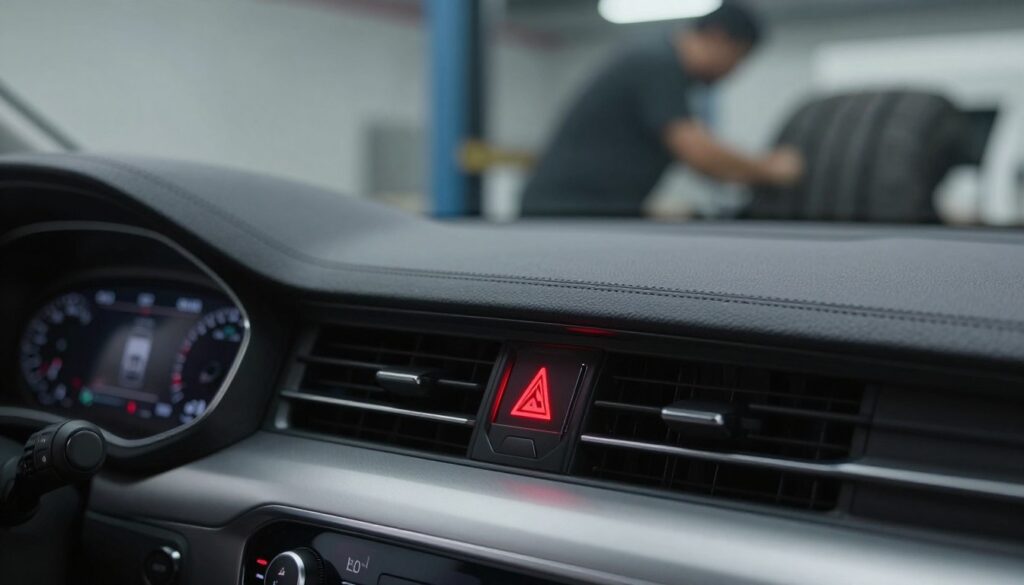
Warning Lights on Your Dashboard
The tire pressure light is the first sign you need to check your system. It turns on when a tire’s pressure drops 25% below what the maker suggests. Don’t ignore this warning because it means your tire is losing air, which can affect how your car handles.
Decreased Fuel Efficiency
Another sign is if your car uses more gas than usual. Underinflated tires make your car work harder to move, using more fuel. Keeping your tires at the right pressure and your system working well can help save gas and cut down on trips to the pump.
Uneven Tire Wear
Look at your tires for uneven wear too. Underinflated tires wear down faster, leading to poor traction in wet or icy conditions. If your tire pressure light stays on even after you’ve checked the air, you might need to reset the system to fix the issue.
- Check tire pressure monthly with a reliable gauge.
- Inspect tread depth for signs of uneven contact.
- Reset the system immediately after any tire rotation or replacement.
Preparing for a Tire Change
Starting a TPMS reset after tire change requires careful planning. Organize your workspace and gather all needed tools to avoid mistakes. This ensures your vehicle’s safety and correct sensor communication.
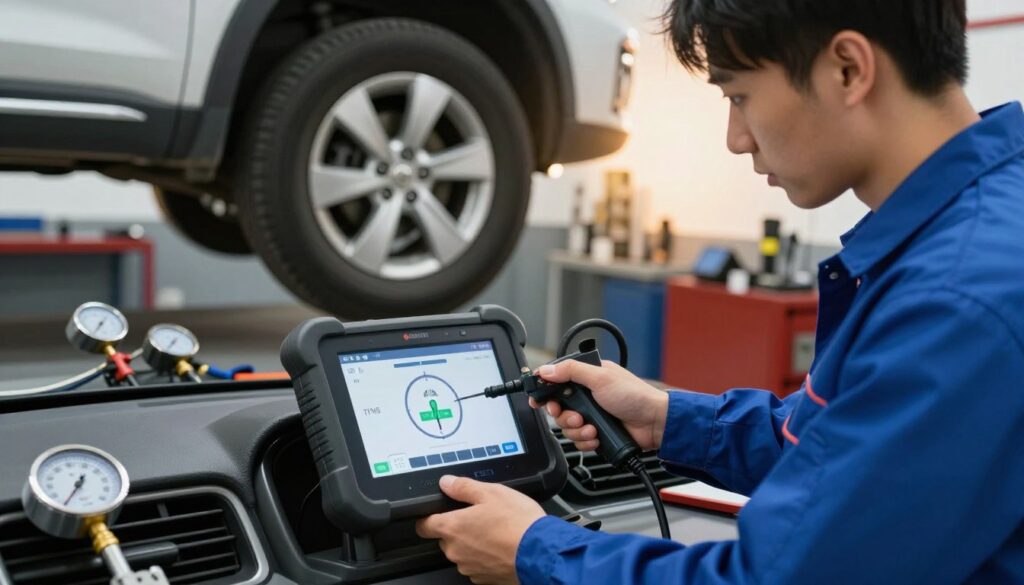
Tools You Will Need
Having the right tools is key for a smooth process. Make sure all tools are in good condition before starting. Here’s a list of essential tools for the job:
- Reliable Jack: Must be rated for your vehicle’s specific weight.
- Jack Stands: Essential for supporting the vehicle safely once lifted.
- Tire Pressure Gauge: A digital or analog tool to verify exact PSI levels.
- Lug Wrench: Used to loosen and tighten the wheel nuts securely.
- Owner’s Manual: Your primary reference for specific manufacturer procedures.
| Tool Name | Primary Function | Safety Importance |
|---|---|---|
| Jack | Lifting the vehicle | High |
| Jack Stands | Stabilizing the load | Critical |
| Pressure Gauge | Verifying tire inflation | Medium |
Safety Precautions
Safety is our top priority when performing any maintenance. Always work on a flat, stable surface. Always engage the parking brake firmly before lifting the car.
“Proper preparation is the difference between a quick, successful repair and a dangerous roadside emergency. Never cut corners when it comes to vehicle stability.”
For driving in challenging conditions, check out winter driving safety tips. These tips help avoid system errors during your TPMS reset after tire change.
Choosing the Right Tires
Choosing tires that meet your vehicle’s specifications is vital. Mismatched tires can confuse sensors, leading to warning lights. Always check that your new tires are compatible with your existing sensors for a smooth TPMS reset after tire change.
Steps to Change Your Tire
We will guide you through the steps to safely remove and install your tires. This includes protecting your sensors. First, you need to physically install the tires. Then, you can reset the TPMS system.
Jacking Up Your Vehicle Safely
Make sure your vehicle is parked on a flat, stable surface. Also, engage the parking brake firmly to prevent any movement during the process.
Position your jack at the manufacturer-recommended lift points to avoid damage. Once elevated, use jack stands for extra support. Never rely only on a hydraulic jack while working under or near the wheel.
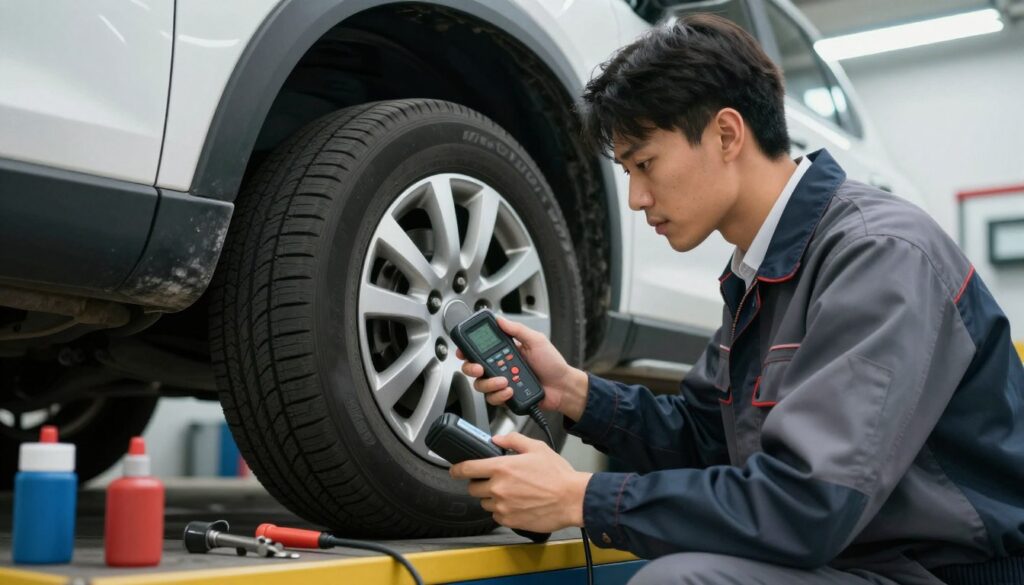
Removing the Old Tire
Loosen the lug nuts slightly while the tire is on the ground. Lift the vehicle and remove the nuts completely. Then, pull the tire off the hub assembly.
It is crucial to handle the wheel sensors with care. These delicate electronics are inside the rim and can be damaged easily.
Installing the New Tire
Align the new tire with the wheel studs and push it into place. Hand-tighten the lug nuts before lowering the vehicle. This ensures the wheel is seated evenly.
After the car is on the ground, use a torque wrench to tighten the lug nuts. Follow the manufacturer’s settings to prevent warping and ensure safety. You may need to reset the TPMS system once the vehicle is moving. This is because the system needs time to recognize the new sensor data.
| Tool Name | Primary Function | Safety Importance |
|---|---|---|
| Hydraulic Jack | Lifts the vehicle | High – Use on flat ground |
| Jack Stands | Supports the weight | Critical – Prevents collapse |
| Torque Wrench | Secures lug nuts | High – Prevents wheel damage |
| Lug Wrench | Removes lug nuts | Medium – Use for initial loosening |
How to Reset the Tire Pressure Monitoring System
Resetting your tire pressure sensor is key to keeping your car safe after new tires. The sensors need to know about the change in pressure or position. If you don’t reset them, a warning light will keep showing up while you drive.
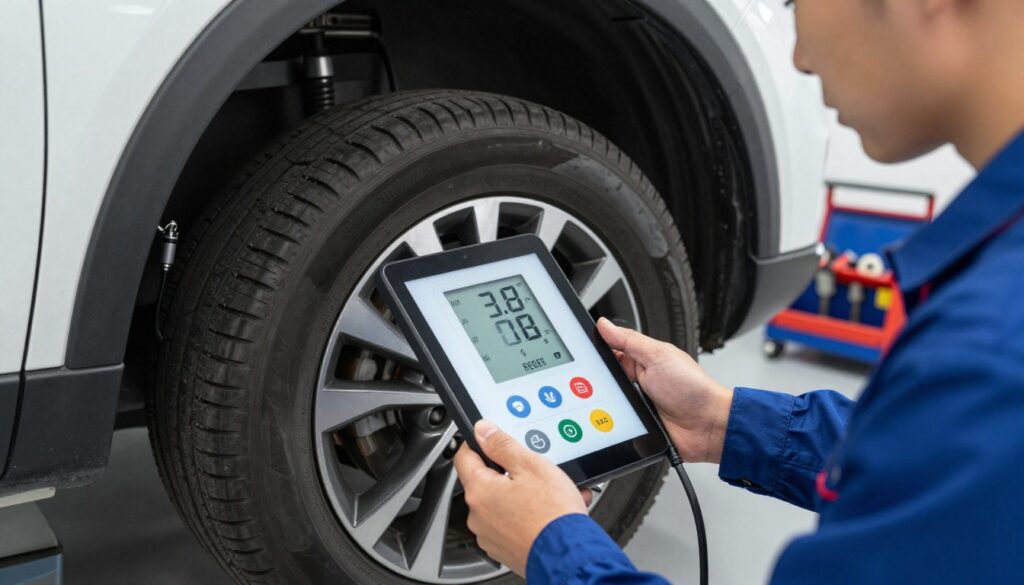
Finding the Reset Button
Most cars have a special button for the TPMS reset procedure. You can find it under the steering wheel, in the glove box, or near the center console. Always check your owner’s manual to find it for your car.
Once you find the button, turn the ignition on but don’t start the engine. Press and hold the button until the dashboard light blinks a few times. This means the system has accepted the reset command.
Using the Vehicle’s Dashboard Menu
Today’s cars often use digital menus instead of buttons. Use the steering wheel controls to find the TPMS reset option in the settings menu. This method is easy and doesn’t need any extra tools.
Go to the “TPMS” or “Tire” menu and follow the prompts to reset. The system will show a confirmation message when it’s done. If the light stays on, you might need to do a more detailed TPMS relearn procedure.
Manual Reset Procedures
Some cars can reset the system while driving. Just drive for about 10 minutes at 50 MPH. This lets the sensors send their new data to the computer.
If the light doesn’t go away, it might mean the sensors need a pro to program them. Always check your tire pressure with a manual gauge before resetting. The system needs accurate data to work right.
| Method | Primary Action | Best For |
|---|---|---|
| Physical Button | Press and hold for 5 seconds | Older vehicle models |
| Dashboard Menu | Navigate settings interface | Modern digital clusters |
| Driving Cycle | Drive at 50 MPH for 10 mins | Automatic recalibration |
| Professional Tool | Use OBDII scanner | Sensor replacement issues |
Common Reset Procedures for Different Cars
Resetting your tire pressure sensor shows that each car brand has its own way. This is because each car maker uses special technology. So, what works for one car might not work for another.
It’s important to know these differences. Using the wrong method can cause problems. You might get error messages or warnings that won’t go away.
Resetting Systems for Popular Brands
Many cars from brands like Toyota or Ford have a special button. You’ll find it under the steering wheel or in the glove box. Pressing this button while the car is on usually starts the reset.
But, European luxury cars are different. They often use the car’s screen or menu to update the system.
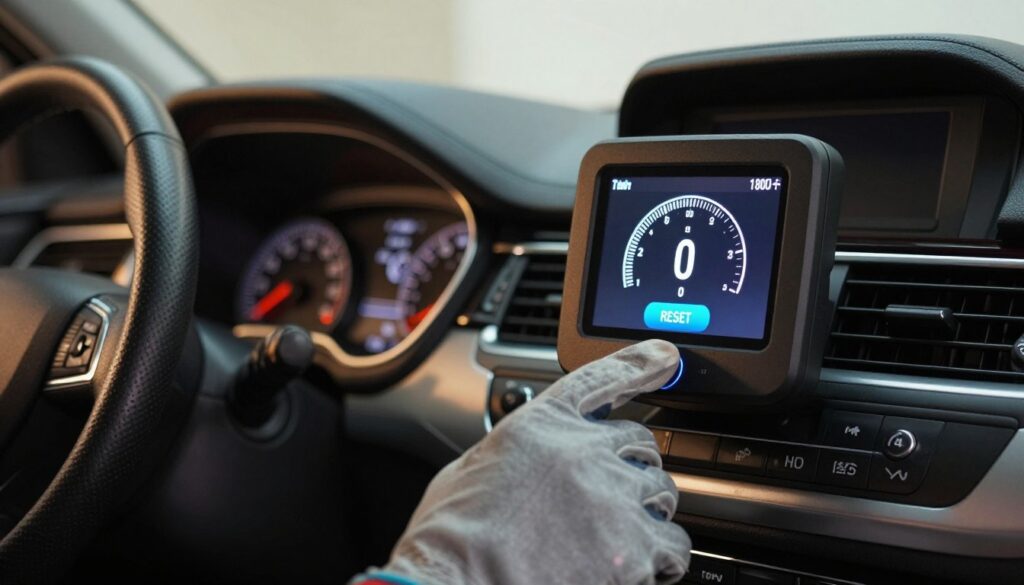
Differences in Reset Procedures
The way you reset tire sensors depends on the car’s computer. Some cars learn and adjust on their own after a drive. Others need you to do it manually.
“Precision in maintenance is the hallmark of a reliable vehicle; never assume that one size fits all when it comes to safety systems.”
Some cars need special tools to talk to the sensors. If your car needs this, just pressing a button won’t do the job.
Checking Manufacturer Guidelines
Always check your owner’s manual before making any changes. It tells you exactly how to reset your car’s sensors.
By following the manual, you make sure your tire sensor reprogramming works right. This keeps your car’s electronics safe and the TPMS reset procedure effective.
Troubleshooting After a Reset
If your tire pressure monitoring system stays active after a reset, there might be a hardware problem. A standard tire pressure monitoring system calibration usually fixes small issues. But if the light keeps flashing, it means the system can’t talk to your tires.
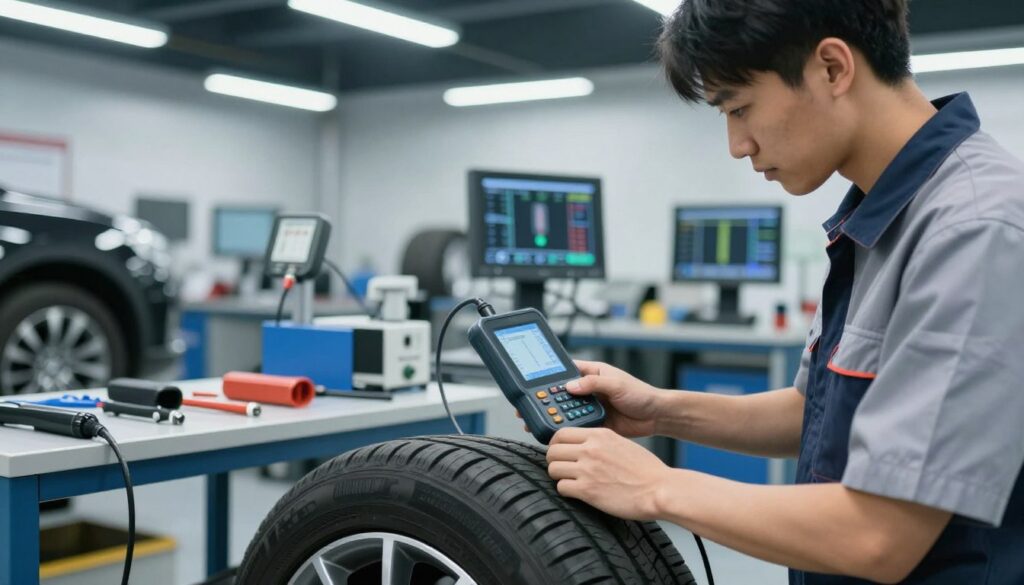
Possible Issues with the System
A flashing light means your car has found a system fault, not just low air. This could be due to a dead sensor battery or a failed TPMS unit. Electronic components can wear out, and sensors have a limited life before needing to be replaced.
Ensuring Proper Tire Pressure
Before thinking it’s a mechanical problem, check if all tires are at the right PSI. Use a good tire gauge to check each tire by hand. The sensors might be right about the pressure being low. If you’re not sure, you can look up how to reset tire pressure light indicators to make sure you did it right.
When to Seek Professional Help
If the light doesn’t go away after checking the pressure, it’s time to get help from a pro. A technician can scan your car to find out which sensor is the problem. Getting a proper TPMS relearn procedure done in a shop makes sure your car’s safety systems work well.
| Indicator Status | Likely Cause | Recommended Action |
|---|---|---|
| Solid Light | Low tire pressure | Inflate tires to PSI |
| Flashing Light | Sensor fault | Professional diagnostic |
| Light stays on | System error | Reset or repair |
Maintaining Your Tire Pressure Monitoring System
Looking after your tire pressure monitoring system is key to getting accurate readings. Treating these parts as essential to your car’s health helps avoid surprise alerts. Consistent attention ensures all four wheels perform at their best.
Regular Checks and Maintenance
Make it a habit to check your monitoring system during oil changes or tire rotations. This helps spot issues early on. If warning lights keep popping up, it might be time for tire sensor reprogramming to get your system back on track.
Keeping Sensors Clean
Sensors are in the wheel assembly, facing road grime, brake dust, and moisture. This buildup can mess with signal transmission. Keeping these areas clean prevents false readings and ensures reliable connectivity.
Understanding Sensor Lifespan
Sensors run on batteries and last between five to ten years, depending on how much you use them. When the battery dies, you’ll need to replace the whole unit. During this time, tire sensor reprogramming is needed to connect the new sensor with your car’s computer.
| Maintenance Task | Frequency | Primary Benefit |
|---|---|---|
| Visual Inspection | Every 5,000 miles | Detects physical damage |
| System Calibration | After tire rotation | Ensures accurate data |
| Battery Health Check | Every 5 years | Prevents sensor failure |
| Sensor Cleaning | During tire service | Reduces signal interference |
The Importance of Proper Tire Pressure
Keeping your tires at the right pressure is key for a smooth ride. It makes your car handle well, whether you’re driving to work or in an emergency. Remember, you often need to reset your tire pressure monitor system after changing your tire pressure.
Impact on Vehicle Safety
Your tires are the only part of your car that touches the road. If they’re not at the right pressure, they can flex too much. This can cause your car to handle badly or even fail.
Low pressure is common in cold weather because air contracts. This can drop your tire pressure below what’s safe. Properly inflated tires are safer for braking and cornering. If your dashboard light stays on after you fill your tires, you might need to reset your tire pressure monitor system.
Fuel Efficiency Benefits
Under-inflated tires make your car work harder, which uses more fuel. This means you’ll spend more money on gas. Keeping your tires at the right pressure helps your car run more efficiently, saving you money.
Enhancing Tire Longevity
Keeping your tire pressure consistent helps prevent uneven wear. Under-inflated tires wear down faster because the weight isn’t spread evenly. Regular checks help your tires last longer and save you money on replacements.
| Condition | Handling Impact | Fuel Economy | Tire Lifespan |
|---|---|---|---|
| Under-inflated | Poor/Sluggish | Decreased | Shortened |
| Over-inflated | Harsh/Bouncy | Neutral | Reduced |
| Properly Inflated | Optimal/Safe | Maximum | Extended |
Conclusion and Final Tips
Keeping your tires at the right pressure is key for safety and performance. Always have a good tire pressure gauge and inflator in your car. This helps deal with changes in temperature or altitude.
Regular checks prevent uneven wear and save fuel. This makes your car run better and longer.
If you need to reset your tire pressure monitoring system, always follow your car’s manual. It has the right steps for your car. Using the manual ensures your sensors work right after any service.
Essential Steps for System Reliability
Remember, resetting is not a fix for real problems. If the light stays on after checking the pressure, get help. A pro can check the sensors and fix the issue.
This keeps your car running well and saves you money. It’s a smart move for your car’s health.
Staying Proactive on the Road
Being informed makes you a safer driver. Knowing your car’s needs gives you peace of mind. Use these tips to handle tire changes well.
Enjoy a safe and reliable drive for many years. It’s all about being proactive and informed.
The Importance of Proper Tire Pressure
What is a Tire Pressure Monitoring System?
It’s an electronic system that watches the air pressure in tires. It tells us the pressure in real-time, usually through a gauge or a light.
Why is it Important for Your Vehicle?
It’s all about safety and efficiency. Right tire pressure saves fuel and makes tires last longer. It also helps the car handle better, which is key for safety.
How Does it Work?
The system uses sensors in the tires. These sensors send data to the car’s computer. If pressure drops by 25% or more, it alerts us to a possible safety risk.
Warning Lights on Your Dashboard
The main sign is the tire pressure warning light. If it stays on after inflating, you need to reset the TPMS.
Decreased Fuel Efficiency
Underinflated tires use more gas. If your gas mileage drops, it might mean your tires are low, even if the light hasn’t come on yet.
Uneven Tire Wear
Seeing these signs early helps avoid bigger problems. Uneven tire wear is a sign of wrong pressure, which the TPMS aims to prevent.
Tools You Will Need
Before starting, gather a lug wrench, a jack, and a tire pressure gauge. For cars like the Chevrolet Silverado or Nissan Altima, the owner’s manual will help find the right jacking points.
Safety Precautions
Change tires on a flat, stable surface. Always use the parking brake and wheel chocks to keep the car steady while it’s up.
Choosing the Right Tires
Pick tires that match the car’s specs. Whether it’s Michelin all-seasons or Bridgestone winter tires, make sure the TPMS is compatible.
Jacking Up Your Vehicle Safely
Put the jack under the car’s metal frame. Raise it until the flat tire is off the ground, keeping the jack stable.
Removing the Old Tire
Loosen the lug nuts in a star pattern before lifting the tire. Then, remove them completely once the tire is off the ground.
Installing the New Tire
Align the new wheel with the lug bolts and tighten them by hand. Lower the car and use the lug wrench to tighten the nuts firmly in a crisscross pattern.
Finding the Reset Button
There are different ways to reset the TPMS. It might be a dedicated reset button or through the car’s menu.
Using the Vehicle’s Dashboard Menu
In cars like BMW or Mercedes-Benz, use the infotainment system to reset the tire pressure monitor system.
Manual Reset Procedures
For some cars, a manual reset involves driving at 50 MPH for about 10 minutes. This lets the sensors recalibrate.
Resetting Systems for Popular Brands
Resetting can vary. A Toyota Camry might need a simple button press, while a Honda Accord might require a sequence through the touchscreen. Always check the owner’s manual for the right steps.
Differences in Reset Procedures
Direct systems need a different reset than indirect systems. Knowing which system your car has is key for a successful TPMS relearn procedure.
Checking Manufacturer Guidelines
Always check the official guidelines to avoid mistakes that could keep the warning light on.
Possible Issues with the System
If the light stays on, there might be a deeper problem. A flashing light often means a dead sensor battery or a TPMS unit failure, not just low pressure.
Ensuring Proper Tire Pressure
Make sure all tires are at the right PSI before assuming a system fault. The recommended pressure is on the driver’s side door jamb.
When to Seek Professional Help
If the light won’t go away after trying to reset, get professional help. A technician can do a diagnostic scan to check if everything is working right.
Regular Checks and Maintenance
Check tire pressure manually at least once a month. This helps catch slow leaks that the TPMS might miss.
Keeping Sensors Clean
Corrosion can mess with sensor accuracy. Always use valve caps to protect the tire pressure sensors from road salt and debris.
Understanding Sensor Lifespan
TPMS sensors have internal batteries that last 5 to 10 years. When these batteries fail, you’ll need to replace the whole sensor.
Impact on Vehicle Safety
Right tire pressure means better handling. This is vital for safety, whether it’s in an emergency or bad weather.
Fuel Efficiency Benefits
Proper inflation reduces rolling resistance. This improves MPG and saves money on gas.
Enhancing Tire Longevity
Keeping tires healthy and checking them often helps avoid premature wear. This saves money in the long run.

Hello! I’m Moheen Iftikhar, the founder of «CarMotivei». I’m dedicated to covering modern automotive trends, new car technologies, and useful driving insights to keep car lovers updated and motivated. Here, you’ll find detailed car reviews, expert automotive content, and helpful tips for drivers and enthusiasts alike.