



Automatic Braking Systems Pros and Cons in Modern Vehicles
Ever felt that rush when traffic stops suddenly? It’s a thrilling moment that shows how risky our daily drives can be. We count on modern vehicle safety features to watch our backs.
These vehicle safety technologies have changed how we drive. They give us peace of mind but also make some drivers feel less in control. Knowing the Automatic braking systems pros and cons in modern vehicles is vital for all drivers.
It’s important to think about the good and bad of these systems. By looking at the Automatic braking systems pros and cons, we can see how they change our driving. Let’s explore what these innovations really mean.
Key Takeaways
- Advanced sensors significantly reduce the risk of rear-end collisions.
- Drivers must remain attentive despite the presence of driver-assist tools.
- False activations can occur in complex traffic environments.
- These features provide a vital safety net for distracted moments.
- Understanding limitations is key to using these tools effectively.
Understanding Automatic Braking Systems
Vehicle safety is key, and fast-acting systems play a big role. These systems are at the heart of the automatic braking systems pros and cons debate. They use advanced sensors to lessen accident severity on crowded roads.
What Are Automatic Braking Systems?
These systems are a critical part of vehicle collision prevention technology. They watch the space ahead and act if a crash is likely. Some just warn you, while others take control to stop the car.
It’s important to know the difference between a warning and active braking. A warning might sound a chime or light up, like when dashboard lights do. But active systems actually apply the brakes to avoid or lessen a crash.
How Do They Work?
These systems use cameras, radar, and sometimes LiDAR sensors. They constantly scan the road for obstacles like cars, people, or bikes. The computer then quickly decides if a crash is likely.
If a danger is spotted, the system figures out how hard to slow or stop the car. If you don’t react, it uses emergency braking to reduce the crash’s impact. This teamwork between software and hardware makes driving much safer for all.
Advantages of Automatic Braking Systems
Car safety is getting a big boost with new tech that protects drivers. These autonomous emergency braking advantages are key in today’s busy traffic. Cars now spot dangers before we do, thanks to smart sensors and software.
Enhancing Driver Safety
These systems aim to cut down on accidents caused by driver mistakes. If a car sees a danger, it can stop faster than we can. This quick action can save lives.
These systems also watch the road when we’re distracted or tired. They keep us safe, no matter how alert we are. This is why safety ratings are higher in cars with this tech.
Reducing Collision Risks
Vehicle collision prevention technology checks the distance and speed of things in front of us. If a crash is likely, it warns us and stops the car. This cuts down on rear-end crashes in cities.
These systems work well in all kinds of weather and light. They make crashes less severe, keeping everyone on the road safer.
Lowering Insurance Costs
With more cars having these safety features, insurance costs are going down. Companies give discounts for cars with advanced safety tech. This makes safer cars more affordable.
These systems also mean fewer repairs and medical bills. As accidents decrease, insuring cars will cost less over time. Here’s how these systems compare in safety and cost.
| Safety Feature | Primary Benefit | Risk Reduction | Insurance Impact |
|---|---|---|---|
| Automatic Emergency Braking | Collision Avoidance | High | Lower Premiums |
| Forward Collision Warning | Driver Alertness | Moderate | Reduced Claims |
| Pedestrian Detection | Vulnerable User Safety | High | Liability Reduction |
The automatic emergency braking benefits are clear for drivers and the public. By using this tech, we’re moving towards fewer and less severe accidents.
Disadvantages of Automatic Braking Systems
It’s important to see beyond the marketing to understand the real limits of car safety tech. While automatic emergency braking benefits save lives every day, these systems are not perfect. Knowing their limits is key for all drivers.

Potential for Technology Failures
Even top sensors can fail in harsh weather. Snow, ice, or heavy rain can hide from cameras and radar. This can lead to missed obstacles or false warnings.
Poor light also limits automated braking system limitations. At night or during twilight, cameras might not see pedestrians or cyclists well. These tools help but can’t replace our eyes in tricky situations.
Over-reliance on Automation
Experts worry about drivers trusting tech too much. Knowing a car has automatic braking might make us less alert or distracted. This decreased driver engagement can actually increase the risk of accidents.
These systems should be seen as a last resort, not the main way to drive. Relying on them for emergency stops can slow down our reaction. The best safety is staying alert and aware of our surroundings.
Key Features of Modern Automatic Braking Systems
Today, we look at the key features that make modern cars safer. These modern vehicle safety features add an extra layer of protection. They help drivers feel more confident in busy traffic.
Adaptive Cruise Control
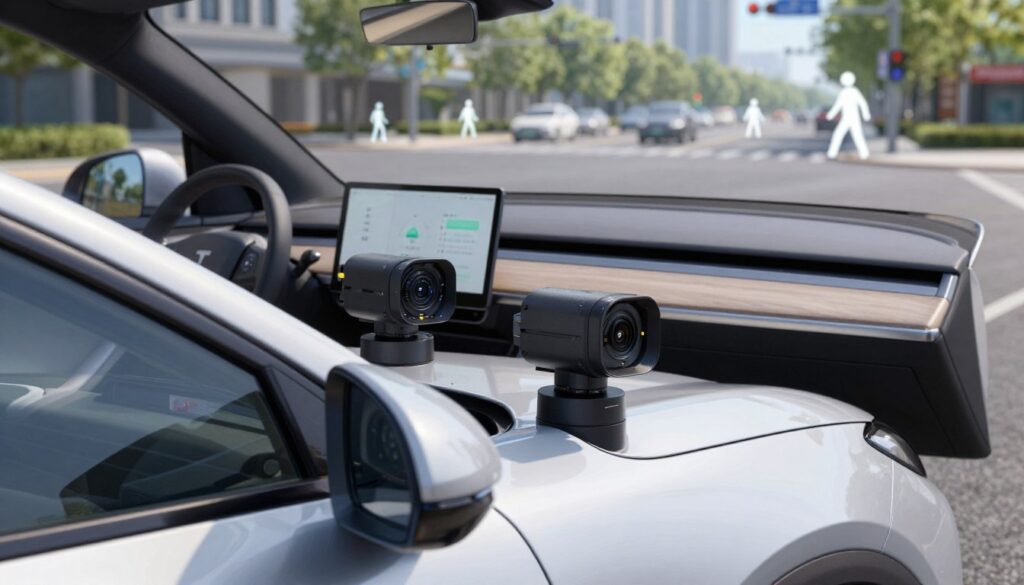
Adaptive Cruise Control (ACC) keeps your car at a set speed. It adjusts to the car in front without needing you to press the gas or brake. This is thanks to radar or camera sensors.
But, there are some adaptive cruise control drawbacks. For example, it might not handle sudden lane changes well. Or, it could be affected by bad weather that blocks the sensors.
Remember, this tech is meant to help, not replace, your driving skills. When looking for a new car, check out car safety ratings to see how it performs.
Emergency Braking Assistance
Emergency Braking Assistance works with other sensors to stop or lessen a crash. If it sees a collision coming, it can apply the brakes for you.
This feature needs a few things to work right:
- Forward Collision Warning: Warns you of dangers ahead.
- Automatic Brake Pressure: Helps stop the car faster in emergencies.
- Object Detection: Finds people, bikes, or cars in your way.
By combining these techs, car makers aim to cut down on driving mistakes. Knowing about these features helps you choose a safer car.
Comparing Automatic Braking Systems to Traditional Braking
Modern cars show a big difference between old braking systems and new automated ones. Old systems need the driver to press the brake. New tech uses sensors and software to watch the road all the time. This change is a big step forward in car safety.

Response Time Differences
The main difference is how fast they react. A driver takes hundreds of milliseconds to see a danger and hit the brakes. But automated systems can start braking in just a fraction of that time.
This quick start can mean the difference between avoiding a crash or just slowing down. Regular braking vs anti-lock braking systems help, but automated emergency braking is even better. Precision is the hallmark of these digital systems, making travel safer in crowded areas.
Driver Control vs. Automation
The best safety comes when tech helps the driver, not replaces them. There’s a debate about how much control drivers should keep. Automation helps avoid mistakes, but drivers need to stay alert.
For example, there are adaptive cruise control drawbacks, like trouble with road debris or sudden lane changes. It’s important to find a balance. This way, drivers stay involved while the car offers extra safety. Here’s a table showing the main differences between these braking methods.
| Feature | Traditional Braking | Automated Braking |
|---|---|---|
| Activation | Manual (Driver) | Sensor-Driven (Computer) |
| Reaction Speed | Human-dependent | Millisecond precision |
| Primary Benefit | Full driver control | Reduced collision risk |
| System Reliance | Low | High |
The Role of Automatic Braking in Autonomous Vehicles
Automotive safety is changing fast with new braking technology. This tech is key for self-driving cars to understand and act on their surroundings. By using autonomous emergency braking advantages, car makers are making roads safer for everyone.

How Automatic Braking Supports Self-Driving Tech
Today’s cars use many sensors and cameras to stay safe. These tools send important info to the car’s brain, helping it make quick choices. This mix of tech is essential for several reasons:
- Enhanced Object Detection: Advanced algorithms spot dangers quicker than humans can.
- Data Fusion: Radar and cameras work together for accurate detection in any weather.
- Predictive Maneuvering: Systems guess when dangers might happen, acting before they do.
This tech mix is what makes true autonomy possible. Without these systems, self-driving cars would find it hard to handle the unpredictability of roads.
The Future of Road Safety
The next ten years will bring big changes in car design, thanks to new rules. Governments are pushing for better pedestrian detection to keep everyone safe. These rules show the autonomous emergency braking advantages that will soon be common in cars.
Our aim is to cut down on road deaths by making these safety features widespread. As we improve these technologies, we’re getting closer to a world where accidents caused by people are rare. Innovation in braking is about more than just stopping a car; it’s about saving lives with smart, automated help.
Consumer Perception of Automatic Braking Systems
People have mixed feelings about automatic braking systems. They see the benefits but also worry about losing control. As we use more tech in our cars, it’s key to understand how drivers feel about it.

Surveys and Research Findings
A lot of American drivers think automatic braking systems are a good thing for safety. Research on car safety tech shows that those who’ve had close calls trust these systems more. But, age and how tech-savvy someone is can affect their views.
Looking at market trends, we see what matters most to people:
- Perceived Reliability: Drivers want systems that work well without surprises.
- Ease of Use: Easy-to-use interfaces make people happier.
- Safety Confidence: The belief that cars can react faster than humans is key.
Public Trust in Advanced Safety Features
Trust is hard to keep with automated driving assistance. False alarms, where the car brakes for no reason, hurt trust the most. If a car stops suddenly on an empty road, trust drops fast.
To keep trust, car makers need to improve sensor accuracy and cut down on mistakes. Drivers want to feel in control, not just along for the ride. Clear communication about what these systems can do is essential.
“The successful integration of safety technology depends not just on the hardware, but on the psychological comfort of the person behind the wheel.”
The goal is to make tech that helps drivers without annoying them. As we go forward, listening to what users say is key. We want vehicle safety to be a help, not a worry, for everyone.
Maintenance and Reliability Concerns
High-tech safety features need a new way to maintain vehicles. These systems offer great protection but can wear out or have software issues. It’s key for car owners to understand vehicle safety technologies.

Regular Checks and Updates
Modern cars are like computers on wheels, needing regular digital care. Manufacturers often update software to boost your phanh tu dong khan cap aeb and other features. Always check for these updates during service visits to keep your system up-to-date.
Physical checks are also important. If your windshield or suspension has changed, your cameras and radar might need a professional tune-up. Not doing this can cause distance errors and lower system performance.
Dealing with Sensor Issues
Sensors can be blocked by road grime, heavy snow, or mud. This can affect your automated braking system. Keep these areas clean to ensure your system works well.
Even small damage, like a bumper hit, can mess with sensors. If your dashboard lights up, don’t ignore it. Fixing these issues quickly keeps your safety systems running right, giving you peace of mind on the road.
Conclusion: The Future of Automatic Braking Systems
Modern cars are getting smarter, thanks to software that helps keep us safe. By using autonomous braking systems, we can cut down on car accidents and injuries worldwide. These systems are a key part of making our roads safer.
Balancing Safety and Driver Engagement
Technology is great, but it’s best when it works with us, not against us. Cars like the Tesla Model S and the Cadillac XT4 react fast, but they can’t replace a driver’s attention. Staying alert is the best way to keep everyone safe on the road.
The Next Steps in Vehicle Safety Technology
Future car tech will aim to work better in bad weather like fog or snow. We’ll see cars that can handle higher speeds safely. But, safe driving habits will always be the most important thing for keeping us safe, even with new tech.
Maintenance and Reliability Concerns
What Are Automatic Braking Systems?
These systems are a key part of vehicle collision prevention technology. They watch the road and step in if a crash is near. Unlike old brakes, they use sensors to act on their own when they see a danger.
How Do They Work?
They use Lidar, radar, or camera sensors to check the area around the car. There are two types: passive alerts that warn the driver, and active intervention where the car brakes to avoid a crash.
Enhancing Driver Safety
The main autonomous emergency braking advantages are keeping people safe. They watch blind spots and the road ahead, helping even when the driver is distracted.
Reducing Collision Risks
These systems cut down rear-end collisions a lot. They spot a slowing car faster than a person, reducing the force of impacts.
Lowering Insurance Costs
Big names like State Farm and Geico give discounts for cars with these systems. This shows how these technologies lower the risk for all cars on the road.
Potential for Technology Failures
There are automated braking system limitations in bad weather. Snow, rain, or fog can mess with sensors, causing problems or even sudden braking.
Over-reliance on Automation
Drivers might get too used to the car doing the work. We say these systems are helpers, not replacements for a careful driver.
Adaptive Cruise Control
Adaptive cruise control is great for long drives by keeping a safe distance. But, it can struggle with sudden cuts or sharp turns.
Emergency Braking Assistance
This feature helps when you brake but not enough. It adds extra pressure to stop faster, helping avoid accidents.
Response Time Differences
Traditional brakes are slow because they rely on human reaction. But, vehicle safety technologies can stop in a split second, saving lives.
Driver Control vs. Automation
Drivers should always be in control. But, digital systems can brake each wheel separately, something drivers can’t do.
How Automatic Braking Supports Self-Driving Tech
Braking systems are key for self-driving cars like Tesla and Waymo. They give the car the data it needs for complex tasks, acting like its reflexes.
The Future of Road Safety
Future cars will have more safety features. We aim for a world where cars can drive safely in cities without human mistakes.
Surveys and Research Findings
Most people like the safety these systems offer. But, false alarms can make them lose trust in automated tech.
Public Trust in Advanced Safety Features
Trust comes from reliability. Brands like Subaru and Volvo are trusted more because their systems work well with the driver.
Regular Checks and Updates
These systems need regular software updates and sensor checks. Keeping them current is as important as for a smartphone.
Dealing with Sensor Issues
Keeping sensors clean is key. Even a little dirt or a cracked windshield can mess with modern vehicle safety features.

Hello! I’m Moheen Iftikhar, the founder of «CarMotivei». I’m dedicated to covering modern automotive trends, new car technologies, and useful driving insights to keep car lovers updated and motivated. Here, you’ll find detailed car reviews, expert automotive content, and helpful tips for drivers and enthusiasts alike.