



AC Blowing Warm Air Troubleshooting Steps for DIY Car Repair
Summer heat can turn your car into a sauna. It’s frustrating when you expect cool air but get none.
It feels personal when your car fails you. Like a car won’t start, AC problems often come from small leaks in complex systems.
Knowing how your AC works can help. Our AC blowing warm air troubleshooting guide can help you find the problem. We think DIY car repair is a great way to keep your car comfortable and reliable.
Key Takeaways
- Modern cooling systems need a careful, pressurized chemical loop.
- Find common failure points before seeing a mechanic.
- Learn to safely check your car’s parts at home.
- Regular maintenance stops cabin heat problems.
- Feel confident in doing basic car checks yourself.
Understanding How Car AC Systems Work
To fix AC blowing warm air troubleshooting, we need to know how your car’s cooling works. Many think it makes cold air, but it actually pulls heat out of the car and throws it outside. This happens through a loop of pressurized refrigerant that changes from liquid to gas.
Key Components of Your Car’s AC System
Your car’s climate control needs several parts working together. If these parts fail, you might face car AC problems that need quick fixes. Knowing these parts helps you find where the issue is:
- Compressor: The system’s core that pressurizes the refrigerant.
- Condenser: At the car’s front, it releases heat outside.
- Expansion Valve: Controls the refrigerant flow into the evaporator.
- Evaporator: Cools the cabin air before it reaches you.
Even though some systems are complex, like in hybrids, the basic AC loop is the same. Regular maintenance of these parts is key for reliability.
How Refrigerant Circulates
The refrigerant cycle starts with the compressor pumping high-pressure gas into the condenser. As it cools, it turns into a high-pressure liquid. This liquid then goes through the expansion valve, where it drops in pressure and temperature, becoming a cold mist.
This cold mist goes through the evaporator coils. A blower fan pushes warm air over these coils, cooling it down. The refrigerant then goes back to the compressor as a low-pressure gas to start the cycle again.
Common AC System Misconceptions
Many think an AC not cooling is always because of refrigerant. But, many problems come from electrical issues, blocked airflow, or worn-out compressor parts. Adding more refrigerant without finding the real problem can harm the system.
“The air conditioning system does not create cold; it merely moves heat from one place to another.”
Another wrong idea is that the AC system needs no maintenance. Like any mechanical part, your AC needs checks to keep seals tight and the condenser clean. Knowing this can save you from expensive repairs later.
Identifying Symptoms of AC Issues
Spotting early signs of a broken AC system can prevent expensive fixes later. Catching these problems early lets you do simple DIY car repair tasks. Being alert helps keep your car comfortable.
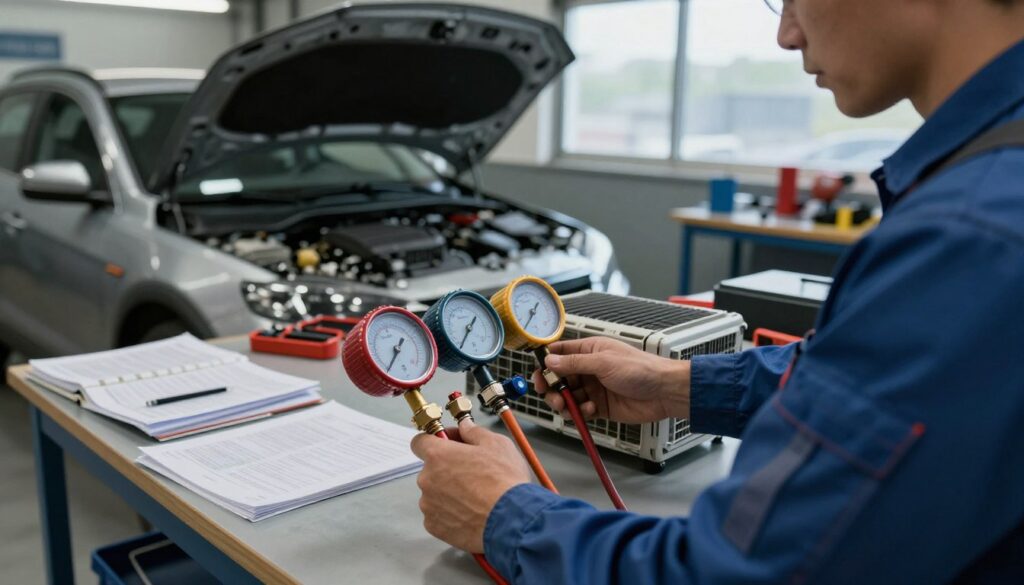
Signs of a Failing AC System
One common car AC problem is when the air goes from cold to warm. You might hear strange noises from the engine when the AC is on. These sounds mean the compressor is having trouble.
A bad smell coming from the vents is another warning sign. It means mold or mildew is on the evaporator coil. If your AC not cooling right, watch out for these signs.
When to Seek Professional Help
While you can fix some small issues yourself, some need a pro. If you think there’s a refrigerant leak, stop right there. Refrigerant is dangerous and needs special care.
If you’ve tried replacing fuses and checking settings but nothing works, it’s time for a pro. Professional technicians have the tools to find and fix complex problems. Knowing when to ask for help keeps you safe and your car running well.
Basic Troubleshooting Steps at Home
Many drivers think a warm AC system means expensive fixes. But, often, the fix is simple. Before calling a pro, try a few easy checks. These AC repair steps can save you money and time by fixing common mistakes or small blockages.

Checking the AC Controls and Settings
The first step in car air conditioning troubleshooting is to check your dashboard settings. It’s easy for someone to accidentally change the temperature or switch to vent-only mode. Make sure the recirculation button is on, as it helps cool the air better.
Also, ensure your fan speed is high and the AC button is on. Sometimes, turning off and on again can fix small electronic issues. If cold air doesn’t come out, you might need to check the physical parts.
“An ounce of prevention is worth a pound of cure when it comes to maintaining your vehicle’s comfort systems.”
Inspecting the Climate Control System
A clogged cabin air filter is often the cause of fix AC blowing hot air. It traps dust and pollen, blocking airflow. If the air feels weak, changing the filter is a good first step.
Also, check the exterior air intake vents near your windshield. Leaves and dirt can block airflow. Keeping these vents clean helps your AC work better all summer.
Checking the Refrigerant Levels
Keeping an eye on your AC refrigerant is key for car air conditioning troubleshooting. Without the right amount, your AC can’t cool the air. This means you’ll get warm air from your vents.
Importance of Proper Refrigerant Levels
Your car’s cooling system needs the right pressure to work well. Keeping this pressure in check helps your compressor last longer and keeps your AC efficient. Remember, just adding more refrigerant isn’t a lasting fix.
If your AC is low, it’s likely leaking. While adding refrigerant might help, it doesn’t fix the leak. Ignoring a leak can damage your system more, causing strange noises. These sounds might seem like other engine noises.
How to Inspect Your Refrigerant Safely
Before starting any AC repair steps, safety comes first. Always wear gloves and safety glasses because refrigerant can hurt you. Check your owner’s manual to find the low-pressure service port.
Here’s how to check your pressure safely:
- Make sure the engine is on and the AC is on max.
- Find the low-pressure port, usually on the thicker tubing.
- Use a certified pressure gauge to check the pressure.
- Compare your reading to what the manual says.
If the pressure is way off, you might have a leak. Don’t overfill, as too much pressure can harm your compressor. Always be precise when checking to keep your AC working right.
Inspecting Electrical Connections
Often, simple electrical problems are the main reason for automotive HVAC issues. Before spending a lot on repairs, check if power is getting to your compressor. Many people get warm air because a connection is loose or a fuse has failed.

Identifying Loose or Damaged Wires
Begin by visually checking the wiring to the AC compressor. Look for frayed insulation, exposed copper, or signs of rodent damage. If connectors show corrosion, clean them with an electrical contact cleaner to ensure a good connection.
Engine vibration can loosen connectors over time. Make sure all plugs are securely in place and wires aren’t rubbing against sharp edges. Fixing these small automotive HVAC issues early can prevent bigger electrical problems later.
Testing Fuses and Relays
If the wiring looks good, check the fuse box, usually under the hood or near the dashboard. Find the fuse for the AC clutch or compressor. If the metal inside is broken, replace it. A blown fuse is a common and cheap fix if your car AC is blowing warm air.
Relays are also important, acting as switches for the compressor. You can test a relay by swapping it with one from a non-essential system, like the horn. If the AC works after the swap, you’ve found a faulty relay.
| Component | Common Symptom | Action Required |
|---|---|---|
| AC Fuse | Compressor won’t engage | Replace with correct amperage |
| AC Relay | Clicking sound but no cooling | Swap or replace relay |
| Wiring Harness | Intermittent cooling | Repair or clean connections |
Examining the AC Compressor
When your air conditioning stops cooling, checking the compressor is key. This part is the system’s heart, moving refrigerant to keep your cabin cool. A failing compressor can spread debris, so diagnosing it carefully is important before replacing it.
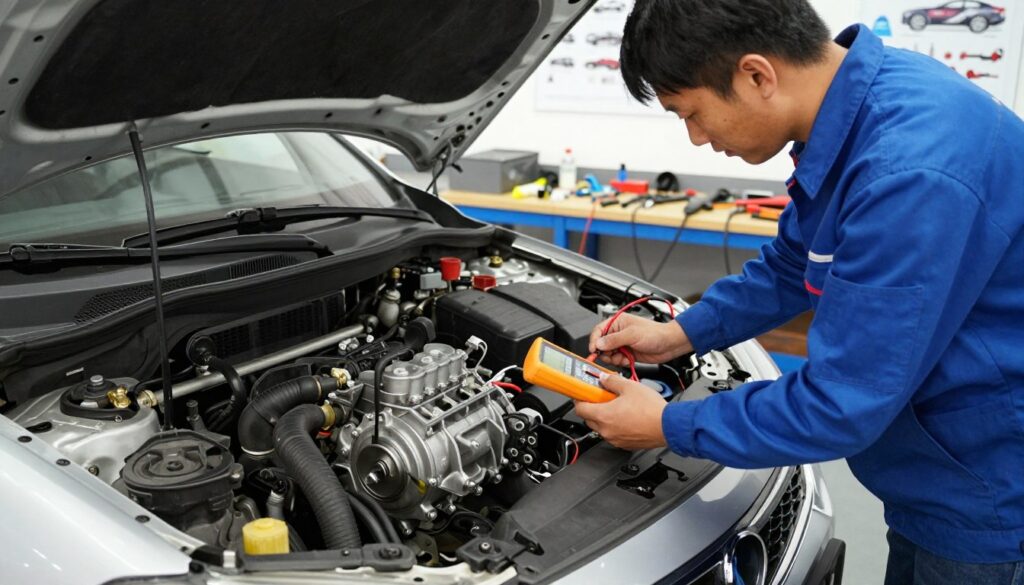
Signs of a Malfunctioning Compressor
Spotting a failing compressor early can save you money. A grinding or squealing noise from the engine bay when you turn on the AC is a common sign. It usually means the bearings are wearing out or the clutch isn’t working right.
Another sign is when you can’t fix AC blowing hot air because the compressor clutch won’t spin. If the clutch doesn’t move when the engine runs, the system can’t cool. Also, look for oil leaks around the compressor, which can mean seal failure.
Steps to Diagnose Compressor Issues
To start diagnosing, turn on the engine and set the AC to the coldest. Open the hood and find the compressor, driven by the serpentine belt. Listen for a metallic click when the electromagnetic clutch engages.
If you don’t hear a click, the clutch might not be getting power or its coil could be damaged. Use a multimeter to check for voltage at the compressor connector to find electrical issues. If power is there but the clutch doesn’t work, the compressor is likely the problem.
Remember, accurate diagnosis is key to fix AC blowing hot air right. If you see metal shavings or the compressor is seized, you need a pro to avoid more damage. These AC repair steps help you avoid wasting time and money on the wrong parts.
Evaluating the Condenser and Evaporator
We often overlook the condenser and evaporator when diagnosing common car AC problems. These parts are key for heat exchange. Their condition affects how well your system cools the cabin. If your AC is blowing warm, check these parts first.

Common Problems with the Condenser
The condenser is at the front of your vehicle. It’s exposed to leaves, dirt, and road grime. These can clog the cooling fins, stopping airflow.
Regularly inspecting the front grille for obstructions is a simple way to maintain system health. If you notice bent fins or heavy buildup, clean the area with a soft brush or low-pressure water. Keeping this component clear is a fundamental step in car air conditioning troubleshooting to ensure your system functions as intended.
How to Clean the Evaporator Coil
The evaporator coil is inside the dashboard. It cools the air before it enters your cabin. Over time, moisture collects, creating a damp environment that encourages mold and mildew growth.
To fix AC blowing hot air caused by a dirty evaporator, use a specialized foaming cleaner designed for automotive HVAC systems. This cleaner breaks down debris and eliminates mold spores trapped within the fins. A clean evaporator ensures fresh air and efficient cooling throughout the summer.
| Component | Primary Function | Maintenance Need |
|---|---|---|
| Condenser | Dissipates heat | Remove external debris |
| Evaporator | Cools cabin air | Clean mold and dust |
| Cabin Filter | Filters incoming air | Replace periodically |
Using Diagnostic Tools for Assistance
Looking beyond simple checks lets you find automotive HVAC issues with great accuracy. Using data instead of guesses changes how you do DIY car repair. This way, you only fix what really needs it.

Recommended Tools for AC Troubleshooting
To do a precise AC system diagnosis, you need special tools. A manifold gauge set is key for checking pressures. This shows if your refrigerant loop is working right. For help getting started, check our guide on fixing car AC.
“The bitterness of poor quality remains long after the sweetness of low price is forgotten.”
How to Use a Multimeter for AC Testing
A digital multimeter is great for finding electrical problems in your AC. It helps check voltage and switch continuity. Always turn off your vehicle before testing to avoid damage.
Begin by setting your multimeter to DC voltage to see if power is getting to the compressor. If there’s no voltage, you might have a blown fuse or a bad relay. Learning to use these tools improves your DIY car repair skills and saves money.
Conclusion and Preventive Maintenance Tips
Regular care keeps your vehicle cabin comfortable during the hottest months of the year. A well-maintained unit often lasts 10 to 15 years with consistent attention to detail. We encourage you to perform seasonal inspections to catch minor problems before they escalate.
Preserving System Longevity
Routine upkeep prevents the frustration of dealing with AC not cooling when you need it most. Simple habits like running the system during winter months keep seals lubricated and functional. Proactive care remains the best strategy for avoiding expensive Automotive HVAC issues down the road.
Expert Support for Complex Repairs
We understand that performing a thorough AC system diagnosis at home provides a sense of accomplishment. Some repairs involve high-pressure lines or specialized chemicals that require professional training. Certified technicians at shops like Firestone or Pep Boys possess the tools to handle these sensitive tasks safely. Relying on experts ensures your vehicle remains reliable and safe for every passenger.
FAQ
Why is my car AC blowing warm air even when the dial is set to max cold?
This is a common problem we see. First, check for a refrigerant leak or a failed compressor clutch. If the compressor isn’t working, the AC can’t cool the air. Use a gauge to check if the refrigerant levels are low.
Can I perform a DIY car repair if my AC is not cooling properly?
Yes, many repairs are easy for car owners to do. Start by checking the cabin air filter. A dirty filter can block airflow. Also, look for debris in the condenser that might be stopping heat dissipation.
What are the most common automotive HVAC issues related to electrical failure?
Often, HVAC problems are due to a blown fuse or a faulty relay. We check the fuse box for the AC compressor relay. If it’s not working, the compressor won’t turn on. A Fluke multimeter helps us see if power is getting to the part.
How can I fix AC blowing hot air caused by a refrigerant leak?
To fix it for good, find and fix the leak. While products like Interdynamics A/C Pro can help, a low refrigerant level means there’s a leak. We use UV dye kits to find leaks and make sure repairs last.
What professional tools do we recommend for advanced AC system diagnosis?
For a detailed diagnosis, get a Yellow Jacket manifold gauge set. It shows both high-side and low-side pressures. Use a Klein Tools infrared thermometer to check vent temperatures and see how well your repairs are working.
Why does my car AC smell like mold or mildew?
Moisture on the evaporator coil can cause this smell. If the condensation doesn’t drain, it creates a place for bacteria to grow. Use Nextzett Klima-Cleaner to clean the evaporator and drain tube, making the air fresh.
How do I know when to stop car air conditioning troubleshooting and call a professional?
If your AC troubles point to a compressor failure or blockage, call a pro. If you see metal shavings, the system needs a flush and new parts. A certified technician can handle this.

Hello! I’m Moheen Iftikhar, the founder of «CarMotivei». I’m dedicated to covering modern automotive trends, new car technologies, and useful driving insights to keep car lovers updated and motivated. Here, you’ll find detailed car reviews, expert automotive content, and helpful tips for drivers and enthusiasts alike.