



Car Safety Ratings for Modern Family SUVs
I remember the day I brought my first child home. It was a big change for me. Protecting your loved ones is the most important job you have as a parent.
Choosing the right vehicle is more than just style or fuel economy. You need to look at car safety ratings for modern family SUVs. These ratings give you a reliable shield on the road. They help you compare different models with confidence.
I want to help you understand crash testing and advanced driver-assist technology. By knowing these tools, you can make a choice that puts your passengers first. If you have questions, please reach out to our team for expert guidance.
Key Takeaways
- Prioritize passenger protection when selecting your next vehicle.
- Use standardized metrics to compare different vehicle models effectively.
- Understand how crash test data influences your final purchasing decision.
- Explore advanced technology features that enhance overall road awareness.
- Feel empowered to make a choice that keeps your household secure.
Understanding Car Safety Ratings: What They Mean
Learning about car safety ratings is key to keeping your family safe. Many people ignore these scores, but they’re very important. They show how a car performs in emergencies.
By understanding these ratings, you can make a better choice for your family. This knowledge helps you pick a safer vehicle.
The Different Safety Rating Organizations
In the U.S., two main groups test vehicles: the National Highway Traffic Safety Administration (NHTSA) and the Insurance Institute for Highway Safety (IIHS). The NHTSA uses a 5-star rating system for frontal, side, and rollover crashes. This government-backed data is a cornerstone for any serious buyer.
The IIHS also tests vehicles, focusing on crashworthiness and safety tech. Both groups aim to make roads safer, but they test differently. It’s smart to check both for a full picture of SUV safety ratings before buying.
Key Safety Features Evaluated
Today’s tests go beyond just crash tests. They also look at SUV safety features that help prevent accidents. This includes advanced braking, lane-keeping assist, and blind-spot monitoring.
Safety is not just about how a car holds up in a collision; it is about the technology that helps you avoid the collision entirely.
Structural strength is also key. Engineers check how well the frame protects passengers in crashes. High scores often mean strong design and cutting-edge electronic assistance.
Importance of Safety Ratings for Families
For parents, safety ratings mean more than just numbers. They offer peace of mind. Choosing a vehicle with top SUV safety features puts your family’s safety first.
High SUV safety ratings are a sign of quality and reliability. When I look for a family vehicle, I check all the safety tests. This ensures my family gets the best in car safety.
Top Safety Picks for Family SUVs in 2023
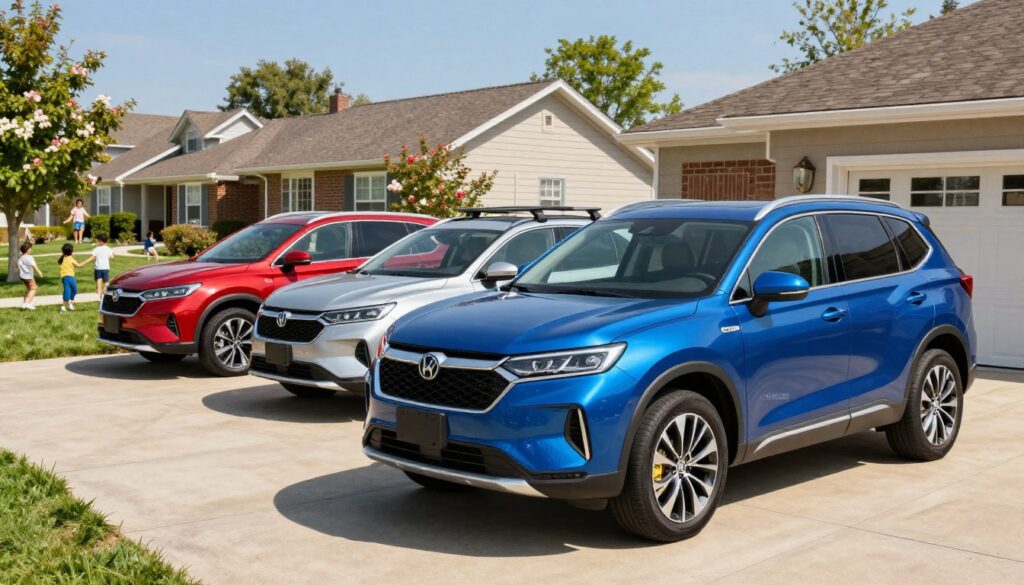
I’ve looked at the latest car data to find the safest vehicles for families. When searching for top-rated SUVs for families, it’s key to ignore marketing and focus on real crash test results. My team at our dedicated research center focuses on cars that excel in many tests.
Criteria for Selection
To pick the safest SUVs for families, I check several important things. I look at how well a car holds up in crashes and its automatic emergency braking. I also see how it protects people of all sizes and ages in different crash types.
Being consistent is key. A car must do well in all tests, not just one. This strict method means you can trust my recommendations for safe driving.
Notable SUVs Making the List
Some cars have set new standards in safety. The 2026 Honda CR-V and the 2026 Hyundai Ioniq 5 both got perfect scores. They show the best of modern car design, blending safety with reliability.
These top-rated SUVs for families show you can have both safety and performance. By picking cars tested to the highest standards, you keep your family safe. These vehicles are always at the top because they put everyone’s safety first.
Highlights of Safety Features
The safest SUVs for families have advanced safety tech. They have blind-spot monitoring, lane-keeping assist, and adaptive cruise control. These features help prevent accidents before they happen.
These SUVs also have easy-to-use tech that helps drivers stay focused. When tech supports the driver, not distracts them, the car is safer. Choosing a car with these features is wise for any parent wanting to keep their family safe.
Crash Test Results: What Families Should Know
Crash testing shows how well a modern SUV really is. I look beyond the shiny ads to see how it handles real forces. Knowing SUV crash test ratings helps keep your family safe on the road.

Overview of Crash Test Procedures
Groups like the IIHS test vehicles to see if they protect people well. They do frontal, side-impact, and roof strength tests. These tests find weak spots that might not be obvious.
These tests are the same for all vehicles. Always check the safety information disclaimer before buying. This info helps you compare different cars’ safety.
Side Impact vs. Frontal Crash Tests
Frontal tests check how well the front absorbs energy in a crash. They look at the cabin and airbags. Side-impact tests check the B-pillars and door panels.
Side impacts are tricky because they’re closer to the people inside. SUVs use strong steel to help. Effective energy management is key in these tests.
Rollover Ratings and Stability Features
SUVs are more likely to roll over than sedans. But, they have special systems to stop this. These systems watch the steering and speed to keep the car stable.
When I look at SUV crash test ratings, I focus on roof strength. A strong roof is important if a rollover happens. Here’s what’s important in these tests:
| Test Category | Primary Objective | Safety Focus |
|---|---|---|
| Frontal Impact | Energy Absorption | Cabin Integrity |
| Side Impact | Intrusion Resistance | Occupant Protection |
| Roof Strength | Structural Rigidity | Rollover Prevention |
Advanced Driver Assistance Systems (ADAS)
Keeping your family safe on the road is more than just airbags and strong frames. Today, family-friendly SUVs come with advanced electronic systems. These systems watch over your family, ready to prevent accidents.
What Are ADAS Technologies?
Advanced Driver Assistance Systems, or ADAS, are electronic tools that help drivers. They use cameras, radar, and sensors to see the world around the car. This lets the car alert you or act to avoid dangers.
Benefits of ADAS for Family Safety
The main plus of these SUV safety features is they react faster than you can. They keep an eye on the road, even when you’re busy with kids or stuck in traffic. This extra safety helps avoid accidents caused by human mistakes.
Popular ADAS Features in Modern SUVs
Today’s cars come with many safety tools as standard. One key feature is Automatic Emergency Braking, which stops the car if it sees a crash coming. Other features like lane-keeping and blind-spot monitoring help you stay safe on the road.
| Feature Name | Primary Function | Safety Benefit |
|---|---|---|
| Automatic Emergency Braking | Detects collision risks | Prevents rear-end impacts |
| Lane Keep Assist | Monitors lane markings | Prevents unintended drifting |
| Blind Spot Monitoring | Detects hidden vehicles | Reduces lane change accidents |
| Adaptive Cruise Control | Adjusts speed automatically | Maintains safe following distance |
Child Safety in Family SUVs
When I look at family-friendly SUVs, I always check how easy it is to install child safety seats. It’s not just about airbags and seatbelts. The design and how easy it is to get to the seats matter a lot.
Importance of Car Seats and Proper Installation
Getting a car seat right is key to keeping kids safe. Make sure the seat fits well and doesn’t move too much. Many cars now have Rear Seat Reminders to help you remember to check the back seat.
Best Family SUVs for Car Seat Compatibility
Not all cars are good for child seats. Look for SUVs with easy-to-use LATCH points and lots of room in the back. This makes it easier to get a child into a seat.
Before you buy, check the terms and conditions of the car’s warranty. Make sure you know how changing the interior might affect your warranty. Choose a car that makes it easy to find the anchor points for the seat.
Safety Ratings for Specific Child Restraint Systems
Groups like the NHTSA test how well child seats fit in different cars. They look at how easy it is to use the LATCH system and the design of the back seats. Here are some things I check when looking at a car’s safety for kids.
| Feature | High Compatibility | Low Compatibility |
|---|---|---|
| LATCH Access | Exposed and easy to reach | Deeply recessed or hidden |
| Rear Seat Width | Wide enough for three seats | Cramped, limits seat types |
| Tether Anchors | Clearly marked and accessible | Difficult to locate or blocked |
| Head Restraints | Removable or adjustable | Fixed, interferes with seats |
By focusing on these details, you can find a family-friendly SUV that keeps your kids safe. Try out your car seat during a test drive to make sure it fits perfectly.
Fuel Economy vs. Safety Ratings: Finding the Balance
Families often worry that fuel-efficient SUVs might lack safety features. It’s a common concern when you want to save on gas and keep your family safe. Luckily, many best safety rated SUVs now offer both good fuel economy and safety.

How Fuel Economy Impacts Family Vehicle Choice
Fuel efficiency is key for many families because it affects the total cost of owning a vehicle. A car that uses less gas can help you save money for other family needs. But, it’s important to check if the car also meets your safety standards.
Driving habits can also affect how much gas a car uses. For example, towing heavy trailers can lower fuel efficiency. If you often tow, you should consider this when choosing a car.
Safety Trade-offs in Fuel-Efficient SUVs
Some people think lighter cars are less safe than heavier ones. But, modern engineering has changed this. Many SUVs with high safety ratings use advanced materials to stay safe without being too heavy.
Efficiency does not have to mean fragility. New materials help cars absorb energy better than old designs. This means you can get good gas mileage and safety at the same time.
Recommendations for Balanced Choices
When looking for a new car, focus on models with top safety ratings. You can find best safety rated SUVs with hybrid or turbocharged engines. These engines give you power for family trips without using too much gas.
Check the specific trim level, as safety features can vary. By choosing SUVs with high safety ratings that come with standard safety systems, you ensure your family’s safety. This way, you get both peace of mind and savings on gas.
Electric SUVs and Safety Standards
The rise of electric SUVs is changing how we think about safety in family vehicles. These cars are not only good for the environment; they are also among the best safety rated SUVs available. By ditching traditional engines, makers are finding new ways to keep passengers safe in crashes.

Growing Popularity of Electric Family SUVs
More families in the U.S. are picking electric SUVs for their daily drives and trips. They like the lower costs and smaller carbon footprint. As more people choose these cars, makers focus on adding the latest safety features.
Electric cars have a lower center of gravity, making them more stable. This is why many electric models are now top picks for safety-minded parents.
Safety Ratings for Electric Vehicles
When looking at SUVs with high safety ratings, electric cars have a big advantage. Their heavy batteries are in the floor, which helps prevent rollovers and absorbs crash energy better. The Toyota bZ4X is a standout example of how electric design can boost safety.
These cars go through the same tough tests as gas cars but often do better in certain areas:
- Structural Integrity: Strong frames protect the battery and passengers.
- Impact Absorption: Without a big engine, they manage crash zones better.
- Advanced Stability: Their lower weight makes them less likely to tip during sharp turns.
Additional Considerations for Electric Vehicle Buyers
While safety is key, buyers should also think about the practical side of electric SUVs. Make sure you have access to charging where you live. Also, remember that these cars are heavier, which can affect tire wear and braking.
Range anxiety is fading, but it’s a concern for those in rural areas. Before buying, check:
- Home charging options for your garage.
- The car’s real-world range in extreme weather.
- Fast-charging station availability on your usual routes.
The Role of Technology in Enhancing Safety
Technology is key for the safest SUVs for families. It has changed how we keep our passengers safe. It’s more than just steel frames and airbags.
Innovations in Safety Technologies
360-degree camera systems are a big upgrade. They give a clear view of the surroundings. This helps drivers park safely in tight spots.

Modern sensors also watch the car’s surroundings. They catch things drivers might miss. This is important for avoiding accidents in parking lots.
Connected Vehicles and Improved Safety
Connected cars talk to their environment. They share data with traffic systems. This warns drivers of dangers before they see them.
These systems also get updates without a trip to the dealer. This keeps your car safe and up-to-date.
Future Trends in SUV Safety Tech
Future cars will use predictive maintenance and AI. They’ll spot problems before they happen. This means safer road trips for families.
More semi-autonomous driving features are coming. They help with traffic, making driving easier. These changes will make driving safer for everyone.
Real-World Safety: Owner Feedback and Experiences
Real-world driving shows how tough modern SUVs are. Lab tests are important, but they don’t show the daily wear and tear families face. Mixing expert opinions with user feedback gives a clearer picture of how a car performs.

Gathering Owner Insights on Safety
For a true view of a car’s performance, check out iSeeCars. They average safety scores over five years to remove odd results. Also, look at the best family SUVs to see how owners rate their safety and reliability.
Community forums and surveys offer honest feedback. They show if safety systems or the car’s structure have common problems. This helps you make a better choice than just looking at test scores.
Case Studies on Accidents and Outcomes
Real accidents give insights that crash tests can’t always match. I look at how safety features like airbags or collision systems work in real crashes. These stories show the difference between small and big accidents.
Every accident is different, with its own speed, angle, and road conditions. But, patterns in these reports can show if a car model often keeps its occupants safe. This qualitative data is key to understanding the numbers in official reports.
Importance of Community Feedback
The community’s voice is priceless for anyone looking to buy a car. When many owners share their experiences, it builds a wealth of knowledge. This shows how safety systems hold up over time, even after the warranty ends.
Your research should be a mix of official SUV crash test ratings and real-world experiences. This way, you can choose a car with confidence. Listening to those who drive these cars every day means your choice is based on both science and real-life use.
Regional Safety Concerns for Family Drivers
I think it’s key to consider local road conditions when picking a car for your family. Whether you’re driving through busy city streets or quiet country roads, you need dependable SUVs for families. Knowing the local challenges helps you choose the right car for your family.
Common Road Hazards in Urban vs. Rural Settings
In cities, the main dangers are lots of cars, stops, and people walking suddenly. You need a car with excellent visibility and quick emergency brakes. On the other hand, rural areas have rough roads, animals crossing, and dark nights.
Climate and Weather Considerations
The weather greatly affects how your car handles. Rain or snow can make it hard to stop, so stability control is key. SUVs, being taller, need special design to avoid rolling over on slippery roads.
Adapting Safety Features for Different Environments
When looking for dependable SUVs for families, focus on features for your area. For example, all-wheel drive is a must in snowy places. And bright headlights are important in dark rural areas. Choosing the right car keeps your family safe, no matter where you are.
| Environment | Primary Hazard | Recommended Feature |
|---|---|---|
| Urban | Pedestrian Traffic | Automatic Emergency Braking |
| Rural | Wildlife/Poor Roads | Adaptive High Beams |
| Mountainous | Steep Grades/Snow | All-Wheel Drive |
| Coastal | Heavy Rain/Fog | Enhanced Stability Control |
How to Choose the Safest Family SUV
Finding the safest SUVs for families requires careful research and hands-on tests. Crash test scores are important, but they don’t tell the whole story. A safe choice must balance technical data with real-world usability.
Factors to Consider Beyond Ratings
When I check a vehicle, I look at more than crash test scores. Reliability and long-term resale value are key. A car that breaks down often or has tech issues can be unsafe.
Here are more factors to think about:
- Maintenance costs: Keeping safety systems working costs less.
- Build quality: Better construction means better protection.
- Resale value: A car that holds its value is well-made.
Tips for Test Driving and Evaluating Safety
A test drive shows if a car fits your family’s needs. Check the visibility from the driver’s seat. Also, test the safety controls to make sure they’re easy to use.
Here’s a simple checklist for your next dealership visit:
| Feature | What to Check | Why it Matters |
|---|---|---|
| Visibility | Check rear and side sightlines | Reduces accident risk |
| Controls | Test infotainment and ADAS | Prevents driver distraction |
| Car Seat Fit | Install your child seats | Ensures proper protection |
Consulting Safety Resources Before Purchase
Before buying, check independent resources to confirm your findings. Look at data from different places to spot trends. You can find a list of the safest SUVs for families online.
By using official ratings and your own experience, you’ll feel sure about your choice. The top-rated SUVs for families offer peace of mind and a good drive. Researching well is the best way to keep your loved ones safe.
Conclusion: Prioritizing Safety for Your Family
Choosing the right vehicle means looking closely at car safety ratings for modern family SUVs. I think making informed choices is key to safer roads. These ratings are like a guide for picking the best car for your family.
Many parents choose modern SUVs because they are safe and have the latest tech. These cars have strong frames and smart systems to help drivers. This means you can drive knowing your family is safer.
Remember to check the NHTSA and IIHS for updates on car safety. New info comes out often. By staying informed, you help keep your family safe on every journey. Your effort now will make the roads safer for your family’s future.
FAQ
Which organization provides the most reliable SUV safety ratings for families?
Look at both the NHTSA and the IIHS. The NHTSA uses a five-star rating system. The IIHS offers more rigorous testing, including small overlap front tests and side-impact evaluations.
What are the must-have SUV safety features for a new family vehicle?
You should look for Automatic Emergency Braking (AEB), Blind-Spot Monitoring, and Lane Keep Assist. These features help prevent accidents before they happen.
Are electric SUVs among the safest SUVs for families?
Yes, many electric SUVs are very safe. Models like the Tesla Model Y are often at the top. Their batteries make them stable and less likely to roll over.
How can I find the top-rated SUVs for families regarding car seat installation?
Check the IIHS “LATCH easy-of-use” ratings. SUVs like the Volkswagen Atlas and Subaru Ascent are good for families. They have easy-to-use anchors and spacious second rows.
Do SUVs with high safety ratings cost more to maintain?
Generally, no. While safe SUVs might cost more upfront, they are often more reliable. They can even save you money on insurance over time.
Does a high safety rating guarantee protection in all types of crashes?
No rating can guarantee safety in every crash. But, choosing a car with a “Top Safety Pick+” designation means it meets the highest safety standards.

Hello! I’m Moheen Iftikhar, the founder of «CarMotivei». I’m dedicated to covering modern automotive trends, new car technologies, and useful driving insights to keep car lovers updated and motivated. Here, you’ll find detailed car reviews, expert automotive content, and helpful tips for drivers and enthusiasts alike.


