



Dashboard Lights Meanings and What to Do When They Flash Red
Did you know that nearly 70% of drivers ignore critical vehicle alerts until a breakdown occurs? Our cars have a smart system to keep us safe from mechanical problems. When we start the engine, symbols light up briefly to check if everything is working right.
Red dashboard lights are urgent signals that need our immediate attention. These car dashboard alerts are not just suggestions. They show serious safety issues that could cause big problems if ignored. By understanding these dashboard warning lights, we keep our cars safe for every trip.
Dealing with these red warning lights right away can save us from expensive fixes later. If you’re facing ongoing problems, our car problems diagnostics guide for common engine warnings can help. Knowing what dashboard lights meanings means we can fix small issues before they turn into big ones.
Key Takeaways
- All symbols perform a brief self-check at startup to ensure system integrity.
- Red indicators signify critical safety issues requiring immediate driver intervention.
- Ignoring urgent signals often leads to expensive mechanical failures and safety risks.
- Proper diagnostics help identify the root cause of persistent vehicle alerts.
- Proactive maintenance keeps your car reliable and safe for daily travel.
Understanding the Importance of Dashboard Lights
Modern cars are like smart computers, sending important messages through lights. These vehicle dashboard symbols connect your car’s health to your driving. They are key to knowing how your car is doing.
What are Dashboard Lights?
Dashboard lights are icons that tell you about your car’s systems. They remind you of simple things like oil changes or warn you about serious engine issues. These lights give you updates in real time.
Using a detailed dashboard light guide helps you understand each light. They watch over everything from tire pressure to emissions. This keeps you in the loop about your car’s health always.
Why Do They Matter?
It’s vital to pay attention to dashboard lights meanings. A lit light often means a problem is starting. If ignored, it could cost a lot to fix later.
By acting on these alerts, you keep your car running well and safely. Not listening can cause big problems, like engine failure. Knowing your car’s warning system is a must for every driver.
Common Misconceptions
Many think warning lights will go away by themselves. But waiting can lead to serious engine damage or safety risks.
Another myth is that only red lights are urgent. While red lights are critical, yellow or amber ones also mean you need a check-up. Always check a trusted dashboard light guide to catch any early warnings.
Common Dashboard Lights and Their Meanings
Learning to read vehicle dashboard symbols is key for every driver. Our dashboard lights tell us important things about our car. A good dashboard light guide helps us know when to worry and when to relax.
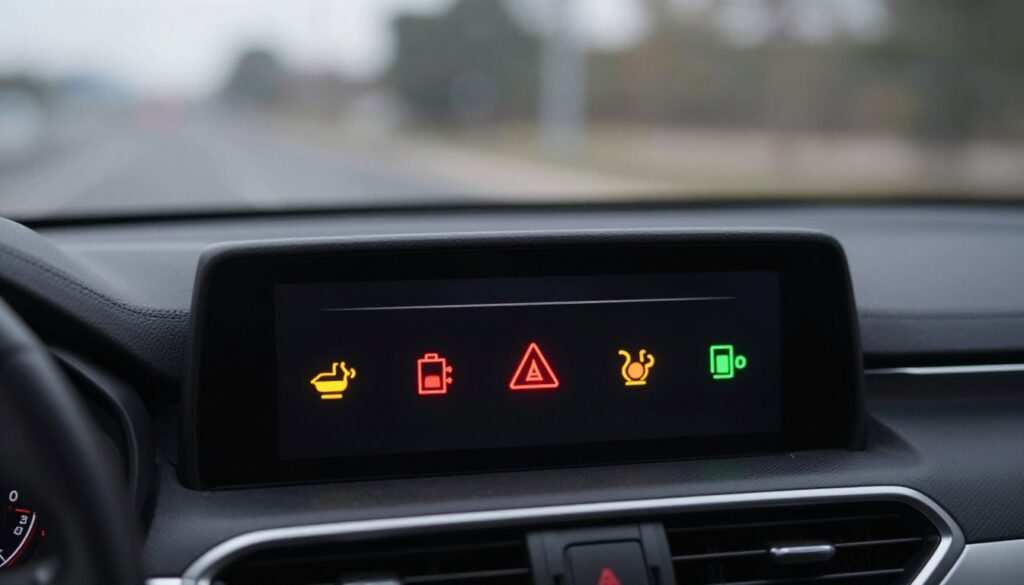
Warning Lights
Dashboard warning lights in red mean serious trouble. They tell us to stop the car right away. Ignoring these lights can damage the engine or make driving unsafe.
Indicator Lights
Car dashboard indicators are usually yellow, green, or blue. They show us if systems like cruise control or turn signals are working. These lights tell us everything is okay.
Service Lights
Service lights remind us when it’s time for car care. They don’t always mean something’s wrong. But, they tell us when it’s time for an oil change or tire rotation. Taking care of these lights keeps our car running well.
| Light Category | Typical Color | Urgency Level |
|---|---|---|
| Warning | Red | High – Stop Immediately |
| Indicator | Green/Blue | Low – Informational |
| Service | Yellow/Amber | Medium – Schedule Soon |
Knowing what vehicle dashboard symbols mean helps us drive better. Always check the owner’s manual if you’re not sure. This way, we’re always ready for what our dashboard warning lights might show us.
Overview of Red Dashboard Lights
Your car uses colors to tell you about its health. Red is the most urgent. If you see red dashboard lights, your car is telling you something serious needs your attention right away. These lights are meant to catch your eye because they often mean something very dangerous or could damage your car badly.
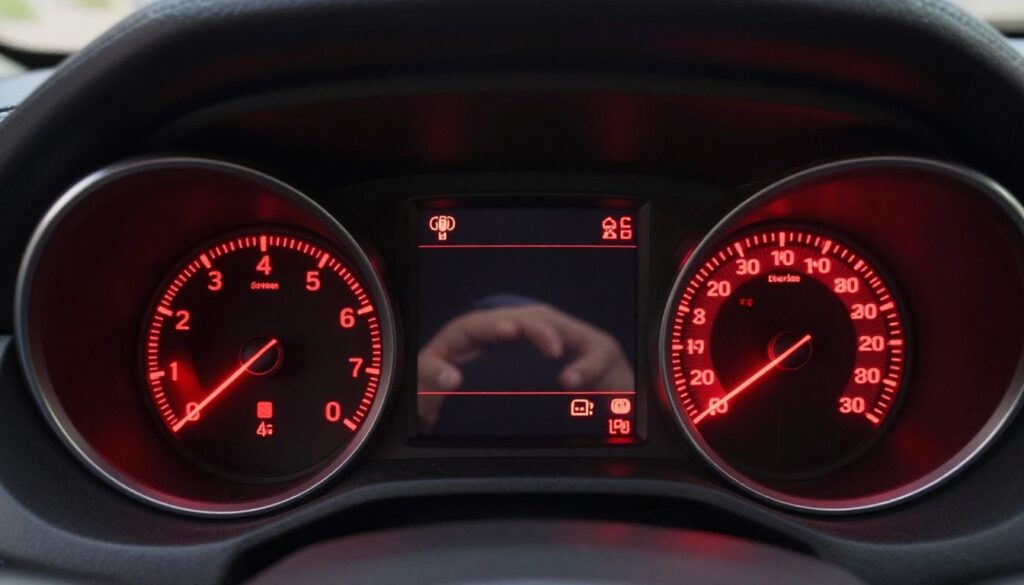
What Does a Red Light Indicate?
In the car world, red warning lights mean danger or serious problems. They tell you to stop the car as soon as it’s safe. These lights are not just suggestions; they are urgent messages that something important is going wrong. If you ignore them, what might be a small problem could become a big, expensive one that leaves you stuck.
Always pull over in a safe spot when you see a red light. Driving with a red light on can damage your engine or brakes. If you’re not sure what a light means, check your owner’s manual. Safety is always the most important thing.
Common Red Dashboard Lights
Most cars have similar red lights. Knowing what these red dashboard lights mean helps you stay safe. If you want to know how cars perform in safety tests, check out the crash test results for affordable cars. This shows how well cars protect drivers.
Here are some common red lights you might see:
- Brake System Warning: Means there might be a problem with your brake fluid or parking brake.
- Engine Temperature Warning: Tells you your engine is too hot and needs to cool down fast.
- Oil Pressure Warning: Warns that your engine isn’t getting enough oil, which could cause it to fail.
- Battery Charge Warning: Alerts you that your car’s charging system isn’t working right.
Brake System Warning
Vehicle safety is all about having a working braking system. It’s the most critical safety feature, helping us control speed and prevent crashes. So, any brake-related warning lights need our full attention right away.
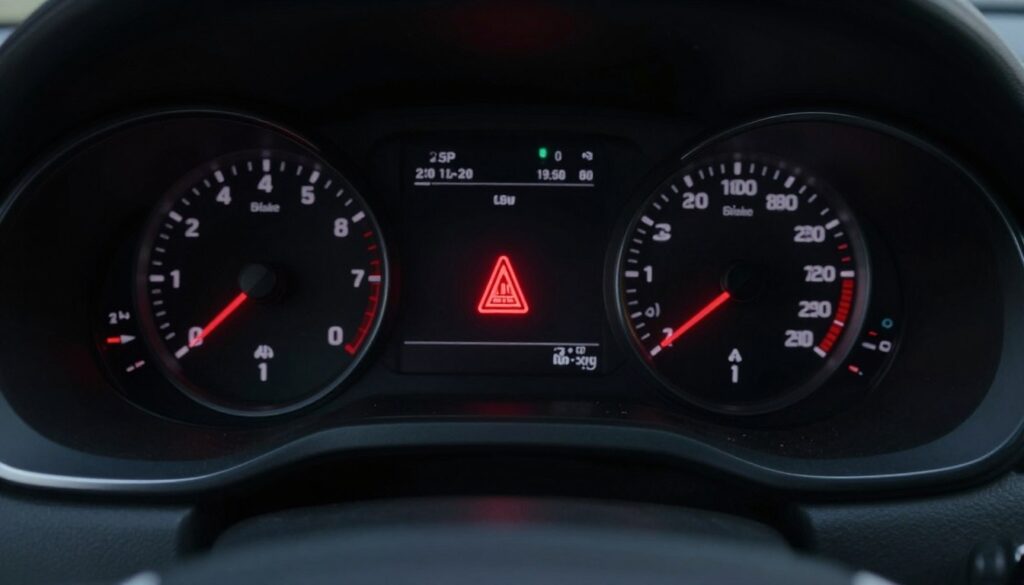
Identifying Brake System Lights
Modern cars use a special symbol to warn us of brake problems. This symbol is usually “BRAKE” in red or a circle with an exclamation point. If this light is on while driving, it means there’s a serious issue.
It’s important to know the difference between the brake light and the ABS light. The brake light warns of hydraulic problems, while the ABS light indicates a fault in the anti-lock braking system. Ignoring these warnings can cause a loss of stopping power.
“The braking system is the primary line of defense between a driver and an accident; never underestimate the importance of a dashboard warning light.”
What to Do If You See This Light
If the light comes on, stay calm and check the situation. First, make sure the parking brake is off. If it’s not, that’s why the light is on. If the parking brake is off and the light stays on, you need to take action.
Check the brake fluid levels under the hood. Low fluid means a leak or worn-out brake pads. If the brake pedal feels soft or spongy or if stopping takes longer, pull over and get help right away.
| Symptom | Potential Cause | Recommended Action |
|---|---|---|
| Light stays on | Low brake fluid | Check reservoir levels |
| Soft brake pedal | Air in lines or leak | Seek professional repair |
| ABS light active | Sensor or pump failure | Diagnostic scan required |
Engine Temperature Warning
When your car overheats, every second is critical. The cooling system is key to your car’s life. Ignoring warnings can cause serious damage.
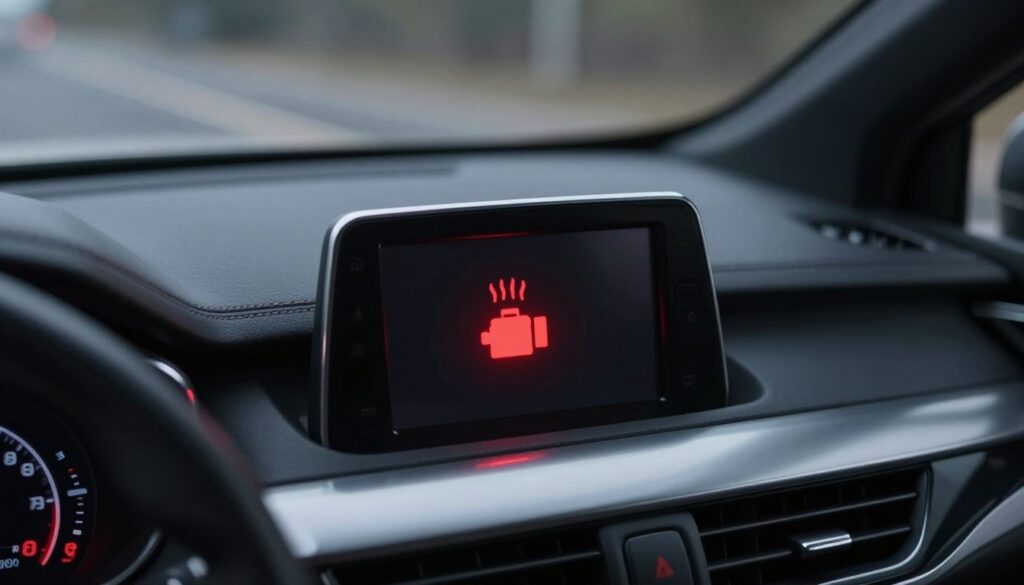
Recognizing the Engine Temperature Light
The engine temperature warning light looks like a thermometer symbol in liquid waves. It turns bright red when the coolant gets too hot. This light means your engine can’t cool itself down.
You might see the temperature gauge needle move towards the “H” or red zone. Never think the light is just a minor issue. It’s always better to treat it as a serious problem to avoid major damage.
Immediate Actions to Take
If the coolant temperature light comes on while driving, pull over to a safe spot right away. Driving further can damage the engine or head gasket. This damage can’t be fixed and might void your warranty.
After stopping safely, follow these steps:
- Turn off the engine immediately to stop heat buildup.
- Keep the ignition on if you need to use the heater. It helps cool the engine.
- Wait at least 30 minutes for the engine to cool down before opening the hood.
- Do not remove the radiator cap while the engine is hot. Steam can cause burns.
After the engine cools, check the coolant levels if you’re comfortable. If levels are low, you might add coolant. But, a pro should check for leaks. If the light stays on or the engine keeps overheating, call for roadside help to protect your car.
Oil Pressure Warning
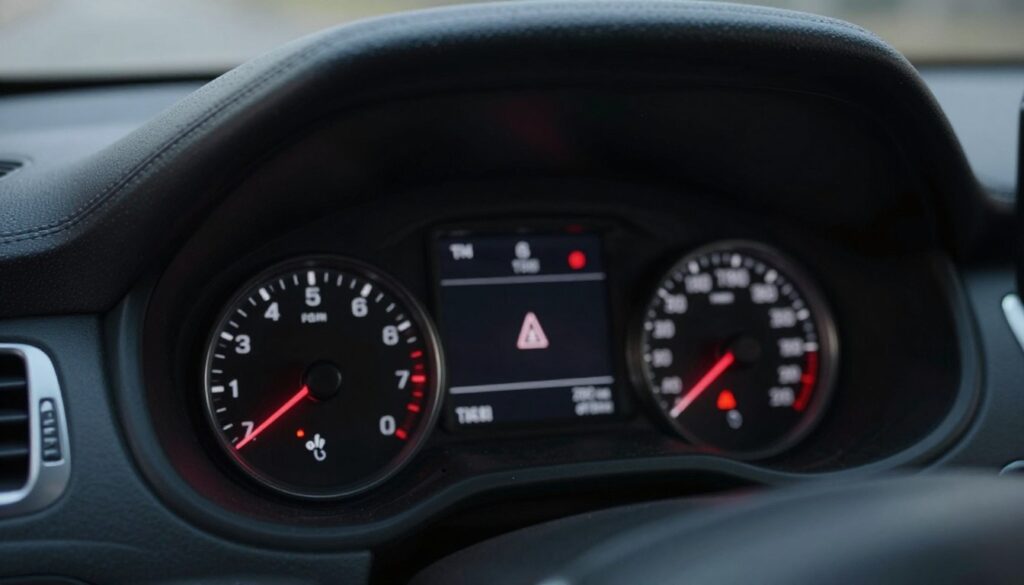
The oil pressure light is a key car dashboard indicator for engine health. Oil keeps your engine running smoothly by reducing friction. If this light comes on, it’s a serious warning that your engine might not have enough lubrication.
Understanding Oil Pressure Indicator
The oil pressure light looks like a red oil can icon. It checks the oil system’s pressure, not just the oil level. If the pressure gets too low, the light turns on to protect your engine.
Low oil, a bad oil pump, or a clogged oil filter can cause this warning. For more info, check our guide on what do the various oil light warnings mean. Ignoring it can damage your engine badly.
Steps to Address Oil Pressure Issues
If the light comes on while driving, pull over and turn off the engine. After it cools, check the oil level with the dipstick. If it’s low, adding oil might fix it, but watch your car closely.
If the oil is fine but the light stays on, don’t drive it anymore. You need a mechanic to check the oil pump and sensors. Taking car dashboard indicators seriously helps keep your engine running well for a long time.
| Condition | Immediate Action | Urgency Level |
|---|---|---|
| Light Flashes Briefly | Check oil level at next stop | Moderate |
| Light Stays Solid Red | Stop engine immediately | Critical |
| Light Flickers at Idle | Inspect oil pump/sensor | High |
Battery Warning Light
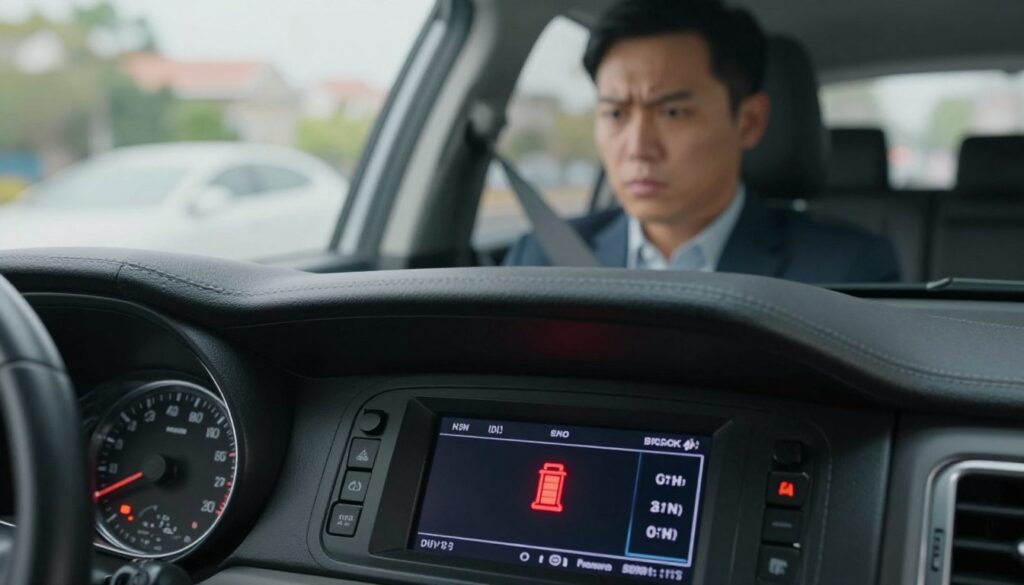
The battery warning light is a big alert for your car’s electrical health. It usually means there’s a problem with the charging system, not just a dead battery. Often, a faulty alternator or a loose drive belt is the cause. These issues stop the system from charging properly when the engine is running.
Signs of Battery Problems
Electrical issues can show up before your car stops working. Look out for dimming headlights or interior lights. Also, if your air conditioning is weaker or power windows slow, it’s a sign of trouble.
These signs mean your car’s electrical parts aren’t getting enough power. If you see these lights, it’s important to know what to do when dashboard lights flash. Ignoring them can leave you stranded.
What to Check When This Light Flashes
If the battery light comes on while driving, save power first. Turn off things like the radio, seat heaters, and climate control. This helps the battery last longer, giving you time to get to a safe place or a service center.
After pulling over safely, check the engine bay if it’s safe. Look for a loose or broken serpentine belt. If the belt looks fine, the problem might be with the alternator or battery connections. Either way, getting a professional to check it is key to keeping your car running right.
Tire Pressure Monitoring System (TPMS)
The Tire Pressure Monitoring System is like a silent guardian. It alerts us to dangers before they become serious. It keeps an eye on our tire air levels, ensuring we stay connected to the road.
Importance of Tire Pressure Monitoring
Keeping tires properly inflated is key for safety and performance. Underinflated tires can hurt our fuel efficiency and make driving harder. They can also cause problems during sharp turns or emergency stops.
The system watches for both quick and slow leaks. It warns us early, helping avoid risks like blowouts or uneven wear. Being proactive with tire care extends their life and keeps our vehicle running well.
“Maintaining correct tire pressure is not just about fuel economy; it is a fundamental pillar of automotive safety that protects every passenger on the road.”
Action Steps When the TPMS Light Appears
If we see the TPMS light on our dashboard, we must act fast. Quick action prevents damage and keeps our vehicle safe.
Here’s what to do:
- Check the pressure: Use a good tire pressure gauge to check each tire, including the spare.
- Refill to specifications: Inflate tires to the recommended PSI, found on a sticker inside the driver’s side door jamb.
- Reset the system: Some cars need a manual reset through the dashboard menu after inflation.
- Inspect for damage: If the light doesn’t go off, look for visible damage or slow leaks that need fixing.
If the light stays on even after checking the pressure, there might be a sensor problem. In this case, a certified technician should check and fix the issue.
Safety Features and Alerts
We count on our car’s safety systems a lot. But knowing what the car dashboard alerts mean is key for safe driving. Today’s cars have smart sensors to watch our surroundings. They help us avoid crashes and stay in our lane.
When these systems talk to us, they use special icons. These icons can change color to show if everything is working right.
Advanced Driver Assistance Systems (ADAS) Lights
Systems like Lane Keep Assist and Forward Collision Alert give us feedback as we drive. A green light means everything is good. But if it turns to amber or yellow, it might mean the system is not working right or needs our attention.
“The integration of advanced safety technology is not meant to replace the driver, but to act as a vigilant co-pilot that enhances our awareness on the road.”
It’s important to know that these car dashboard alerts can be set off by things like heavy rain or blocked sensors. You can learn more about how these dashboard warning lights work. This helps you get ready for any unexpected changes.
What to Do When ADAS Lights Flash
If you see an ADAS light flashing or staying on in a weird color, don’t worry. First, check if the feature is turned off by mistake. If it’s not, try cleaning the sensors. Dirt or ice can block their view.
Here’s a table that shows what the lights usually mean:
| Indicator Light | Color Meaning | Recommended Action |
|---|---|---|
| Lane Keep Assist | Green: Active | Monitor road position |
| Forward Collision | Amber: Blocked | Clean front sensors |
| Adaptive Cruise | White: Standby | Engage system manually |
| System Fault | Red: Error | Visit a service center |
If the car dashboard alerts keep flashing after you try to fix it, get help from a pro. Keeping these systems in check makes sure your car stays safe on the road.
Conclusion: Staying Safe on the Road
Watching our vehicle’s instrument panel is key to avoiding sudden breakdowns. It keeps our car and everyone in it safe. Every dashboard light is a message from our car, telling us something important.
Not paying attention to these lights can lead to costly fixes or even danger on the road. Regular check-ups at places like Firestone or Jiffy Lube help keep our cars running well. These experts have the tools to understand complex error codes.
It’s smart to keep your owner’s manual handy. Knowing what your car’s lights mean helps you make quick, smart choices. Taking care of our cars means a smoother, safer drive for a long time.
Let’s share our stories about dashboard alerts. This helps everyone on the road. Let’s all stay alert and keep our vehicles in top shape every time we drive.
FAQ
What should I do if my red warning lights start flashing while I’m driving on the highway?
If red lights flash, it’s an emergency. Signal, move to the shoulder, and turn off the engine. Red lights often mean a serious problem that could cause engine failure or a fire.
Why is my dashboard light guide showing a yellow light instead of a red one?
Yellow lights are cautionary. They mean a system needs checking soon. Unlike red lights, you can usually keep driving but should not delay the check.
Can cold weather trigger the Tire Pressure Monitoring System (TPMS) indicator?
Yes, cold weather can drop tire pressure enough to trigger the TPMS. Check tire pressure on cold mornings and inflate to the recommended PSI for optimal fuel efficiency.
What does it mean when dashboard lights flash and the car won’t start?
This often means a failing battery or poor electrical connection. If lights flicker, there’s not enough voltage. Check the battery terminals for corrosion or use a jump-starter.
Are all car dashboard alerts the same across different brands like BMW or Ford?
While many symbols are standardized, some brands have unique ones. But the color-coding is always the same: Red for danger, yellow/amber for caution, and green/blue for status.
Is it safe to drive with the oil pressure light on if I just added oil?
No. If the light stays on after adding oil, there’s a mechanical failure. Stop the engine to avoid damage that could require a new engine.

Hello! I’m Moheen Iftikhar, the founder of «CarMotivei». I’m dedicated to covering modern automotive trends, new car technologies, and useful driving insights to keep car lovers updated and motivated. Here, you’ll find detailed car reviews, expert automotive content, and helpful tips for drivers and enthusiasts alike.