



Radiator Leak Repair Options and How to Use Coolant Stop Leak
Seeing a puddle under your car can be very stressful. Cooling system failures can really mess up your day. There are many radiator leak repair options out there, but picking the right one depends on your car’s needs.
Many people use chemical additives to fix leaks quickly. Learning how to use coolant stop leak can help avoid overheating. But remember, these additives are only temporary fixes, not long-term solutions.
These special formulas work by sealing small cracks from the inside of your car. Proper application helps keep your car running while you get it checked. Using these products gives you time, but fixing the real problem is key for your car’s health.
Key Takeaways
- Cooling system failures often require immediate attention to prevent engine damage.
- Chemical additives offer a temporary fix for minor cracks and pinhole openings.
- Always follow manufacturer instructions when applying sealing agents to your system.
- Stop leak products are not a substitute for thorough mechanical maintenance.
- Monitoring your temperature gauge remains vital after applying any temporary chemical solution.
Understanding Radiator Leaks: Causes and Symptoms
We often overlook the cooling system until a puddle appears under the car. A working radiator keeps your engine cool. If it fails, a radiator leak sealant might fix small problems before they get worse.
Common Causes of Radiator Leaks
Radiators face high pressure and temperature changes every drive. Over time, corrosion from old or dirty coolant can damage the metal. This leads to small leaks.
Things outside the car can also cause problems. Road debris can hit the radiator, and engine vibrations can loosen parts. These issues often lead to leaks that need quick fixing.
Warning Signs of a Radiator Leak
Spotting a leak early can prevent a breakdown. Look for green, orange, or pink puddles under your car. A sweet, syrupy smell from the engine bay also means antifreeze is leaking.
Watch your dashboard temperature gauge during drives. If it goes into the red, your cooling system is failing. While a good radiator leak sealant can fix small leaks, constant overheating means a bigger problem.
When to Seek Professional Help
Not all cooling problems can be fixed at home. If you see big cracks in the radiator or the engine starts smoking, call a certified technician right away. Driving with a big leak can damage your engine beyond repair.
| Leak Severity | Primary Symptom | Recommended Action |
|---|---|---|
| Minor | Small damp spots | Monitor or use sealant |
| Moderate | Visible puddles | Professional inspection |
| Severe | Steam or overheating | Immediate towing |
If you’re not sure about the leak, get a professional’s help. Safety is our priority. A technician can check if a radiator leak sealant will work or if you need a new radiator.
Temporary Fixes for Radiator Leaks
Dealing with a radiator leak on the road can be stressful. But, some DIY fixes might not be the best solution. They can even cause more damage. The radiator works under high pressure and heat, making most home fixes useless.
Duct Tape: A Quick Solution?
Many think duct tape can fix a radiator leak. But, it’s not that simple. The tape can’t handle the engine’s heat. When the engine warms up, the tape will melt or fall off, making the leak worse.
Using tape is not a good long-term fix. It might work for a short time while the car is stopped. But, it will fail when you start driving. We advise against it because it’s not safe and can leave you stranded.
“The cooling system is a pressurized environment designed for specific tolerances; introducing foreign materials like tape or improper sealants often compromises the entire cooling loop.”
Epoxy Patches: Pros and Cons
Epoxy patches seem like a better option than tape. They harden to seal small leaks. But, they have their own set of problems.
Getting the radiator surface ready for epoxy is hard. It needs to be clean and free of coolant. Also, the radiator expands and contracts with heat and cold. This can cause the epoxy to crack or peel off over time.
| Method | Durability | Risk Level | Recommended Use |
|---|---|---|---|
| Duct Tape | Very Low | High | None |
| Epoxy Patch | Moderate | Medium | Emergency Only |
| Professional Repair | High | Low | Permanent |
These quick fixes are only meant to get you to a repair shop. A proper repair is safer and more reliable. Trying to fix it yourself for too long can lead to expensive engine problems.
Long-term Repair Options for Radiator Leaks
Fixing a leak that keeps coming back needs more than just a quick fix. Temporary solutions don’t solve the real problem of damage. It’s important to find radiator leak repair options that keep your car’s cooling system working well for a long time.
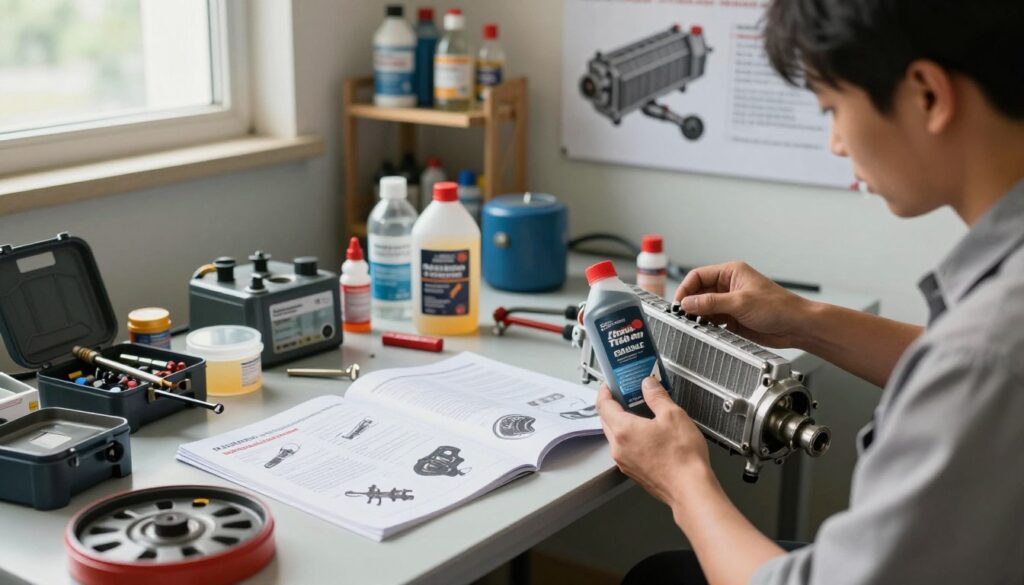
Replacing a Radiator: When It’s Necessary
Big cracks in the plastic or metal corrosion mean you might need a new radiator. Not fixing it can cause your engine to overheat, which is much harder and more expensive to fix than just replacing the radiator.
Choosing to replace the radiator keeps your engine cool. This way, you avoid sudden breakdowns. If you’re dealing with other cooling problems, check out AC blowing warm air troubleshooting for your car’s climate system.
Professional Repair Services vs. DIY
Choosing between DIY radiator repair and a pro depends on your skills and tools. Pros use special tools to find and fix leaks, which is hard to do at home. While you can fix some leaks yourself, complex jobs need a pro’s precision to avoid more problems.
“A well-maintained cooling system is the heartbeat of a reliable engine; never underestimate the value of professional diagnostics when dealing with persistent leaks.”
Here’s a table showing the main differences between fixing it yourself and getting a pro:
| Feature | DIY Repair | Professional Service |
|---|---|---|
| Diagnostic Tools | Basic visual inspection | Advanced pressure testing |
| Cost | Lower upfront expense | Higher labor costs |
| Reliability | Variable based on skill | Guaranteed performance |
| Time Required | Often time-consuming | Efficient and fast |
Choosing professional care means your car is in good hands. DIY fixes are great for small problems, but for lasting solutions, a mechanic’s skill is needed to make sure everything is fixed right.
Using Coolant Stop Leak: Introduction and Benefits
Many drivers face a problem when their radiator leaks. But, modern chemistry has a solution. We use radiator leak products to fix leaks until we can get a permanent repair. These additives go through your cooling system, finding and sealing small leaks before they get worse.
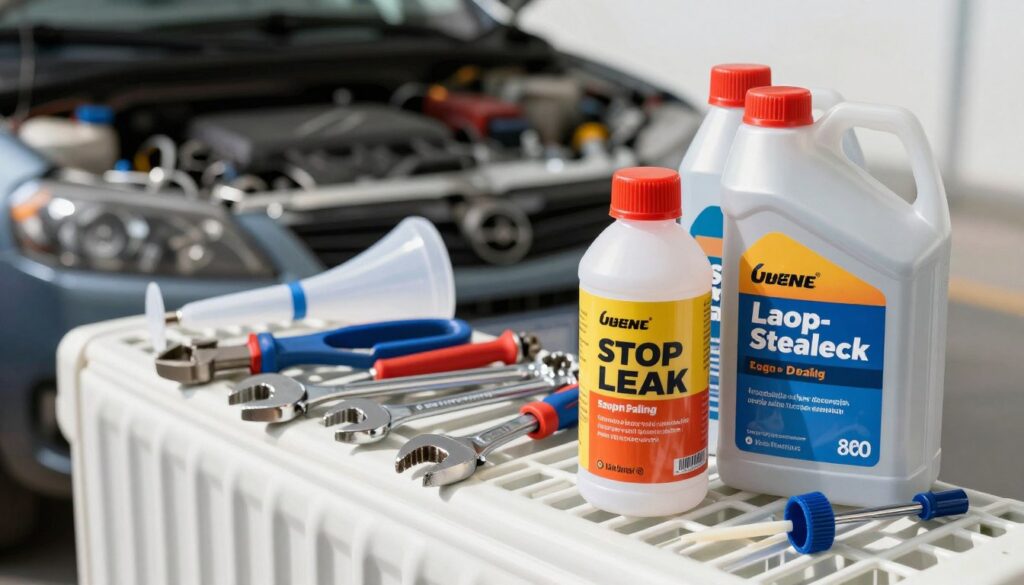
What Is Coolant Stop Leak?
Coolant stop leak is a special mix with particles like ceramic fibers. It hardens when it meets air. When a leak happens, the mix gets pushed into the hole. Then, it reacts with air to form a durable, heat-resistant seal.
This method works well for small leaks in the radiator or heater core. It’s not a permanent fix, but it’s a good temporary solution. If your car leaks water when the air conditioner is on, check if it’s really a coolant leak.
Benefits of Using Coolant Stop Leak
The main benefit of these radiator leak products is how convenient they are in an emergency. They let you safely get to a repair shop without overheating your engine. Plus, many formulas also help keep rubber seals and hoses from getting brittle.
These products also have corrosion inhibitors. They protect the metal inside your cooling system from rust and scale. This keeps your water pump and other parts working longer.
| Feature | Standard Sealant | Premium Additive |
|---|---|---|
| Sealing Speed | Fast | Moderate |
| Corrosion Protection | Basic | Advanced |
| Seal Conditioning | None | Included |
| Best Use Case | Emergency | Preventative |
How to Choose the Right Coolant Stop Leak Product
Finding the best radiator sealant means knowing what your car needs. Cooling systems differ across car models, so picking the right product is key. If your car smells like burning rubber, check out our guide on car smells like burning rubber. Make sure the problem is just with the cooling system.
Evaluating Different Brands
Looking at radiator leak products, we focus on brands known for quality. These brands offer reliable formulas that won’t clog your car’s heater or radiator. Always check the label to make sure it’s safe for your coolant type.
“Quality is never an accident; it is always the result of high intention, sincere effort, intelligent direction and skillful execution.”
Key Ingredients to Look For
The right radiator leak sealant has special ingredients. Look for organic fibers or ceramic compounds. These create a strong seal even under pressure. Avoid products with heavy metallic flakes, as they can block cooling parts.
When choosing, think about these points:
- Compatibility: Make sure it works with your antifreeze.
- Sealant Type: Pick between liquid or pellets based on the leak size.
- Safety: Choose non-corrosive ingredients to protect your car’s parts.
Step-by-Step Guide to Using Coolant Stop Leak
Wondering how to use coolant stop leak? This guide will show you the key steps for a good repair. Getting a reliable seal needs patience and following the product label’s instructions.
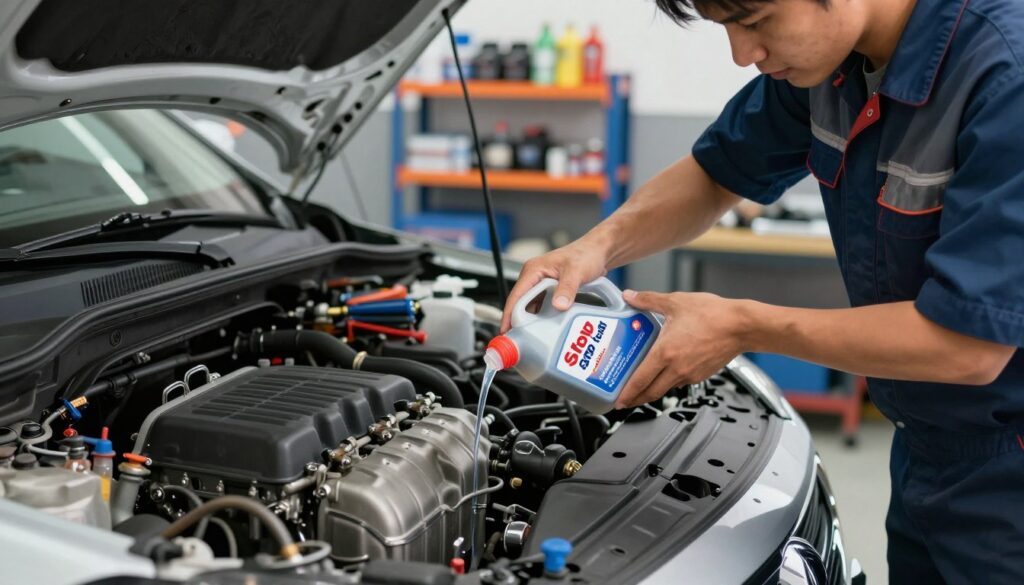
Preparing Your Vehicle for Repair
First, park your vehicle on a level surface and let the engine cool down completely. Never open the radiator cap when the engine is hot. This can cause severe burns.
After the engine cools, check the coolant levels. Make sure there’s enough space to add the sealant. If the reservoir is full, you might need to drain some coolant first.
Application Instructions
Using coolant stop leak right means more than just pouring it in. Follow these steps for the best results:
- Shake the bottle well to mix the ingredients.
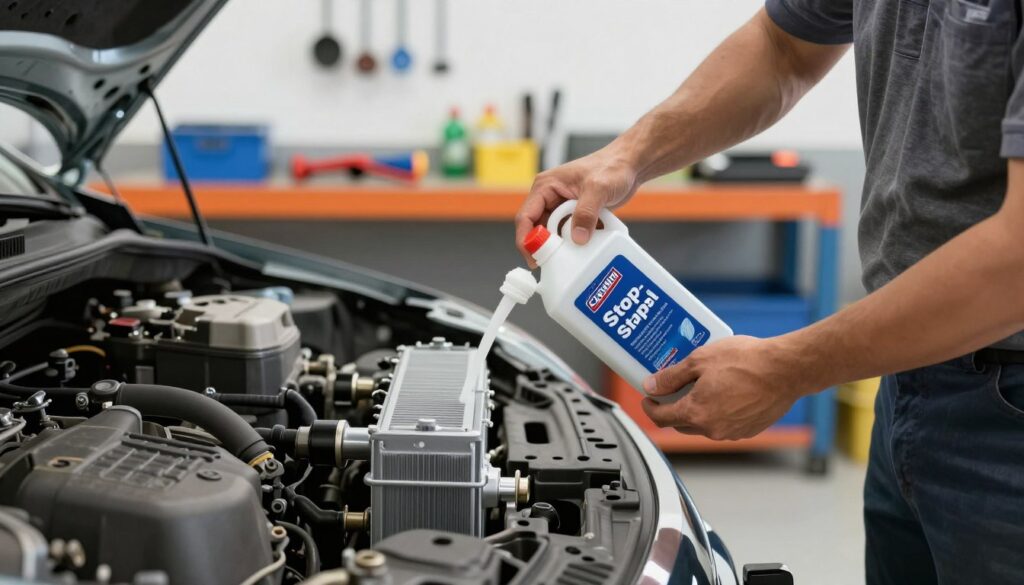
- Pour the sealant into the radiator or overflow reservoir, as your vehicle needs.
- Put the radiator cap back on to keep the system pressurized.
- Start the engine and turn the heater to max to circulate the coolant.
- Let the engine idle for 15 to 20 minutes to cover all leak points.
What to Do After Application
After applying, watch your vehicle closely for a few days. Keep an eye on the temperature gauge to stay within the normal range.
Look under your vehicle for drips or puddles. If the leak doesn’t stop, you might need to apply again or see a mechanic. Knowing how to use coolant stop leak is useful, but always think about your cooling system’s long-term health.
Tips for Preventing Future Radiator Leaks
Keeping your car in top shape starts with regular maintenance. Instead of waiting for a leak, take steps to prevent it. This approach saves you time and money in the long run.
Regular Maintenance Checks
Check your cooling system twice a year. Look for buildup or wet spots on your radiator. These signs often mean a slow leak.
Also, check your rubber hoses for damage. Tightening loose clamps can stop small leaks from getting worse. If unsure, learn more about preventing radiator leaks from experts.
Importance of Quality Coolant
Using the right coolant is key to your radiator’s life. Cheap or wrong coolants can cause corrosion inside the radiator.
Quality coolant stops rust and scale. It keeps your cooling system’s pH balanced. Always use the coolant your car’s maker recommends. Regular changes keep your system clean and efficient, reducing leak worries.
Understanding the Limits of Coolant Stop Leak
Even the best radiator sealant can’t fix all vehicle damage. These products work well for small leaks but aren’t a replacement for regular car maintenance. Chemical fixes are just temporary solutions, not lasting repairs.
When It’s Not Appropriate
Sealants aren’t right for big cracks or radiator core failures. Using them too much can clog your heater core or block coolant flow. This can lead to engine overheating, causing more damage than the leak itself.
Don’t use sealants if your cooling system is corroded or filled with sludge. It will only make things worse. If your water pump or thermostat is failing, get a professional radiator repair to keep your car safe.
Signs You Need a Professional Repair
Some signs mean you need more than a sealant. If you’re constantly refilling coolant, the leak is too big. Also, if your temperature gauge goes into the red, your cooling system needs a check-up.
Seeing puddles under your car or smelling coolant inside means your cooling system is failing. Relying on the best radiator sealant in these cases is risky and could break your engine.
| Issue Type | Sealant Effectiveness | Recommended Action |
|---|---|---|
| Small Pinhole Leak | High | Monitor Regularly |
| Large Crack/Split | None | Professional Replacement |
| Heater Core Clog | Negative | System Flush/Repair |
| Overheating Engine | Low | Immediate Inspection |
Cost Considerations for Radiator Repairs
Knowing the real cost of fixing a radiator leak fix helps you make better choices. When your cooling system breaks, it can be a big shock. Being ready for the cost can help you avoid financial stress.
Looking at your options early can save you a lot of money. By comparing the cost of parts now to the risk of future problems, you can keep your car running without spending too much.
Budgeting for Impromptu Repairs
Car repairs can surprise you, so it’s smart to have an emergency fund for your car. A quick-fix product is cheap but only a temporary fix.
Choosing to fix your radiator yourself means you’ll need to buy sealant, coolant, and spend your time. These are cheap, but they don’t fix big problems like broken hoses or corroded fins.
Comparing DIY vs. Professional Costs
Choosing between fixing it yourself or taking it to a shop depends on the cost and how long it lasts. For more info on coolant leak repair costs, check out this link to see what a professional might charge for your car.
| Repair Method | Estimated Cost | Labor Involved | Longevity |
|---|---|---|---|
| Stop Leak Additive | Low ($10-$30) | Minimal | Temporary |
| DIY Part Replacement | Moderate ($100-$300) | High | Permanent |
| Professional Shop Repair | High ($400+) | None | Permanent |
A DIY radiator repair might seem cheap at first, but pros often offer warranties. This gives you peace of mind. For older cars, a professional radiator leak fix is usually the best choice to avoid future problems.
Assessing the Health of Your Vehicle’s Cooling System
Understanding your cooling system is key to avoiding breakdowns. Many drivers only check the radiator, but the whole system must work together. Knowing how each part works is essential for finding the right coolant leak repair options.
Essential Components of the Cooling System
Your car needs several important parts to keep it cool. If any of these parts fail, it can harm the radiator. This might lead to leaks or even a complete system failure.
- Water Pump: This acts as the system’s heart, moving coolant through the engine.
- Thermostat: It controls the coolant flow based on engine temperature for better performance.
- Cooling Hoses: These hoses carry coolant between the engine and radiator.
- Radiator Fan: This fan pulls air through the radiator to cool it when the car is stopped.
Identifying Other Possible Problems
What seems like a simple radiator issue might be a sign of a bigger problem. Spotting these signs early helps you choose the right coolant leak repair options before damage gets worse.
Watch for these signs of system trouble:
- Discolored Coolant: If the coolant looks dark or murky, it could mean corrosion or a failing water pump.
- Pressure Loss: A bad radiator cap can’t keep pressure, causing the system to overflow.
- Unusual Noises: A whining sound from the engine’s front often means a failing water pump bearing.
Regular checks on these parts help keep your engine healthy and prevent sudden failures. Always look at the whole system when picking coolant leak repair options for a lasting solution.
When to Replace Your Radiator
Knowing when to stop patching and start replacing is key for car owners. Minor leaks can be fixed with temporary solutions. But, there are times when the radiator’s structure is too damaged to fix. Spotting these moments early can prevent engine failure and avoid expensive breakdowns.
Signs Your Radiator is Beyond Repair
Big cracks or damage to the plastic tanks or metal core mean it’s time for a new radiator. If coolant keeps leaking under your car, despite fixes, it’s a sign of internal pressure. Persistent leaks that come back after repairs show the material is too weak to seal.
Corrosion or sludge buildup that blocks cooling fins is another warning sign. When the core is clogged, it can’t cool the engine properly. If your temperature gauge often goes into the red, it’s time for a new radiator to protect your engine.
Choosing the Right Replacement Radiator
Choosing the right replacement part is vital for your car’s performance. We suggest going for Original Equipment Manufacturer (OEM) parts whenever you can. They are made to fit your cooling system perfectly, ensuring a good fit and proper connections.
If you pick an aftermarket radiator, look for high-quality materials like aluminum or reinforced plastic. Make sure it has a solid warranty. A reliable replacement today means a better driving experience for years ahead.
Conclusion: Making Informed Choices for Radiator Repair
Managing your vehicle’s cooling system is a balance. You need to think about quick fixes and long-term solutions. We suggest you consider the pros and cons of each to keep your engine running well.
Summary of Repair Strategies
There are many ways to deal with cooling system failures. Commercial sealants or emergency fixes, like those in this guide on how to stop radiator leaks, offer quick relief. But, they are only temporary solutions. Knowing their limits helps you avoid relying on them too long.
Prioritizing Vehicle Safety
Your safety on the road depends on a good cooling system. We recommend regular checks with a skilled mechanic to catch problems early. Learning how to stop radiator leaks helps with small issues, but a pro is best for long-term care. Keep up with maintenance to make sure your car is always ready for the road.
FAQ
What are the most effective radiator leak repair options available for modern vehicles?
The best radiator leak repair options vary based on the damage’s severity. For small leaks or cracks, products like Bar’s Leaks Liquid Aluminum or K-Seal work well. But for bigger issues or a blown head gasket, professional repairs or replacement are needed to keep your engine safe.
Can you explain how to use coolant stop leak safely and effectively?
Using coolant stop leak safely is key. Always start with a cold engine and never open the radiator cap when it’s hot. Pour the sealant into the radiator or expansion tank as the product says. Then, run the engine for 15 to 30 minutes with the heater on to seal the leak.
What should I look for when choosing the best radiator sealant for my car?
Look for a sealant that matches your car’s coolant type, like OAT or HOAT. Choose products with microfibers or particles that harden at the leak site. This ensures the sealant works without clogging your heater core or cooling passages.
Is a chemical radiator leak fix a permanent solution for my cooling system?
Chemical radiator leak fixes are semi-permanent and can last many miles. They’re great for stopping leaks and getting you to a service station safely. But they can’t fix major corrosion or a split tank. They’re a good temporary fix until a pro can check your car.
How can I tell if my vehicle requires a DIY radiator repair or professional help?
Watch for signs like a sweet smell or puddles of green or orange fluid. For small drips or slow leaks, a DIY fix might work. But white smoke or a rising temperature gauge means you need a pro to check your system.
Are there any risks involved in using radiator leak products incorrectly?
Yes, using too much or dirty products can harm your cooling system. Always follow the instructions for brands like BlueDevil or Steel Seal. If your system is dirty, get a pro to flush it first to ensure the sealant works right.
What are the long-term cost benefits of professional coolant leak repair options?
Professional repairs might cost more upfront, but they’re better for your engine in the long run. They find and fix the real problem, like a failing water pump. This avoids the high cost of an engine rebuild from sudden overheating.
Can I use household items like duct tape or epoxy as a DIY radiator repair?
Some try J-B Weld or epoxy for leaks, but they’re not the best fix. They can fail fast due to the system’s high pressure and temperature. Instead, use dedicated radiator leak products that are made for the job.

Hello! I’m Moheen Iftikhar, the founder of «CarMotivei». I’m dedicated to covering modern automotive trends, new car technologies, and useful driving insights to keep car lovers updated and motivated. Here, you’ll find detailed car reviews, expert automotive content, and helpful tips for drivers and enthusiasts alike.