



Winter Driving Safety Tips for Heavy Snow and Black Ice
Did you know that nearly one in four weather-related vehicle crashes are caused by frozen precipitation? When temperatures plummet, our roads transform into unpredictable environments that demand our full attention.
Understanding winter driving safety tips for heavy snow and black ice is not just a recommendation; it is a vital necessity. We must prepare our vehicles to handle these harsh conditions before we even leave our driveways.
If you notice any dashboard lights mean what to do when they flash, you should pull over immediately to assess the situation. Proactive maintenance ensures that we remain in control when the weather turns against us. By acknowledging these risks, we can navigate freezing surfaces with confidence and arrive at our destinations without incident.
Key Takeaways
- Nearly 25% of weather-related accidents involve frozen road conditions.
- Preparation is the most effective way to mitigate risks during the colder months.
- Always monitor your dashboard for urgent warnings that require immediate action.
- Proper tire pressure is essential for maintaining traction on slippery surfaces.
- Clean your vehicle sensors regularly to ensure driver assistance systems function correctly.
Understanding the Dangers of Winter Driving
Nearly one in four weather-related vehicle crashes are caused by snow, slush, and ice. When we head out during the colder months, we must recognize that winter weather creates unpredictable and dangerous driving conditions. This makes it hard to control our vehicle. Adopting a defensive mindset is the first step in mastering winter driving safety tips for heavy snow and black ice.
Heavy Snow: Impact on Visibility and Control
Heavy snow often obscures our vision and creates deep slush on the pavement. This makes it hard to maintain traction and steering precision. When we are driving in winter conditions, the weight of the snow can also hide lane markings and road signs. This makes navigation much more difficult.
Black Ice: Hidden Hazards on the Road
Black ice is one of the most dangerous threats because it is nearly invisible to the naked eye. It forms a thin, transparent layer that makes the road surface look like wet asphalt. Because we cannot easily spot this hazard, we must always assume that shaded areas or bridges might be slippery.
| Hazard Type | Primary Risk | Visibility Level | Control Impact |
|---|---|---|---|
| Heavy Snow | Reduced Traction | Low | High |
| Slush | Hydroplaning | Moderate | Moderate |
| Black Ice | Loss of Grip | Very Low | Extreme |
By staying aware of these specific threats, we can adjust our behavior to mitigate the risk of accidents. Understanding these hazards allows us to remain calm and focused while driving in winter conditions. Prioritizing safety ensures that we reach our destinations without incident, even when the weather turns severe.
Preparing Our Vehicles for Winter Conditions
Winter puts extra demands on our vehicles. It’s key to prepare them well to stay safe. By following these tips for safe winter driving, we can avoid getting stuck in the cold.
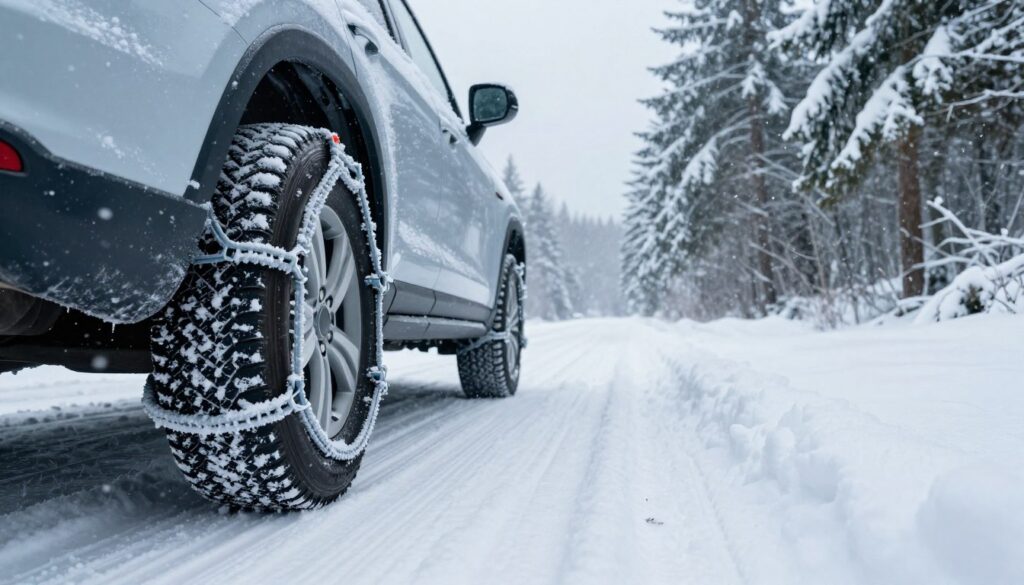
Essential Winter Maintenance Checks
First, we should check our vehicle’s important systems before snow falls. Make sure windshield wipers work and gas tanks are half full. If we hear odd sounds, look up an engine noise identification chart to fix problems early.
Also, we need a winter survival kit in our trunk. It should have an ice scraper, a strong snow shovel, and sand or salt for better grip. These tools help us handle driving in winter conditions safely.
Choosing the Right Tires
Tires are our only contact with the road in winter. We should use snow tires, which stay soft in cold. They give us better grip on ice than regular tires.
| Preparation Item | Primary Benefit | Frequency |
|---|---|---|
| Snow Tires | Enhanced Traction | Seasonal |
| Ice Scraper | Visibility | Daily |
| Road Salt/Sand | Emergency Grip | As Needed |
| Fuel Level | System Reliability | Every Trip |
By choosing the right gear, we boost our safety. Being ready lets us drive through winter with confidence and control.
Driving Techniques for Heavy Snow
Learning to control our vehicles in snow is key to a safe snow driving safety guide. When snow covers the roads, we need to change how we drive. This helps us avoid accidents in bad weather.
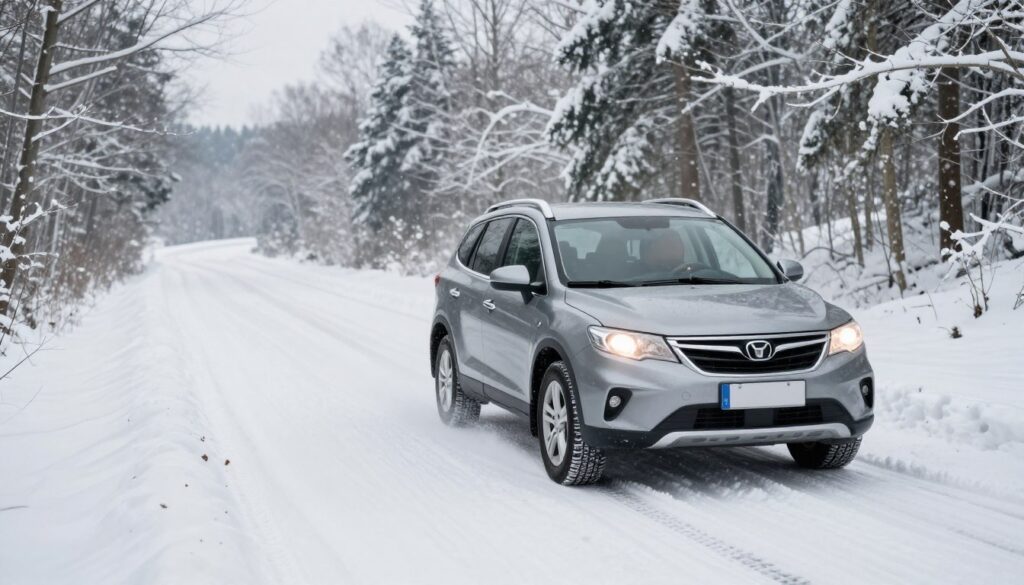
Maintaining a Safe Speed
Speed limits are for clear roads, not snowy ones. Driving fast in a blizzard is risky. We should drive slower to stay safe.
Driving slower gives us time to see and react to dangers. This keeps our car stable. For more info on car safety, check crash test results for affordable cars.
Using Smooth Steering and Braking
Smooth steering and braking are key to not losing traction. Sudden actions can make us skid. Slow and steady movements help us control our car better.
The table below shows how to drive differently in snow compared to dry roads.
| Action | Dry Road Technique | Heavy Snow Technique |
|---|---|---|
| Speed | Follow posted limits | Significantly reduced |
| Steering | Standard responsiveness | Slow and deliberate |
| Braking | Firm and direct | Gentle and gradual |
| Following Distance | 3-second rule | 8 to 10 seconds |
Staying calm and focused is important. Avoiding sudden actions keeps our car stable. These tips are key for safe winter driving.
Navigating Black Ice Safely
Winter driving can be tricky, with black ice being a big danger. This ice is thin and looks like water or shiny pavement. It’s important to know how to handle it to stay safe.
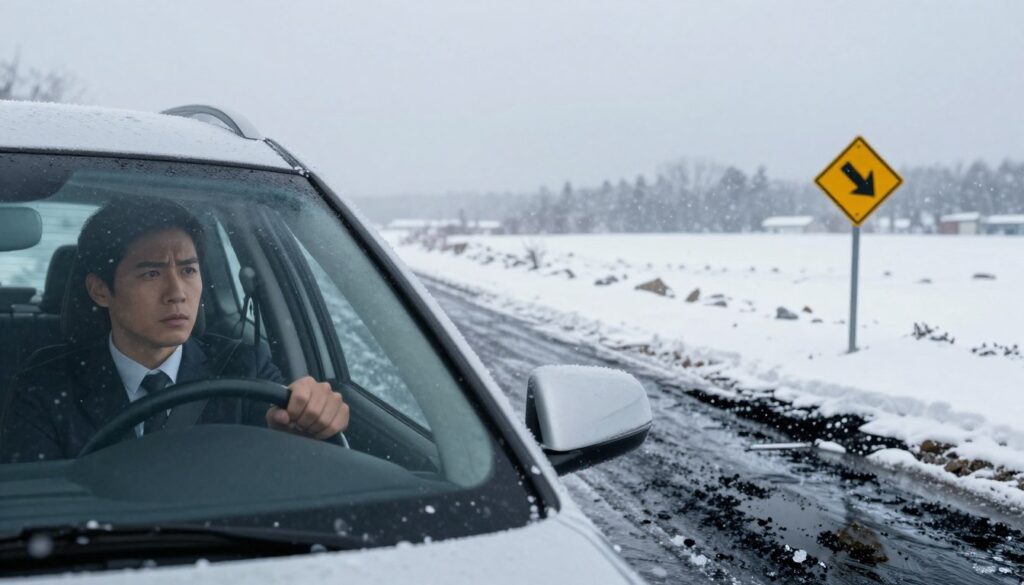
Identifying Black Ice Locations
Be careful in cold spots, like bridges and overpasses. Cold air makes ice form faster here. Also, watch out for shaded areas where the sun can’t melt ice.
If the road looks dark and wet, it might be icy. Always check the road ahead for signs of ice. Make sure your car has good safety features, like infant car seats with the best ratings, to keep your kids safe.
Correct Responses to Skidding
If your car starts to slide, don’t hit the brakes hard. Instead, take your foot off the gas or brake slowly. Try to steer in the direction of the slide to get back on track.
When your tires catch again, slowly straighten the wheel. Don’t overcorrect, as it can make things worse. Drive carefully to reach your destination safely.
| Road Condition | Visual Indicator | Recommended Action |
|---|---|---|
| Black Ice | Shiny, dark, wet look | Ease off pedals, steer into skid |
| Packed Snow | White, dull surface | Increase following distance |
| Slush | Gray, watery texture | Maintain steady speed |
Emergency Preparedness for Winter Driving
When it gets cold, knowing how to handle emergencies is as important as driving skills. We often focus on how to drive in icy conditions. But we also need to be ready for being stranded in remote areas. Being prepared today keeps us safe if something unexpected happens on our trip.
Assembling a Winter Emergency Kit
Always have a detailed emergency kit in your trunk for breakdowns. This kit is our lifeline during severe weather when help might be slow to arrive.
- Warmth: Pack heavy blankets, extra gloves, and thermal hats for everyone.
- Visibility: Include a high-powered flashlight with extra batteries to signal for help.
- Sustenance: Keep non-perishable snacks and bottled water ready.
If we get stuck in a snowbank, staying safe means staying in the car. Always make sure the exhaust pipe is clear of snow to avoid carbon monoxide poisoning. Run the car heater for just 10 minutes every hour to save fuel and stay warm.
Staying Informed with Weather Updates
Today’s technology lets us track weather changes in real-time. This is key for making smart travel choices. Always check local forecasts before you leave to see if it’s safer to wait.
“Preparation is the best defense against the unpredictable nature of winter storms.”
By following these winter road safety tips, we can drive with more confidence. Use reliable apps and radio alerts to avoid dangerous roads and stay ahead of storms. For more tips on staying safe in the cold, check out our winter road safety tips to get ready for any challenge.
The Importance of Keeping Distance
Keeping a safe distance from other cars is key to staying safe in winter storms. When roads are icy or snowy, our tires slip more easily. This makes stopping much harder. By following winter road safety tips, we can manage these risks better.
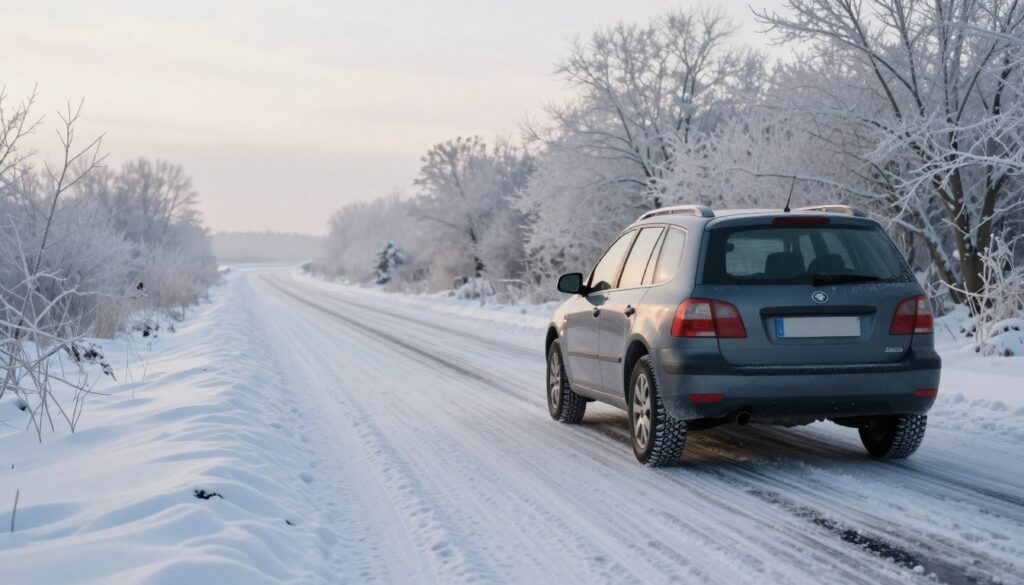
Establishing Safe Following Distances
Normally, we keep a two-second gap from the car in front. But in winter, we need much more space. We should aim to keep at least three times the normal following distance to stop safely.
“Safety is not just about the car you drive, but the space you create around it.”
This extra space is a safety net. It gives us time to react if the car ahead stops suddenly or hits black ice. Keeping this distance shows we value caution over speed.
Avoiding Sudden Movements
When roads are slippery, smooth actions are essential. Sudden braking or steering can make our car slide. These snowy road driving tips remind us to make all actions slow and careful.
To slow down, apply the brakes gently and early. Avoiding sudden moves keeps our car stable and easy to predict. This helps us avoid startling others and stay safe on tough roads.
Utilizing Technology to Enhance Safety
Today’s cars come with advanced features that help us control our vehicles better on slippery roads. These systems offer a safety layer, but they don’t replace the need for cautious and attentive driving. By using modern tech and black ice safety precautions, we can stay safer on the road.
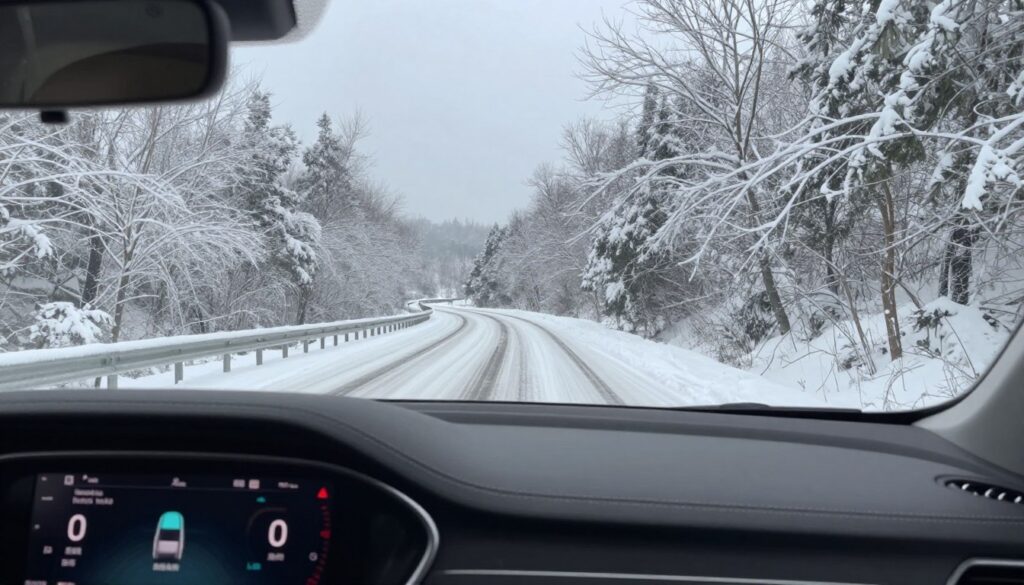
GPS and Navigation Aids in Winter
We can use GPS and navigation tools to find safer routes during bad weather. Many apps give updates on road closures and accidents, which helps with snowy road driving tips. Planning our route ahead helps us avoid areas with poor visibility or heavy snow.
Traction Control and Other Features
Modern cars have tools to improve our safety on snowy and icy roads. Traction control and anti-lock brakes help us keep control during tough drives. These systems watch wheel speed and adjust power to prevent skidding.
Even with these features, we must stay alert for black ice safety. Relying only on tech can make us feel too secure. Always drive defensively. By following these snowy road driving tips, we can reach our destination safely, no matter the weather.
Community Resources for Winter Safety
Using shared community resources is a smart move to stay safe during winter. These tools help us follow safe winter driving strategies to protect ourselves and others. Local knowledge makes navigating tough weather easier.
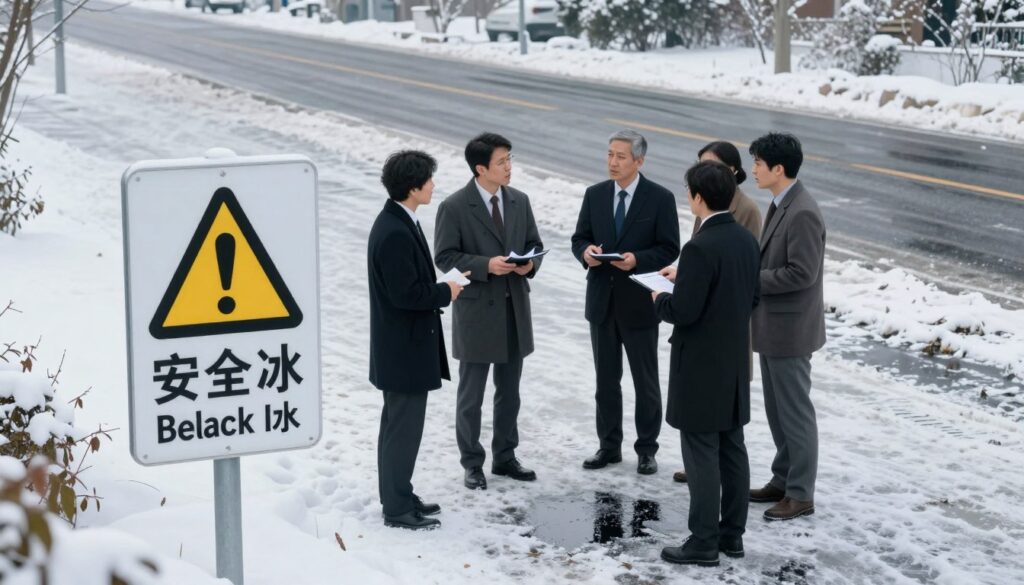
Local Road Condition Reports
Knowing the current road conditions is key for winter travel. State transportation departments, like DriveTexas, offer updates on highways. Checking these reports helps us plan our trips and steer clear of danger zones.
Many states have mobile apps or text alerts for updates. These tools give us instant news on accidents, roadwork, or bad weather. Using them keeps us informed and safe from unexpected road issues.
Winter Driving Workshops and Classes
Hands-on experience is the best way to learn about driving in snow. Local groups and driving schools offer workshops on black ice safety precautions. These sessions let us practice driving in a safe setting.
Attending these classes helps us develop the skills needed for emergencies. Instructors give us feedback to improve our driving. This investment makes us better prepared for winter driving.
| Resource Type | Primary Benefit | Accessibility |
|---|---|---|
| DOT Road Reports | Real-time hazard alerts | High (Web/App) |
| Driving Workshops | Hands-on skill building | Medium (Scheduled) |
| Community Forums | Local traffic updates | High (Social Media) |
After the Storm: Post-Driving Safety
Our dedication to road safety doesn’t stop when we park. We must stay alert to keep our cars ready for the next trip.
It’s important to check our vehicles for damage from ice or hidden debris. Looking at lights, bumpers, and tires helps keep our cars in good shape. By following these safe winter driving strategies, we fight against harsh weather.
Assessing Vehicle Integrity
Heavy snow and ice can hide damage to our cars. We clean out frozen slush from wheel wells and sensors to avoid mechanical problems. This simple step keeps our vehicles running well in the cold months.
Reporting Road Hazards
We help keep our community safe by reporting dangerous roads. If we see downed power lines, deep potholes, or severe ice, we call the authorities right away. By doing this, we help everyone stay safe on the roads.
What are the most effective driving in winter conditions strategies for commuters?
Slow down, increase following distances to at least three times the normal length, and use high-quality winter tires like Goodyear UltraGrip.
Do you have a snow driving safety guide for beginners?
Our guide emphasizes the “triple-S” rule: keep it Slow, keep it Smooth, and keep your Space. Avoid sudden movements and clear all windows of snow before driving.
What are your top tips for safe winter driving on mountain passes?
Carry tire chains, keep a full tank of Shell gasoline to prevent freeze-ups, and check the National Weather Service reports before entering pass zones.
Can you explain how to drive in icy conditions if the car starts to slide?
Look and steer where you want the car to go. Do not panic-brake; ease off the accelerator and let the tires regain friction naturally.
What are the essential winter road safety tips for long-distance travel?
Share your itinerary with a friend, carry a Readywise emergency food kit, and use Waze to stay updated on road closures and plow locations.
Are there specific snowy road driving tips for front-wheel-drive vehicles?
Yes, avoid stopping on uphills if possible. Maintain steady momentum and use a light touch on the throttle to prevent spinning and losing steering.
What black ice safety precautions should we take during early morning hours?
Treat any “wet” looking patch on a bridge or overpass as ice. Even if it’s 35°F, the road may be frozen, so approach shaded areas with caution.
What are the most reliable safe winter driving strategies for night driving?
Keep your headlights clean to avoid reduced visibility. Use low beams in heavy snow and keep a Black Diamond headlamp in your glovebox for emergencies.

Hello! I’m Moheen Iftikhar, the founder of «CarMotivei». I’m dedicated to covering modern automotive trends, new car technologies, and useful driving insights to keep car lovers updated and motivated. Here, you’ll find detailed car reviews, expert automotive content, and helpful tips for drivers and enthusiasts alike.