



Hydroplaning Prevention Tips When Driving Fast in Heavy Rain
Driving in the rain requires heightened awareness and careful control. When water builds up on the road, your tires might slip, causing a loss of traction. This situation can be scary for anyone driving.
We aim to give you the key to stay stable in bad weather. By learning how to prevent hydroplaning, you can greatly reduce your chance of accidents. Being prepared is the best way to handle unexpected road conditions.
Staying safe means knowing how your car handles the road. We’ll explain how traction loss happens and give you tips to stay safe. Let’s see how you can stay in control, even when the weather is against you.
Key Takeaways
- Understand the physics behind why vehicles lose traction on wet surfaces.
- Maintain proper tire pressure to ensure optimal water displacement.
- Reduce your speed significantly to allow tires to maintain road contact.
- Avoid sudden braking or sharp steering maneuvers during storms.
- Keep a safe following distance to allow for longer stopping times.
Understanding Hydroplaning and Its Causes
We often take for granted the grip our tires provide until we encounter a slick, water-covered surface. When rain falls, the road can quickly transform into a dangerous hazard for any driver. Learning how to prevent hydroplaning on wet roads is essential for maintaining control during severe weather events.
What is Hydroplaning?
Hydroplaning occurs when a layer of water builds up between your tires and the road surface. This separation prevents the rubber from making direct contact with the pavement, leading to a complete loss of steering and braking control. Your vehicle begins to glide on top of the water instead of rolling through it.
This phenomenon is frightening because it happens in an instant. Even a small amount of standing water can trigger this loss of traction. If you are interested in broader safety measures, you can also review our winter driving safety tips for heavy snow and black to prepare for other seasonal challenges.
Factors That Contribute to Hydroplaning
Several variables influence whether your vehicle will maintain its grip or begin to slide. The weight of your car plays a significant role, as lighter vehicles are often more susceptible to being lifted by water. The type of road surface and the quality of local drainage systems also determine how quickly water pools on the asphalt.
Roads that are poorly maintained or have deep ruts are prime locations for water accumulation. By understanding these environmental factors, we can better anticipate dangerous spots. This knowledge is a critical component of avoiding hydroplaning in fast driving scenarios where reaction time is limited.
The Role of Speed and Water Depth
The relationship between your velocity and the depth of the water is the most important factor in maintaining traction. As you increase your speed, your tires have less time to displace the water beneath them. When the water depth exceeds the depth of your tire treads, the risk of losing contact with the road increases exponentially.
We must remain vigilant about our pace when the rain begins to fall. By avoiding hydroplaning in fast driving, we ensure that our vehicle remains responsive to our inputs. Mastering these techniques is the best way to learn how to prevent hydroplaning on wet roads and arrive at our destination safely.
Preparing Your Vehicle for Rainy Conditions
We think that keeping your car in good shape is key to safe driving in the rain. When it starts raining, your car’s condition can really affect your safety. Making sure your tires are ready for rain is a must before the weather gets worse.

Importance of Tire Maintenance
Your tires are the only thing touching the road. They need to push water away to keep you from sliding. Keeping your tires in good shape is essential for staying safe on wet roads.
Checking Tire Pressure and Tread
It’s important to check your tires often, making sure they’re ready for rain. The tread should be at least 2/32nd of an inch deep. If it’s too thin, your tires can’t push water away, which is dangerous.
Also, keeping your tires at the right pressure is important. If they’re too low, they can’t clear water well. Always check your owner’s manual for the right pressure.
Ensuring Wiper Blades Are Functional
Being able to see clearly is as important as staying on the road. If your wiper blades leave streaks or chatter, they’re not working right. It’s a good idea to replace them every year.
While you’re checking your wipers, look for other car problems too. For example, if you see water under your car when the AC is on, it’s probably just condensation. But it’s always good to keep an eye on your car’s health. Taking these small steps can help you stay safe and confident while driving.
Driving Techniques to Avoid Hydroplaning
Specific driving habits can help you stay in control on wet roads. When it rains, how you handle the steering and pedals is key. It helps keep your vehicle stable.
Maintaining a Safe Speed
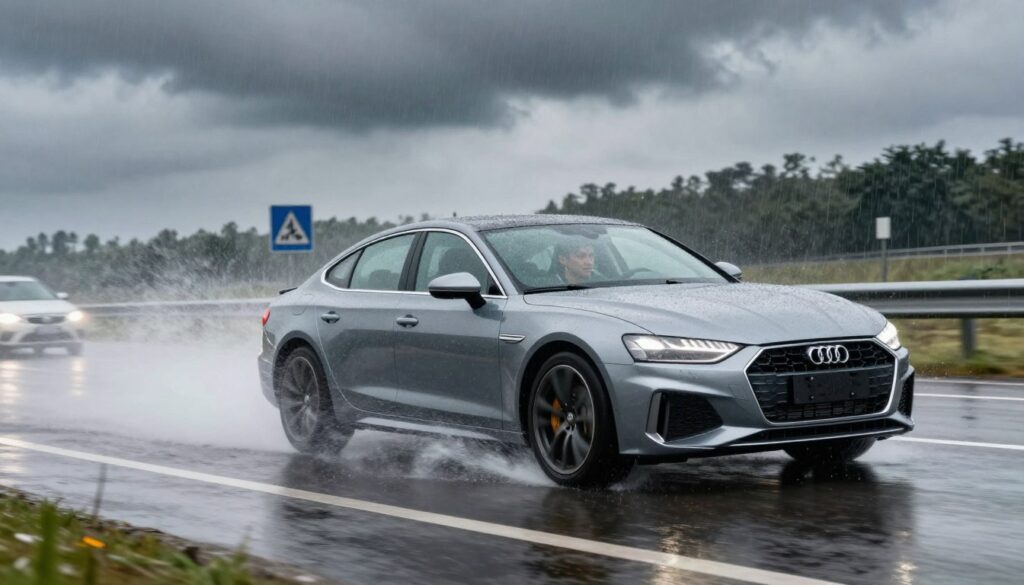
Staying safe means reducing speed in rain a lot. Studies show you’re less likely to lose control at 35 MPH or less.
Slowing down lets your tires push water away from the road. This makes it easier to handle during heavy rain.
Smooth Steering and Braking
Aggressive driving is bad on slippery roads. It’s important to avoid sudden braking in wet conditions. Sudden braking can make your wheels lock up and cause a skid.
Apply the brakes slowly and steadily. This lets your vehicle move smoothly, keeping all tires on the road.
Avoiding Sudden Movements
Quick steering can break your tires’ grip on the road. Smooth, steady movements help you avoid hydroplaning in fast driving situations.
Plan your turns early to avoid sharp corrections. A calm and steady approach is key for safe driving in bad weather.
Identifying Bad Weather Conditions
Being able to read the road during a storm is key to safe travel. We stress the importance of situational awareness in our driving tips for rainy weather. Staying alert helps you spot hazards before they affect your vehicle’s stability.
Recognizing Heavy Rain Indicators
Heavy rain often comes with early signs that many miss. Look for dark, low-hanging clouds or a sudden decrease in visibility. Weather apps are helpful, but your eyes are the best tool for spotting sudden rain changes.

Assessing Road Conditions
Most weather-related car crashes happen on wet roads. Water pooling on the asphalt means you need to take wet road safety precautions right away. If your dashboard lights flicker or show warnings, check out dashboard lights meanings and what to do when they flash.
Watch how other cars handle the road. If you see a lot of spray or cars swerving, the road is slippery. Slowing down is the best way to stay safe.
Knowing When to Avoid Driving
At times, it’s best to stay off the road. If the rain is so heavy you can’t see the lines, or if you see flooded areas, it’s safer to wait. Driving into deep water can damage your engine irreparably.
| Weather Intensity | Visibility Level | Recommended Action |
|---|---|---|
| Light Drizzle | High | Maintain normal speed |
| Moderate Rain | Moderate | Reduce speed by 10% |
| Heavy Downpour | Low | Pull over safely |
| Severe Flooding | Very Low | Avoid driving entirely |
By following these wet road safety precautions, you protect yourself and your vehicle. Always put your safety first when the weather gets bad. Using these driving tips for rainy weather will help you stay safe during storms.
The Role of Tires in Hydroplaning Prevention
Keeping your tires in good shape is key to staying safe on wet roads. Your tires are the only part of your car that touches the road. So, how well they handle water is very important.
To prevent hydroplaning, your tires need to push water away from the road. Start by choosing the right tires for your area.
Choosing the Right Tires for Rain
Look for tires with special tread patterns for wet roads. These patterns have deep grooves and sipes to move water away.
High-quality tires help you grip the road even when it’s wet. A tire with a high wet-traction rating is a good choice for rainy areas.

Benefits of All-Season vs. Summer Tires
Many people wonder about all-season vs. summer tires. All-season tires work well in many conditions, including light rain.
Summer tires are best for dry, warm weather. They might not be as good in cold, wet conditions. The right choice depends on your local weather and how often it rains.
Regular Tire Rotation and Alignment
Even the best tires won’t last if they wear unevenly. Rotate your tires every 5,000 miles to keep them even.
Also, make sure your tires are aligned right. Correct alignment helps your car stay in touch with the road. This is important for proper tire maintenance for rain.
The Importance of Maintaining a Safe Following Distance
Keeping a safe distance from other cars is key when it’s raining. When the road is wet, it takes longer to stop. So, leave more space to react to sudden stops or skidding.

Recommended Distances in Rainy Conditions
Normally, you should follow another car by two to three seconds. But in the rain, you need more space. We suggest adding at least three to four seconds or more.
This extra space is a top wet road safety precaution. It helps you stop safely if the car in front brakes hard.
How to Judge Safe Distance While Driving
Choose a fixed object like a sign or pole to check your distance. Count seconds from when the car in front passes it until you do. If you reach it in under four seconds, you’re too close.
Adjusting Following Distance in Heavy Rain
Heavy rain makes it hard to see and can cause your car to lose control. Increase your gap if you see a lot of spray or if your wipers can’t keep up. This is critical to avoid accidents in bad weather.
| Condition | Recommended Gap | Risk Level |
|---|---|---|
| Dry Pavement | 2-3 Seconds | Low |
| Light Rain | 3-4 Seconds | Moderate |
| Heavy Downpour | 5+ Seconds | High |
Utilizing Technology for Safety
Modern cars have many safety features to prevent hydroplaning. They come with advanced systems to help drivers in wet conditions. Learning safe driving techniques in heavy rain helps you use these tools well. This keeps you in control on slippery roads.
Understanding Vehicle Stability Systems
Electronic Stability Control (ESC) and Anti-lock Braking Systems (ABS) are key to car safety. They watch wheel speed and steering to spot when you might skid. If they see a skid, they adjust brakes to keep you on course.
“Technology is best when it brings people together and keeps them safe on the road.”
Features That Help Prevent Hydroplaning
Traction control systems are great in heavy rain. They stop wheel spin by cutting engine power when a tire slips. But, be careful with some automated features.
Never use cruise control in heavy rain. If your tires lose grip, cruise control can make them spin fast. This can cause your car to fishtail and lose control.
Regularly Updating Safety Technology
Your car’s tech needs regular updates to work best. Many cars get updates that improve safety sensors and algorithms. Here’s how to keep your tech up to date:
- Check for updates during service visits.
- Make sure your tire pressure monitoring system (TPMS) is right.
- Always read your owner’s manual to know how safety features work in rain.
By staying informed, your car’s safety systems will help you, not distract you. Using these safe driving tips with your car’s tech makes your commute safer.
Alternative Routes and Driving Times
Driving in heavy rain needs more than caution. It requires a smart plan to travel safely. By picking the right route and timing, we can avoid the dangers of slippery roads and poor visibility.
Planning Ahead to Avoid Heavy Rain Areas
Before you leave, check local traffic reports and flood warnings. Remember, just 12 inches of moving water can sweep a car off the road. If your usual route is flooded, find higher ground or alternate highways that are safer.
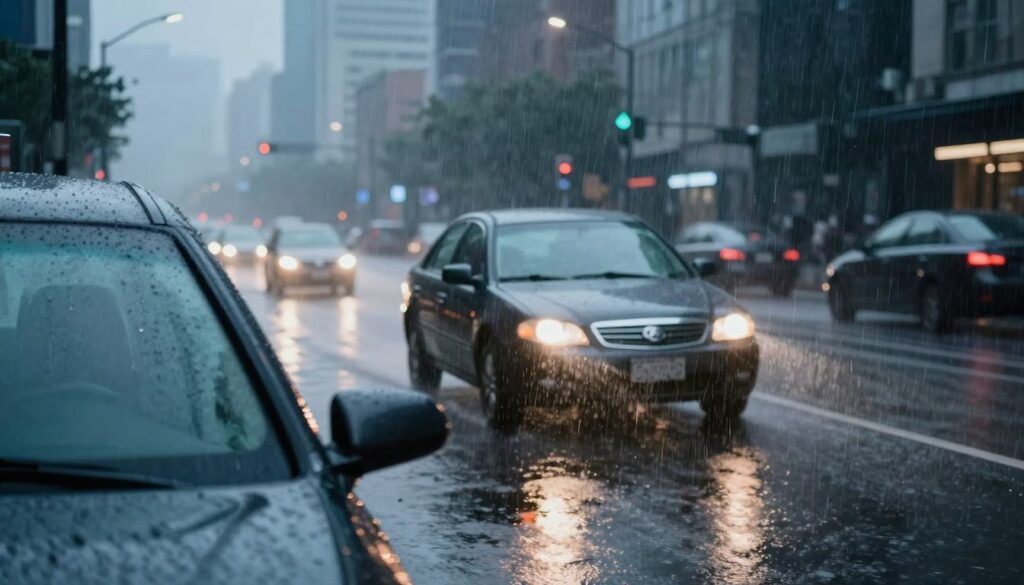
Planning ahead is key to a safe trip. If it rains unexpectedly, slow down to keep control of your car.
Timing Your Travel for Better Conditions
Being flexible is important with changing weather. Try to wait until the storm passes or the rain gets lighter. Even a short delay can greatly improve your safety.
If you must drive in the storm, stay alert. Always reduce speed in rain and watch out for hidden dangers like potholes or debris.
Using Reliable Weather Apps
Today’s technology gives us access to real-time weather data. We recommend using weather apps to track storms and rain along your route.
These apps can alert you to flash flooding and high winds. By staying updated, you can make informed decisions about when to drive, keeping everyone safer on the road.
Emergency Response If You Start to Hydroplane
If your car starts sliding on water, how you react is key to your safety. It’s natural to feel scared, but staying calm is the first step. This helps you make smart choices instead of acting out of fear.
How to React Calmly and Safely
When you lose traction, don’t overreact. If the steering feels light, don’t slam on the brakes or jerk the wheel. Sudden movements can make things worse and lead to a spin.
- Take your foot off the accelerator right away to slow down naturally.
- Look where you want to go, not at what you fear hitting.
- Breathe deeply to keep your heart rate steady and your mind clear.
Steps to Regain Control of Your Vehicle
Getting control back takes patience. Wait for your tires to touch the road again. Avoid sudden braking in wet conditions to prevent skidding further. Keep the steering wheel straight until your tires grip the road.
If you need to steer, do it smoothly. When your tires grip the road, you can slowly apply the brakes. Gradual adjustments help you stay in control.
What to Do After a Hydroplaning Incident
Even if you manage to get through it, it can be tough. Pull over to a safe spot as soon as you can. Take a few minutes to calm down before you keep driving.
After stopping, check your car to make sure everything works right. If it’s not handling well, call for roadside help. Your safety is the most important thing when driving in bad weather.
Educating Others on Hydroplaning Prevention
We think that spreading the word about road safety is key to fewer accidents. When we share what we know, we help others make safer choices. Together, we can all stay safer on wet roads.
Spreading Awareness Among Friends and Family
46% of weather-related crashes happen during rain. This shows how important it is to talk about safety with our loved ones. Telling your family to be careful in storms can save lives.
At your next family meeting, talk about tire health and slowing down in rain. Making safety a normal topic helps everyone stay safe during storms.
Sharing Safe Driving Tips on Social Media
Online platforms are great for sharing safety tips with many people. Post driving tips for rainy weather to keep your friends safe. Clear, easy-to-understand tips can help others avoid hydroplaning.
Use your social media to stress the need for a safe distance. Simple, shareable graphics or short videos can teach these important skills. By sharing, you help make the roads safer for everyone.
Encouraging Driving Courses and Workshops
Supporting formal driving education is also important. Classes and workshops offer real-world practice that books can’t match. They teach drivers how to handle slippery roads.
Look for local defensive driving programs that focus on driving tips for rainy weather. Encouraging these workshops shows you care about road safety. Advanced training keeps you and your community safe in any weather.
Conclusion: Drive Safely and Responsibly in Rain
Learning to drive in heavy rain is a mix of preparation, staying alert, and using the right techniques. We hope these tips help you drive safely on wet roads.
You now know how to avoid hydroplaning and control your car on wet roads. It’s also important to stay updated on the weather for your daily drive.
Always put safety first when driving. Safe driving practices are the best way to protect yourself and others on the road.
Share these important tips with your loved ones. Teaching others how to avoid hydroplaning makes the roads safer for everyone in the U.S.
Before you head out, check your tire pressure and tread depth. Taking care of your vehicle and driving carefully are key during rainy weather.
What are the most effective hydroplaning prevention tips when driving fast in heavy rain?
The most effective method is to reduce speed in rain. Also, turn off cruise control and ensure your vehicle has proper tire maintenance for rain to allow for maximum water displacement.
How can I identify the best driving tips for rainy weather before I hit the road?
Focus on visibility and traction. Check The Weather Channel for storm intensity and ensure your Bosch wiper blades are in perfect condition. Always remember to avoid sudden braking in wet conditions to maintain vehicle stability.
What exactly are hydroplaning prevention strategies for high-speed travel?
These strategies include maintaining a high tread depth (at least 4/32″), driving in the tracks of the vehicle ahead of you, and performing smooth steering inputs. Avoiding hydroplaning in fast driving is largely about preventing the water from building a wedge under the tire.
Are there specific wet road safety precautions I should take during a flash flood warning?
Yes. Avoid any area with standing water, as it only takes a few inches to lose control. If visibility drops significantly, it is a professional safety precaution to pull over and wait for the intensity to decrease.
What are the essential safe driving techniques in heavy rain for new drivers?
New drivers should learn to double their following distance and avoid all distractions. They should slow down and avoid puddles that typically form in the outer lanes of highways to prevent hydroplaning.
How does proper tire maintenance for rain actually stop a car from sliding?
Tires like those from Michelin or Bridgestone feature grooves designed to pump water away from the center of the tire. Without deep treads, the water has nowhere to go, which is why regular checks are a cornerstone of hydroplaning prevention strategies.

Hello! I’m Moheen Iftikhar, the founder of «CarMotivei». I’m dedicated to covering modern automotive trends, new car technologies, and useful driving insights to keep car lovers updated and motivated. Here, you’ll find detailed car reviews, expert automotive content, and helpful tips for drivers and enthusiasts alike.