



Battery drain causes how to find a parasitic draw in your car
Ever walked out to your car and it won’t start? It’s really frustrating. Modern cars need lots of power for their electronics. If they lose too much power, it’s often because of an electrical problem.
Knowing why your car’s battery drains is key to fixing it. A parasitic draw happens when something keeps using power even when the car is off. If your car won’t start, check this troubleshooting guide for a clicking starter.
We think you can find these electrical problems with the right steps. By checking each circuit, you can fix your car battery drain issues. This way, your car will start up every morning without a hitch.
Key Takeaways
- Modern vehicles naturally consume small amounts of power for memory functions and security systems.
- A persistent electrical leak occurs when a component fails to shut down properly after the engine stops.
- Systematic testing allows owners to pinpoint exactly which circuit is responsible for the power loss.
- Regular maintenance of terminals and wiring helps prevent common electrical gremlins from developing.
- Proper diagnostic tools, such as a digital multimeter, are essential for accurate troubleshooting.
Understanding the Basics of Vehicle Electrical Systems
Learning how electricity flows in your car is key to fixing problems. Knowing how power moves from the battery to different parts helps find the main cause of vehicle electrical issues.
How a Car Battery Maintains Charge
Your car battery stores energy to start the engine. When the engine is off, it powers things like the clock and radio. This is because it holds a charge.
Chemical reactions in the battery keep this charge. But, if too much power is used, the battery can’t start the engine well.
The Role of the Alternator and Voltage Regulator
When the engine is on, the alternator takes over. It turns engine energy into electrical energy. This keeps the battery charged and powers the car’s electronics.
The voltage regulator controls this process. It makes sure the alternator doesn’t overcharge the battery. This prevents damage to the car’s electronics.
Defining Parasitic Draw in Modern Vehicles
A parasitic draw happens when a part keeps using power after the car is turned off. A little power is okay to keep memory. But too much will drain the battery overnight.
We say a draw is bad if it’s more than what the maker says, usually in milliamperes. Finding this hidden drain is key to a car that starts every time.
Common Battery Drain Causes You Should Know
Many drivers face the frustration of a dead battery. But finding the source of battery drain causes is often simpler than it seems. Most power loss issues come from a few predictable culprits that we can easily inspect. By understanding these common failure points, you can save time and avoid unnecessary repair costs.
Interior Lighting and Glove Box Switches
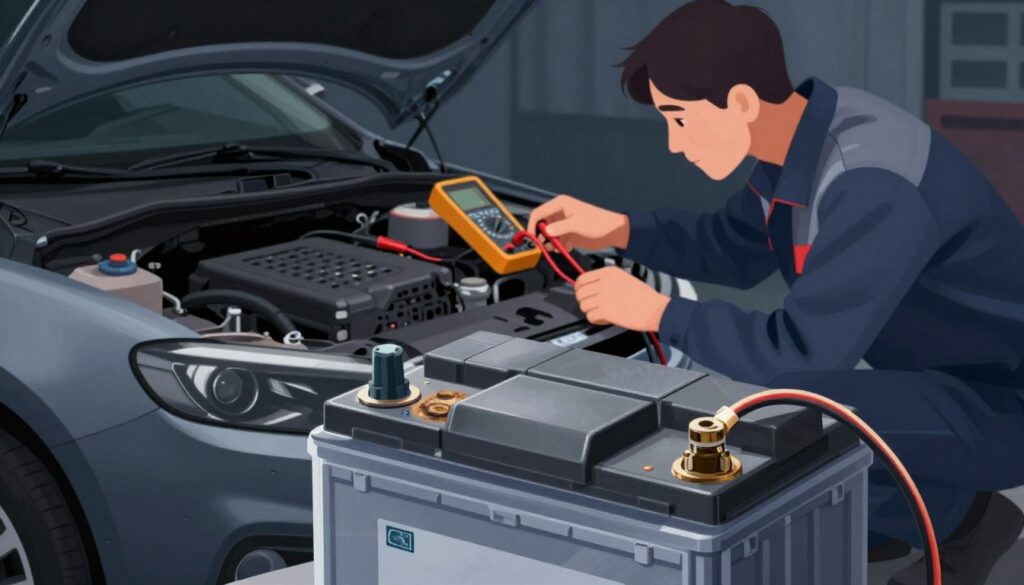
The most frequent reason for a car battery drain is often the simplest: human error. Leaving an interior dome light on or failing to close the trunk completely can deplete your battery overnight. Mechanical failures in these systems also occur frequently.
Sometimes, the switch responsible for turning off the light in your glove box or vanity mirror becomes stuck. Even if the door appears closed, the light remains illuminated, creating a slow but steady power draw. We recommend checking these areas first, as they are the most common sources of unexpected energy loss.
Aftermarket Accessories and Improper Wiring
Adding new technology to your vehicle is exciting, but poor installation is a leading factor in excessive battery drain. Aftermarket alarm systems, dash cams, and high-end audio equipment often require constant power to maintain settings or monitor surroundings. If these devices are wired incorrectly, they may never enter a low-power sleep mode.
When installing new electronics, always ensure that the power source is switched with the ignition. If you suspect your recent upgrades are causing issues, consider these common red flags:
- Exposed or frayed wiring near the fuse box.
- Devices that remain warm to the touch after the engine is off.
- Aftermarket components that were spliced into “always-on” circuits.
Faulty Relays and Stuck Solenoids
Beyond human error and accessories, internal mechanical failures can also lead to power loss. A relay that is stuck in the “closed” position will continue to send electricity to a component even when the ignition is off. This is common with fuel pump or cooling fan relays.
Also, a failing starter solenoid can create a persistent draw that prevents your engine from turning over. If you notice a clicking sound when trying to start your vehicle, you may want to review our troubleshooting checklist for a clicking starter to determine if the issue is isolated to the starting system. Addressing these faulty components promptly is essential to maintaining the longevity of your electrical system.
Preparing Your Workspace and Safety Equipment
Creating a safe and organized space is key to fixing car battery drain. Make sure your car is parked on a flat surface with the engine off and key out. A clean, bright area helps avoid accidents and keeps small parts in order.
Essential Tools for Electrical Diagnostics
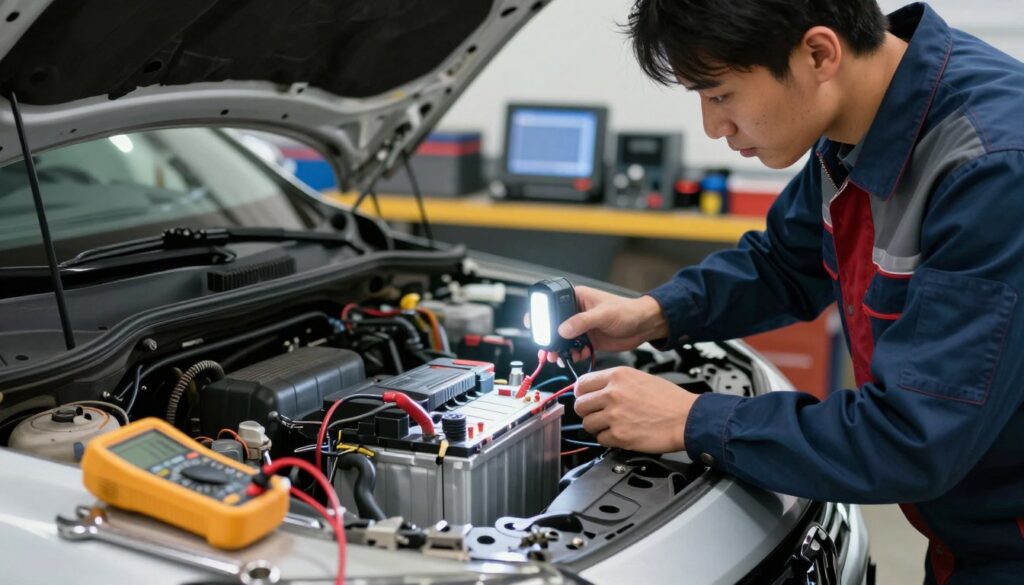
You’ll need a digital multimeter to test low current. Also, have insulated screwdrivers, a flashlight, and alligator clips ready. These tools help you connect wires without straining your hands.
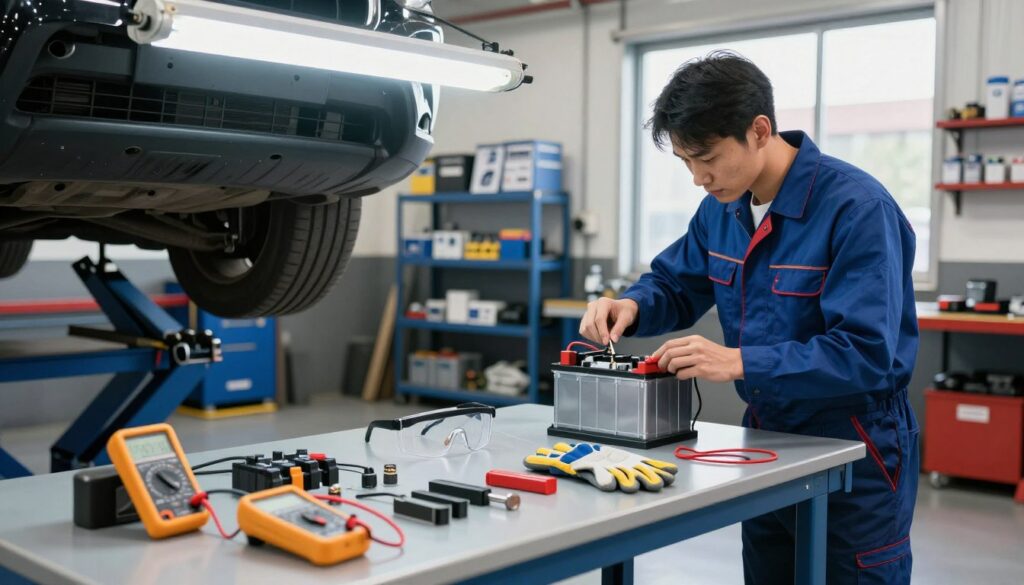
The right tools make finding battery drain easier. Precision is key when working with car electronics. Make sure your multimeter fuses are good before you start to get accurate readings.
Safety Precautions When Working with Lead-Acid Batteries
Lead-acid batteries can release dangerous gas. Always wear safety glasses and gloves to protect against splashes or sparks. Work in a place with good air flow to avoid harmful fumes.
“Safety is not just a rule; it is the foundation upon which all successful mechanical work is built.”
Don’t use metal tools near battery terminals to avoid short circuits. Such incidents can cause burns or damage your car’s electrical system. Always disconnect the negative terminal first for safety when making repairs.
Setting Up Your Multimeter for Current Measurement
Setting up your multimeter right is important to avoid damage. Move the red lead to the high-amperage port, usually marked 10A or 20A. Set the dial to DC Amps to measure small currents.
If you’re not sure about the current, start with the highest range. Then, adjust to a more precise setting if needed. This careful method helps you diagnose battery drain safely and protects your tools.
Battery drain causes how to find a parasitic draw in your car
Understanding how your car uses power when off is key. Many struggle with battery drain causes due to complex systems. A structured testing process can help find the source of electrical issues.
The Importance of the Sleep Mode Delay
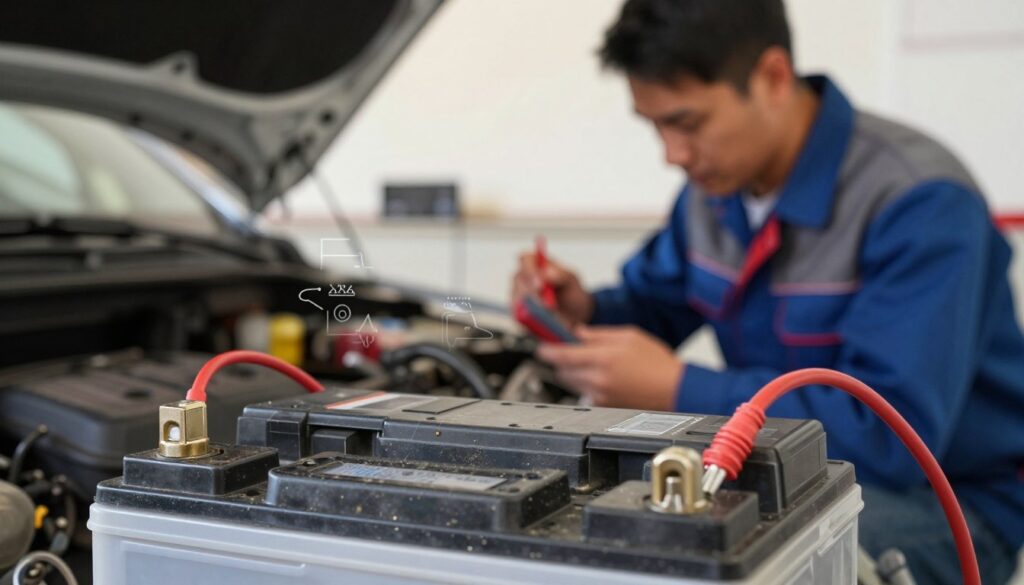
Modern cars have control modules that stay active after the engine is off. These systems do self-checks and security functions before entering sleep mode. Trying to measure current too soon will give a false reading.
Wait 30 to 60 minutes after turning off the car and locking it. This lets all computers power down. Then, you can find a true parasitic draw without interference.
Isolating the Circuitry for Accurate Testing
Once in sleep mode, isolate the electrical path for accurate current measurement. Connect your multimeter in series with the battery terminal. Learn more about dashboard lights meanings and what to do when they flash to prepare your vehicle for testing.
Follow these steps for a stable connection:
- Set the multimeter to the highest amperage setting initially.
- Disconnect the negative battery cable carefully.
- Place the multimeter leads between the battery post and the disconnected cable.
- Avoid breaking the connection to prevent waking up the vehicle’s computers.
Interpreting Multimeter Readings for Normal vs Abnormal Draw
After a stable connection, observe the multimeter reading. Most modern cars have a normal standby current draw of 20 to 50 milliamperes. A reading higher than this indicates excessive battery drain and needs further investigation.
Use the table below to categorize your findings:
| Reading Range | Status | Action Required |
|---|---|---|
| 0 – 50 mA | Normal | No action needed |
| 50 – 100 mA | Borderline | Monitor for 24 hours |
| Above 100 mA | Abnormal | Begin fuse isolation |
If your reading stays high, you’ve confirmed an electrical leak. Consistency is key in these tests to avoid misidentifying a healthy system as faulty.
Performing the Initial Voltage Drop Test
Looking for a hidden power drain? Voltage drop testing is a precise way to find it, unlike pulling fuses. It’s key for diagnosing battery drain in today’s cars. Removing fuses can cause error codes or reset important memory.

Testing Across Fuses Without Removal
To check battery drain, measure the millivolt drop across each fuse’s top. Most car fuses have metal tabs for this. Use your multimeter on the lowest DC millivolt scale to see current flow without breaking the circuit.
If a fuse shows zero millivolts, that circuit is off. But, any voltage drop means current is flowing. This helps you find which systems are on when they shouldn’t be.
Identifying High-Resistance Circuits
Found a circuit with a voltage drop? Check if it’s normal or too high. A high-resistance circuit might mean corroded connections or a failing component. Compare your results to a fuse voltage drop chart to see if it’s too much.
This method lets you check battery drain safely. It keeps your radio presets and engine data safe. Make sure your probes touch the fuse terminals well for accurate readings.
When to Use a Clamp Meter for Non-Invasive Testing
For diagnosing battery drain, a low-amp inductive clamp meter is often better. It measures the magnetic field around a wire, so you can watch current without touching the battery or fuses. It’s great for checking heavy cables that power main blocks.
Use a clamp meter for big shorts or faulty alternator diodes. It shows the current draw in real-time. This helps confirm if your fixes worked. It’s a key tool for complex, computer-heavy electrical work.
Systematic Fuse Pulling Techniques
Looking through your fuse panel is the best way to find a parasitic draw. When you need to check battery drain, this method helps you find the problem quickly. It lets you see which part is using power when it shouldn’t.
Mapping the Fuse Box Layout
First, find your vehicle’s fuse box diagrams in the owner’s manual or on the fuse cover. Carefully match each fuse to a system like lights, radio, or security. This makes sure you check every circuit.
The Sequential Removal Process
Start by pulling one fuse at a time with your multimeter. Make sure to only pull one fuse at a time. Watch the reading, then put it back before moving to the next one. This helps avoid confusion and prevents system resets.
If removing a fuse makes the amperage drop, you found the problem. Check the battery drain again to see if it’s back to normal. Here’s a table to help you with common fuse types.
| Fuse Type | Typical Application | Amperage Range |
|---|---|---|
| Mini Blade | Interior Accessories | 5A – 30A |
| Standard Blade | Lighting and Horns | 5A – 40A |
| Maxi Blade | Main Power Feeds | 20A – 80A |
| J-Case | Engine Control Modules | 20A – 60A |
Monitoring the Multimeter During Circuit Isolation
Watch the multimeter closely as you check each fuse. A drop in numbers means you found the problem. If the numbers stay high, the issue might be in a fuse-less component. Always remain patient, as some modules may take time to turn off after reconnecting a fuse.
Analyzing Control Modules and Computer Systems
When you need to troubleshoot car battery drain, the most challenging culprits are often hidden within your vehicle’s electronic control modules. Modern cars have dozens of computers that manage everything from engine timing to climate control. These systems are designed to be efficient but can be frustrating when they malfunction.
Why Modern ECUs Keep Drawing Power
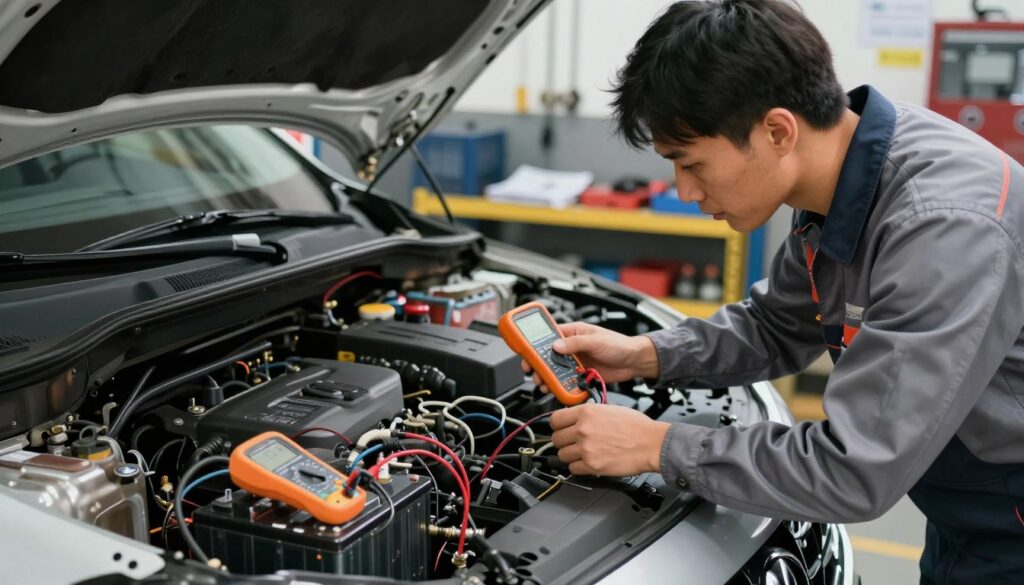
Electronic Control Units (ECUs) need a small amount of power to keep settings and security features. This is called quiescent current, which is normal for modern vehicles. But, problems start when these modules don’t go into sleep mode after the ignition is turned off.
If a module stays active, it keeps pulling a lot of power from the battery. This is why owners often struggle to troubleshoot car battery drain in newer models. Without the ability to power down, the system keeps the car “awake” indefinitely.
Identifying Corrupted Modules That Fail to Sleep
Finding a module that refuses to sleep takes patience and a systematic approach. Often, a corrupted software update or a faulty sensor signal stops the module from going to sleep. You might notice that specific interior lights stay dim or that certain dashboard indicators flicker long after the key is removed.
We recommend monitoring the current draw while systematically disconnecting suspected modules one by one. If the amperage drops significantly after unplugging a specific unit, you have likely found the source of the issue. Always document your findings to ensure you do not misidentify a healthy component.
The Role of CAN Bus Communication in Battery Drain
The Controller Area Network (CAN) bus is the nervous system of your car, allowing different modules to talk to each other. If one module sends constant error messages or “wake-up” signals, it forces other modules to stay active as well. This creates a chain reaction that drains the battery much faster than a single faulty component would.
| Module State | Power Consumption | Expected Behavior |
|---|---|---|
| Active | High | Engine running or ignition on |
| Standby | Low | Brief period after engine off |
| Sleep | Minimal | Normal state for parked vehicle |
| Corrupted | Excessive | Fails to enter sleep mode |
Understanding these communication loops is vital when you troubleshoot car battery drain. By isolating the CAN bus traffic, you can determine if a module is stuck in a loop or if it is being triggered by an external sensor fault. This level of diagnostic precision is necessary for modern, highly computerized vehicles.
Investigating Common Culprits in Specific Vehicle Models
When you troubleshoot car battery drain, knowing your vehicle’s weak spots can save time. Many cars have electrical issues that cause power loss. By focusing on these known problems, we can find the source of a parasitic draw quickly.
Troubleshooting Door Lock Actuators in Honda Civics
In older Honda Civics, door lock actuators often fail. They can get stuck or not lock fully. This keeps the body control module active, draining the battery.
Addressing Infotainment System Glitches in Ford F-150s
Ford F-150s sometimes have infotainment system problems. The system stays on even when turned off. Check the software version of the infotainment module first. A simple update can fix the issue.
Checking Alarm System Sensors in Toyota Camrys
Toyota Camrys are usually reliable, but their alarm systems can fail. Faulty hood or trunk sensors can keep the system active. Look for corrosion or misalignment on these switches to fix the problem.
| Vehicle Model | Common Component | Typical Symptom |
|---|---|---|
| Honda Civic | Door Lock Actuator | Battery dies overnight |
| Ford F-150 | Infotainment Module | Screen stays active |
| Toyota Camry | Alarm/Hood Sensor | Security system error |
Advanced Diagnostics for Hidden Electrical Shorts
Sometimes, a parasitic draw can hide deep in a vehicle’s electrical system. When usual steps don’t work, we need advanced methods to find the power loss source.
Tracing Wiring Harness Damage and Corrosion
Damage to the wiring harness often causes intermittent electrical faults. We suggest a detailed look at main cable runs, where they’re exposed to salt, moisture, or heat.
Check for frayed insulation, pinched wires, or green corrosion at connectors. Even a bit of oxidation can cause a high-resistance path, leading to excessive battery drain over time.
Using Thermal Imaging to Find Hot Spots
Modern thermal imaging cameras help see electrical resistance. Active circuits with shorts or poor connections show abnormal heat signatures not seen by the eye.
We recommend scanning fuse boxes, relay centers, and wiring looms when the vehicle is off. A warm spot usually means a component is drawing current when it shouldn’t.
Testing Alternator Diodes for Leakage
The alternator is a common source of electrical leakage. If its internal rectifier diodes fail, current can flow back to the battery. This causes an excessive battery drain even when the engine is off.
To test this, we measure AC ripple voltage or use a multimeter at the alternator’s main output terminal. If we find a big parasitic draw from the alternator, it’s time to replace it to fix the system.
Verifying the Repair and Final System Check
After fixing the faulty part, check if the power draw is back to normal. Diagnosing battery drain needs a final check to make sure it worked. This step helps avoid waking up to a dead car.
Confirming the Draw Has Dropped to Acceptable Levels
Keep your multimeter ready to see the current when the car sleeps. Most cars should use less than 50 milliamps. If it’s higher, you might need to check battery drain again to find other problems.
Reconnecting Battery Terminals Safely
When you’re sure it’s fixed, reconnect the battery terminals carefully. Start with the positive terminal, then the negative. Make sure they’re tight to avoid damage.
Some cars might sound an alarm or need a code when you reconnect. Have your owner’s manual ready for any security issues. A good connection is key for your car’s electrical system.
Monitoring Battery Voltage Over a 24-Hour Period
Watch the battery voltage for 24 hours to be sure. Use a digital multimeter to check the voltage right after and the next day. A healthy battery should stay above 12.4 volts.
If the voltage drops a lot, you might have another problem. Keeping an eye on it gives you confidence your car is ready. These steps help keep your car’s electrical system working well.
Preventative Maintenance to Avoid Future Electrical Issues
We think regular maintenance is key to avoiding expensive vehicle electrical issues. By being proactive, you can make your car parts last longer and start up every day without trouble. Small steps today can stop big headaches tomorrow.
Keeping Battery Terminals Clean and Tight
Corrosion is a big problem that can cause your battery to drain. Check your terminals every month for any white or blue powdery stuff. If you see corrosion, clean it off with baking soda and water and a wire brush.
Make sure the terminal clamps are tight and secure. A loose connection can cause power loss and damage to your car’s electronics. If you’re not sure how to handle these connections, you can learn more about identifying electrical faults through professional guides.
Regular Inspection of Aftermarket Installations
Many vehicle electrical issues come from bad aftermarket installs like dash cams or custom lights. Check these installs often to make sure wires are not frayed or not grounded right. Loose or exposed wires can cause short circuits and drain power even when the car is off.
Monitoring Battery Health with Periodic Load Testing
A battery might look fine when it’s not working hard but fail when you need it most. We recommend a load test at least twice a year to check the battery’s real capacity. This simple test can spot a failing battery before it leaves you stranded.
| Maintenance Task | Frequency | Importance |
|---|---|---|
| Terminal Cleaning | Every 6 Months | High |
| Check Aftermarket Wiring | Every 3 Months | Medium |
| Load Testing | Annually | High |
| Voltage Check | Monthly | Medium |
By sticking to this schedule, you lower the chance of car battery drain and keep your electrical system running well. Regular care is the best thing you can do for your car’s long-term health.
Conclusion
Fixing power loss in your car means moving from guesswork to exact measurements. By doing troubleshooting parasitic draw, you avoid buying batteries you don’t need. This saves money and keeps your car ready to go.
You can now find and fix bad circuits and hidden power users. Fixing these issues stops battery damage. Regular checks keep your car’s electrical system working well.
Use these methods when you see slow engine starts or dim lights. Taking charge of your car’s electrical system gives you peace of mind. Caring for your battery and car makes them last longer and work better.
FAQ
What is a normal amount of parasitic draw for a modern car?
For most modern cars, a draw of 20mA to 50mA is normal. If your car draws more than 75mA to 100mA, it’s experiencing excessive battery drain.
How can I check battery drain if I don’t want to disconnect the battery?
Use the voltage drop test across fuses. This method measures millivolts across fuse test points to identify active circuits without breaking the electrical connection.
Can a bad alternator lead to car battery drain when the engine is off?
Yes. A failed diode in the alternator can cause electricity to flow back to the battery, leading to significant parasitic draw.
Why is it necessary to wait for “sleep mode” when diagnosing battery drain?
Modern cars take time to enter “sleep mode.” Waiting ensures accurate readings. Measuring too soon can give false high readings.
Will pulling fuses always find the source of parasitic draw?
Pulling fuses is a classic method but not always reliable. It can “wake up” modules or miss wiring issues. Thermal imaging or a clamp meter are better for these cases.
Can a faulty aftermarket alarm like Viper cause vehicle electrical issues?
Absolutely. Aftermarket accessories, like security systems, can drain the battery if wired incorrectly.
How does cold weather affect a car with a small parasitic draw?
Cold weather reduces a battery’s capacity. A small draw can easily drain the battery in cold weather because the battery has less reserve.

Hello! I’m Moheen Iftikhar, the founder of «CarMotivei». I’m dedicated to covering modern automotive trends, new car technologies, and useful driving insights to keep car lovers updated and motivated. Here, you’ll find detailed car reviews, expert automotive content, and helpful tips for drivers and enthusiasts alike.