



White exhaust smoke causes on cold mornings vs overheating engine
Seeing vapor trail from your tailpipe can be alarming. It’s not always clear if it’s just condensation or a serious problem. Knowing the difference is key for your car’s health and your peace of mind.
We explore the main reasons for these emissions. We help you tell normal operation from serious warning signs. If your car also won’t start, check our troubleshooting checklist for a clicking starter. Proper diagnosis is the first step to a healthy car.
We aim to help you make safe choices. We explain complex tech in simple terms for all drivers. Spotting problems early saves you from expensive fixes and keeps your car running well.
Key Takeaways
- Distinguish between harmless water vapor and coolant leaks.
- Learn why temperature fluctuations affect tailpipe emissions.
- Identify early warning signs of a failing head gasket.
- Understand when to seek professional mechanical assistance.
- Maintain your vehicle’s health through regular observation.
Understanding the science behind white exhaust smoke
White exhaust smoke on cold mornings is common and usually normal. It happens because of natural condensation. Knowing the science behind it helps us tell if it’s just normal or if there’s a problem.
The role of condensation in exhaust systems
Exhaust systems handle high temperatures but also collect moisture. When we turn off our engines, they cool down overnight. This lets moisture from the air condense on the exhaust pipes.
Starting the vehicle the next day leads to this:
- The engine heats up fast, warming the exhaust components.
- The trapped moisture turns into water vapor.
- This vapor is pushed out, looking like white smoke.
How ambient temperature affects vapor visibility
Ambient temperature affects how we see this vapor. In cold mornings, the contrast is huge. This makes the water vapor turn into a mist as it exits the vehicle.
As the exhaust system warms up, the vapor disappears. If you see other issues, like AC blowing warm air, check your car’s health. But, a little vapor on a cold start is usually just your car adjusting.
Distinguishing between harmless vapor and engine failure
It’s key to tell apart simple water vapor from serious engine damage to keep your car running well. Many drivers worry when they see white smoke coming out. But knowing the exhaust smoke causes can help figure out if it’s just a minor issue or a big problem.
Visual cues for identifying water vapor
Thin white smoke on a cold morning is usually just water vapor. It’s a normal part of how cars burn fuel that turns into water in the cold. This vapor dissipates quickly once the engine warms up.
But if the smoke is thick and doesn’t go away, it might be a sign of engine issues. Heavy white smoke that lasts means coolant might be getting into the engine. If you’re not sure, check a car problems diagnostics guide for engine warnings.
The smell test: Sweet coolant vs odorless steam
Your nose can help diagnose car problems too. Harmless condensation doesn’t smell and won’t leave a scent. But a distinctly sweet smell from the exhaust is a big warning sign.
This sweet smell means coolant is burning in the engine. It usually means a head gasket has failed or there’s a crack in the engine. Acting fast when you notice these engine issues can save your car from serious damage.
Analyzing White exhaust smoke causes on cold mornings vs overheating engine
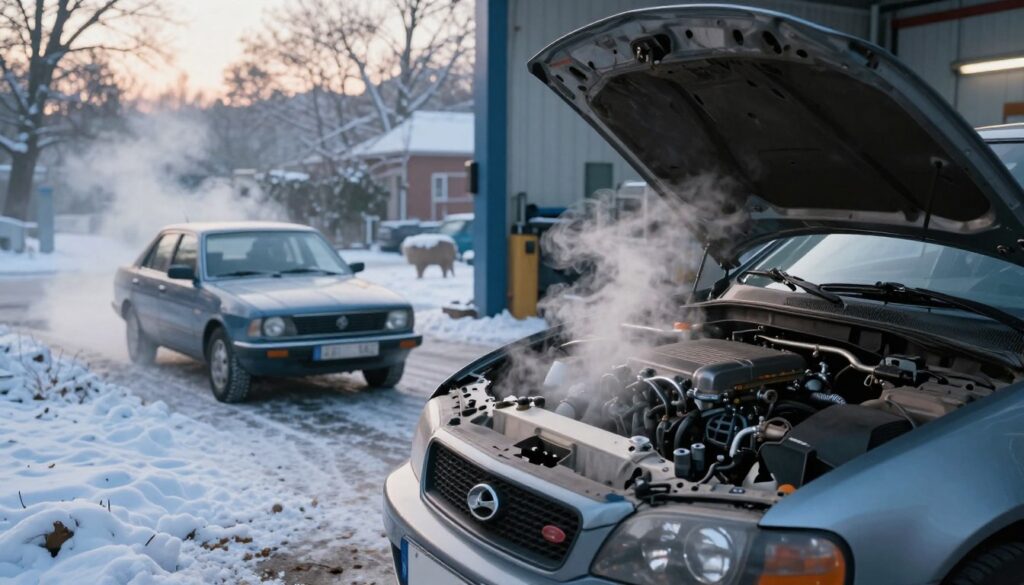
It’s important to know if white smoke from your car’s tailpipe is just the weather or a sign of trouble. We often see white clouds coming from the tailpipe and wonder if it’s okay or not.
Why cold starts produce temporary white smoke
On cold mornings, seeing white smoke from your car is normal. This happens because moisture builds up in the exhaust system when the car is off.
When you start the car, the heat from the exhaust turns this water into steam. This steam usually goes away once the engine warms up and the exhaust system dries out.
“True mechanical failure is persistent, whereas condensation is a fleeting visitor that vanishes as the engine warms.”
The mechanics of coolant leaks in the combustion chamber
If the white smoke doesn’t go away after a few minutes, there might be a bigger problem. A head gasket is key to keeping the engine’s combustion chamber sealed. It stops oil and coolant from mixing.
If this gasket fails, coolant can leak into the combustion chamber. The engine’s heat turns this liquid into thick, lasting white smoke. This smoke keeps coming out even when the car is fully warmed up.
Knowing how this works helps us figure out if the engine is really overheating. Ignoring these signs can cause serious damage. So, it’s key to fix the problem before it gets worse.
Common culprits for persistent white smoke
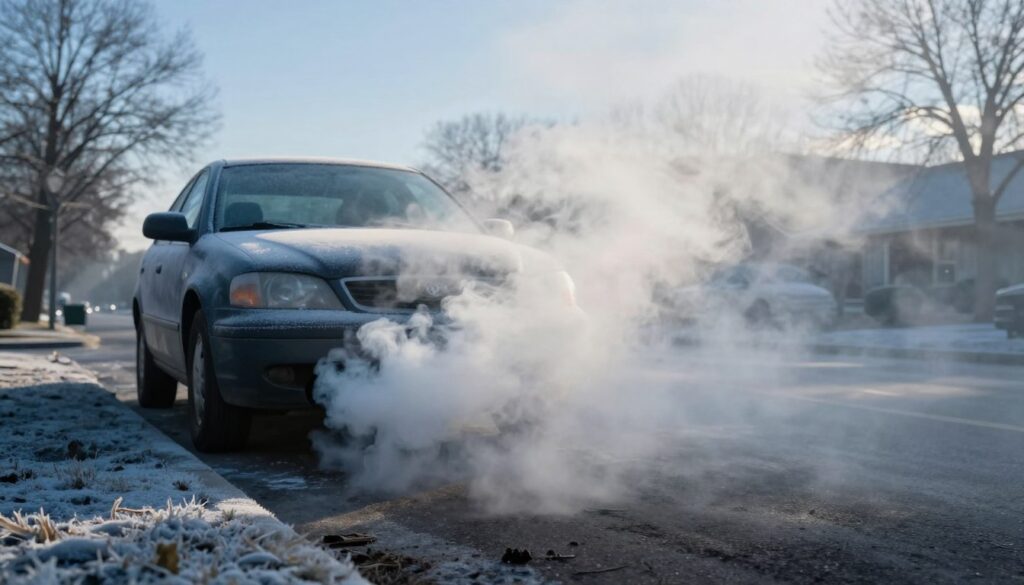
Continuous white smoke from the exhaust often means coolant is leaking where it shouldn’t. When your engine burns coolant, it creates a thick, sweet-smelling vapor. This vapor stays even after the engine warms up. It’s a clear sign that your engine’s internal structure is damaged.
Blown head gasket symptoms and diagnostics
A blown head gasket is a major cause of persistent engine problems. This part keeps the cylinder head and engine block sealed. If it fails, coolant leaks into the cylinders, causing white exhaust smoke.
“The head gasket is the silent guardian of your engine’s combustion chamber; once it fails, the entire balance of pressure and fluid management collapses.”
Cracked engine blocks and cylinder heads
Structural damage to the engine can also cause similar issues. A cracked cylinder head or engine block lets coolant bypass internal passages. This usually happens due to severe overheating that causes metal to warp or crack.
Intake manifold gasket failures
The intake manifold gasket is another critical seal that can fail. If it degrades, coolant leaks into the intake ports. This coolant is then pulled into the engine and burned. While not as severe as a head gasket failure, it’s also a problem that needs quick attention.
| Component | Primary Failure Mode | Severity Level |
|---|---|---|
| Head Gasket | Seal breach | High |
| Cylinder Head | Thermal cracking | Critical |
| Intake Gasket | Material degradation | Moderate |
Fixing these problems early is key to your vehicle’s health. Ignoring white smoke from the exhaust can lead to serious issues like hydrolock or total engine failure. These problems are much more costly to fix than a simple gasket replacement.
The dangers of ignoring an overheating engine
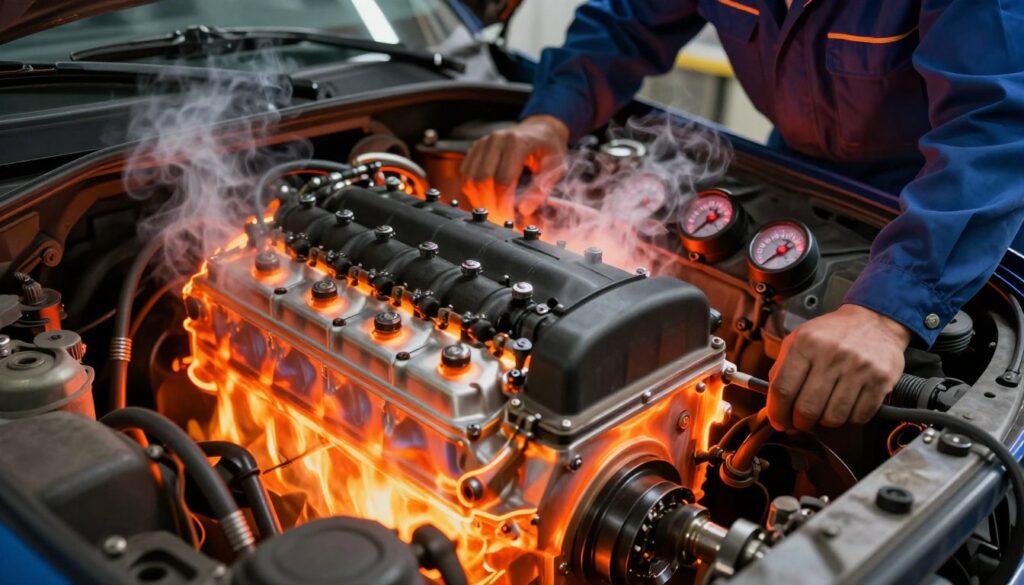
Ignoring an overheating engine can lead to big financial losses. When your car shows signs of trouble, not fixing it right away can cause serious damage. It’s key to spot these signs early to avoid engine failure.
How coolant loss leads to catastrophic engine damage
Coolant keeps your car’s engine cool. A leak means the engine can’t control its temperature. This can cause:
- Warped cylinder heads from too much heat.
- Cracked engine blocks needing expensive fixes.
- Loss of power while driving, making roads unsafe.
Driving with a coolant leak is risky. High temperatures can damage the engine’s structure, making repairs hard or impossible.
Thermal stress and metal fatigue in engine components
High temperatures also stress engine parts. They expand and contract, causing tiny cracks. These cracks can lead to engine failure without warning.
It’s important to check for smoke diagnosis signs. White smoke means coolant is getting into the engine. If you see this, stop driving right away. Quick action is key to protect your engine.
Diagnostic steps for vehicle owners
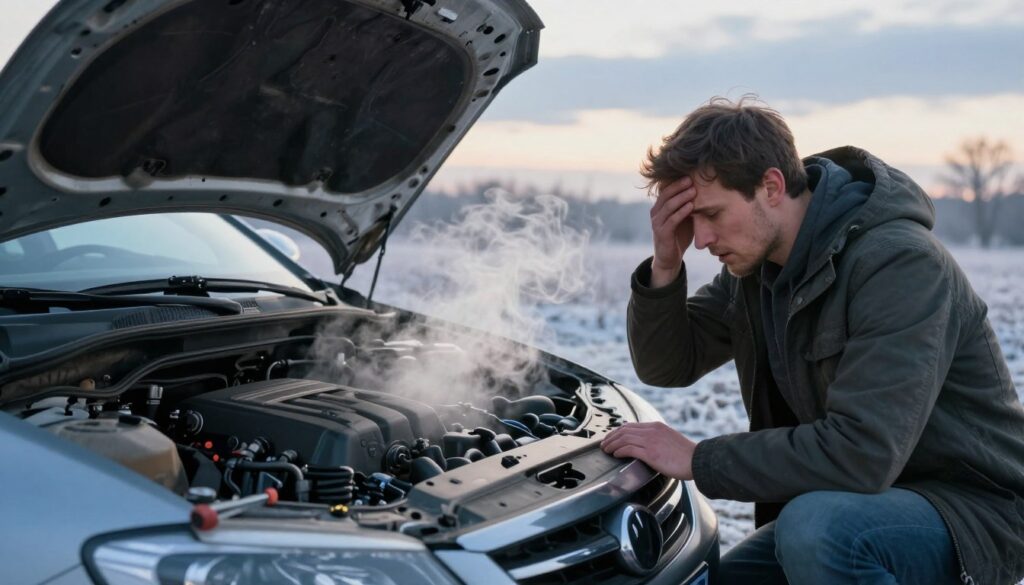
Being proactive with car troubleshooting helps us catch engine problems early. We can tell if white smoke is just condensation or a serious issue with a few simple checks.
Checking coolant levels and reservoir condition
Start by checking the coolant reservoir when the engine is cool. Look for low fluid levels, which can mean a leak inside or outside the engine.
If the reservoir looks empty or has stains, it might mean the engine is using coolant. Always check that the cap is tight after you check it to keep the system pressure right.
Inspecting the oil filler cap for milky residue
The oil filler cap’s condition is a key sign of engine issues. If oil and water mix in your engine, you’ll see a creamy, light-brown deposit on the cap’s underside.
This looks like a milkshake or mayonnaise. Finding this residue means a head gasket might have failed, letting coolant into the oil.
Performing a pressure test on the cooling system
If looking doesn’t help, try a cooling system pressure tester. This tool lets us test pressure when the engine is off, making leaks easier to find.
By adding pressure, we can see if the gauge drops. This shows a leak is present. It’s a common step in car troubleshooting to find where coolant is leaking.
Environmental factors and vehicle maintenance
Our daily commute can affect our car’s exhaust and cooling systems. Keeping your car in good shape is key to its performance. Knowing how to handle these issues can prevent big repairs.
Learn about these factors and how to manage them. This way, you can avoid exhaust smoke causes before they become serious.
Impact of short trips on exhaust system moisture
Short trips can harm your exhaust system. When the engine doesn’t get hot enough, moisture doesn’t evaporate. This can cause premature corrosion and rust in the exhaust.
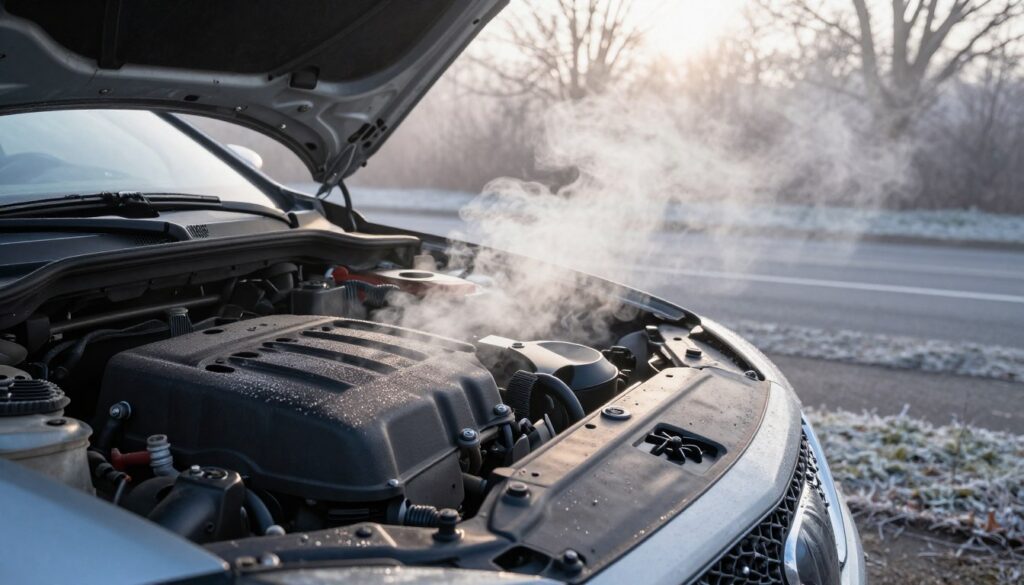
Over time, this moisture can turn into visible vapor when you start your car. Longer drives help the exhaust system get hot enough to clear out these deposits. Try to drive your car for longer periods to keep it healthy.
The importance of regular cooling system flushes
The cooling system also needs regular care to avoid overheating. Flushing the cooling system keeps rubber hoses in good shape and prevents blockages. Neglecting this can lead to engine problems.
Following a regular maintenance schedule is important. It keeps your cooling and exhaust systems working well. Here’s a table with key maintenance tasks and how often to do them:
| Maintenance Task | Recommended Frequency | Primary Benefit |
|---|---|---|
| Coolant System Flush | Every 30,000 miles | Prevents corrosion and blockages |
| Exhaust Inspection | Every 12 months | Detects early signs of rust |
| Coolant Level Check | Every oil change | Ensures optimal thermal regulation |
| Hose Integrity Check | Every 6 months | Avoids sudden leaks and overheating |
By following these guidelines, you protect your engine from moisture and cooling system problems. Taking care of your car ahead of time is the best way to avoid exhaust smoke and keep your vehicle running well for years.
When to seek professional mechanical assistance
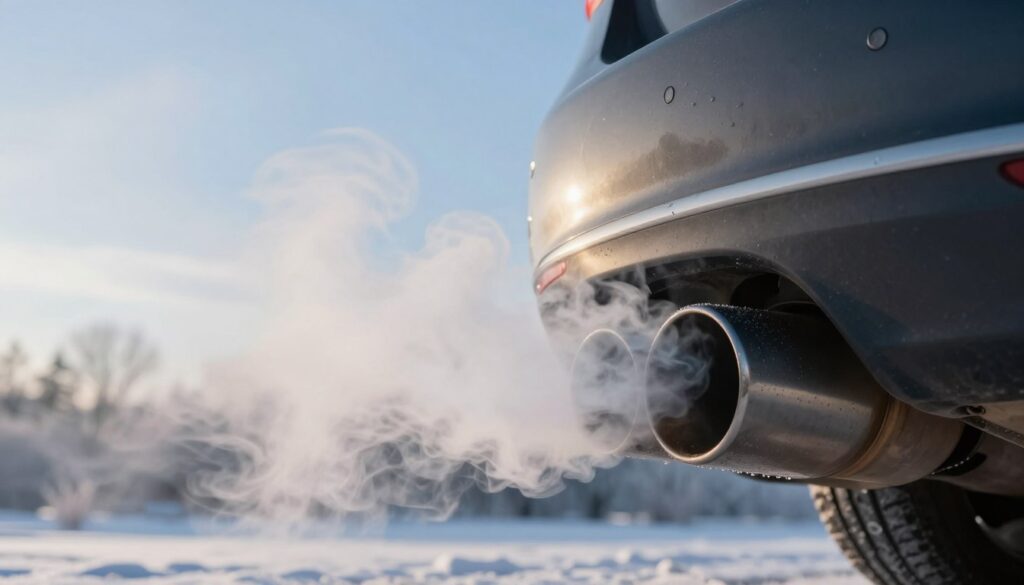
Knowing when to call a mechanic can save you a lot of money. While some white smoke is normal, constant white smoke from exhaust means there’s a serious problem. This usually needs a pro to fix.
Recognizing signs that require immediate towing
Be careful if you see thick smoke behind your car. If it smells sweet, it means coolant is burning. This is a big problem. You should get expert help right away to avoid more damage.
If your temperature gauge goes into the red, stop and turn off the engine. Driving with a hot engine can damage it badly. Towing your car is the best way to avoid expensive repairs.
The cost of ignoring early warning signs
Thinking you can ignore white exhaust smoke might save you money at first. But, it can lead to much bigger problems and costs later. If you catch it early, small fixes can prevent big damage.
| Symptom | Urgency Level | Recommended Action |
|---|---|---|
| Thin, wispy vapor | Low | Monitor during next drive |
| Thick, persistent smoke | High | Schedule professional inspection |
| Sweet smell + Overheating | Critical | Stop driving and tow immediately |
Preventative measures for long-term engine health
Looking after your car is key to avoiding expensive repairs. Regular car maintenance keeps your vehicle running smoothly. It also spots small problems before they become big ones.
Monitoring temperature gauges and warning lights
Watching your temperature gauge and dashboard lights is vital. If the needle goes into the red, act fast to stop an overheating engine. Ignoring these signs can cause serious damage that can’t be fixed.
Seeing unusual smoke from your exhaust? Knowing why it happens and what to do is important. Being alert helps you fix leaks or blockages before they harm your engine.
Choosing the right coolant for your specific engine type
Picking the right coolant is critical for your engine’s health. Not all coolants are the same. The wrong one can cause sludge or damage seals. Always check your owner’s manual for the correct coolant for your car.
Here are some key habits to keep your car in top shape:
- Check fluid levels often to keep your cooling system working right.
- Look for signs of wear or damage on hoses and connections.
- Keep your radiator fins clean to ensure good airflow.
- Get your car checked by a pro at least once a year.
By taking these steps, you can make your engine and cooling system last longer. Taking care of your car now saves you from costly repairs later.
Conclusion
Knowing the difference between harmless steam and serious engine problems is key for car owners. Keep an eye on your tailpipe to make sure your engine is running well.
Good smoke diagnosis means watching your car closely over time. If you see white clouds that don’t go away after driving, it’s a sign of coolant loss.
Learning basic car care helps you spot small issues before they get big. Always check your coolant levels and temperature gauge while driving.
Regular maintenance keeps your car running smoothly and keeps you safe. If you’re unsure about your engine, call a trusted mechanic. Acting fast now can save you from big problems later.
Why do I see white exhaust smoke only when I first start my car?
It’s usually from cold mornings where moisture condenses in the exhaust system. As it heats up, the water turns into steam. This is normal and doesn’t usually mean engine issues.
What are the most common exhaust smoke causes I should worry about?
Thick smoke often means a blown head gasket, a cracked engine block, or a damaged cylinder head. These let coolant into the engine, which is a serious problem.
How can I tell if my white smoke is from an overheating engine?
Watch your dashboard temperature gauge. If the white smoke from exhaust is with a rising temperature needle or a “Check Engine” light, your engine is overheating due to a coolant leak.
What does it mean if the white smoke from my exhaust smells sweet?
A sweet, syrupy odor means burning coolant. This is a major warning sign in smoke diagnosis, indicating antifreeze is being burned inside the engine. This needs immediate car troubleshooting.
Is white smoke from the exhaust expensive to fix?
It depends on the cause. Harmless condensation costs nothing. But, a blown head gasket or a cracked block can be expensive. Regular cooling system flushes can help avoid these costs.
Can I continue driving if I see white smoke?
If the smoke goes away after a few minutes, it’s likely okay. But, if it stays, stop driving right away. Ignoring exhaust smoke causes can lead to engine failure and high repair bills.
What is the first step in car troubleshooting for white smoke?
Check your coolant levels and look at the underside of your oil filler cap. A milky, light-brown residue on the cap means coolant is mixing with your oil. This is a clear sign of internal engine issues.

Hello! I’m Moheen Iftikhar, the founder of «CarMotivei». I’m dedicated to covering modern automotive trends, new car technologies, and useful driving insights to keep car lovers updated and motivated. Here, you’ll find detailed car reviews, expert automotive content, and helpful tips for drivers and enthusiasts alike.