



Night Driving Glasses Review and Safety Tips for Elderly Drivers
When the sun goes down, a quiet worry creeps in. Our once-familiar drives become scary as our eyes adjust slowly to the dark. It is a natural part of aging, but it feels like losing a piece of our freedom.
As we age, our pupils get smaller, letting in less light. This makes driving at night much harder. We aim to help you feel confident driving again.
This guide offers a detailed night driving glasses review to improve your vision. We also share key safety tips for elderly drivers to keep your trips safe. By understanding these changes, we can keep driving with confidence and safety.
Key Takeaways
- Aging causes pupils to shrink, which reduces light intake during evening travel.
- Choosing the right eyewear can significantly improve visual clarity in low-light conditions.
- Regular eye exams are vital to monitor age-related vision changes.
- Adjusting your vehicle mirrors can help reduce glare from oncoming headlights.
- Planning routes to avoid high-traffic areas at dusk enhances your overall security.
Understanding the Importance of Night Driving Glasses
Our eyes change with age, affecting how we see light and contrast at night. The roads seem different at dusk, as our eyes find it hard to adjust to the dark. Keeping our vision clear is key to driving safely.
Why Night Vision Matters for Seniors
As we get older, our eyes change, making it harder to see in the dark. Our pupils get smaller and don’t open as wide as they used to. This means less light gets in, making it tough to see things clearly in dim light.
Common Vision Problems in Older Drivers
Many seniors find it hard to see through glare from headlights and street lamps. This reduced contrast sensitivity makes it hard to see lane lines or pedestrians. Some look into blind spot detection systems to stay safe, but clear vision is more important.
Benefits of Using Specialized Glasses
Looking at night driving glasses benefits, it’s key to know the difference between lens types. A good night driving glasses comparison shows that while yellow-tinted lenses help with contrast, anti-reflective coatings are better at cutting down glare. Here’s a table comparing common night driving glasses.
| Feature | Yellow-Tinted Glasses | Anti-Reflective Coating | Standard Clear Lenses |
|---|---|---|---|
| Glare Reduction | Moderate | High | Low |
| Contrast Enhancement | High | Low | None |
| Night Clarity | Variable | Excellent | Average |
| Best Use Case | Dusk/Overcast | Night Driving | Daytime |
Key Features to Look for in Night Driving Glasses
Learning how to choose night driving glasses is key for road safety. Many think a yellow tint is enough, but it’s not. True quality comes from specific tech features. Knowing these night driving glasses features helps seniors drive safely at night.

Anti-Reflective Coating
An anti-reflective (AR) coating is vital for eyewear today. It cuts down glare by letting more light pass through. This means less distraction from headlights and streetlamps, making the road clearer.
Polarized Lenses
Polarized lenses block strong light waves, great for sunny days and night. They reduce glare from wet roads or reflective surfaces. With the right car care, like checking crash test results for affordable cars, they make driving safer.
Comfort and Fit
Comfort is as important as clear vision, more so for seniors. Light frames avoid nose and ear pressure. Look for adjustable nose pads to keep glasses in place during quick turns.
| Feature | Primary Benefit | Best For |
|---|---|---|
| Anti-Reflective Coating | Reduces glare | Oncoming headlights |
| Polarized Lenses | Blocks reflections | Wet road surfaces |
| Lightweight Frames | Long-term comfort | Extended night trips |
Top Night Driving Glasses on the Market
Finding the right eyewear can be tough for many drivers. We’ve looked at the market to find the best options for your vision. It’s important to look at both how clear the lenses are and how well the frames hold up.
A detailed night driving glasses review shows not all glasses block glare the same. We focus on glasses with top-notch lenses and frames that are both comfy and light. This helps you choose glasses that boost your confidence while driving.

Review of BluBlocker Night Driving Glasses
BluBlocker is a top choice for improving vision in the dark. Their amber-tinted lenses are known for blocking blue light. This helps reduce eye strain and blurry vision at night.
The wrap-around style of these glasses is a big plus. It gives you a wide view, which is great for seniors. Plus, they’re light, so they’re comfy to wear for a long time.
Comparison of Style and Performance
When comparing night driving glasses, material matters a lot. Some focus on looks, while others are all about function. Here’s a table that shows the main differences to help you pick the right glasses.
| Brand Model | Lens Type | Frame Weight | Glare Reduction |
|---|---|---|---|
| BluBlocker | Amber Tint | Lightweight | High |
| Duco Optics | Polarized | Medium | Excellent |
| RIVBOS | Anti-Reflective | Lightweight | Moderate |
User Feedback and Ratings
What people say about glasses matters a lot. Most reviews say these glasses really cut down on glare from headlights. Drivers also say they feel less tired after driving at night.
But, some say the glasses don’t work as well for everyone. It’s smart to talk to an eye doctor before buying. Many positive reviews mean these glasses are worth considering for your safety.
Safety Tips for Elderly Drivers
Many of us want to keep driving as we age. To do this, we need to follow safety tips for elderly drivers. Our bodies and eyes change with age, so we must adjust how we drive. By being proactive, we can stay safe and confident on the road.
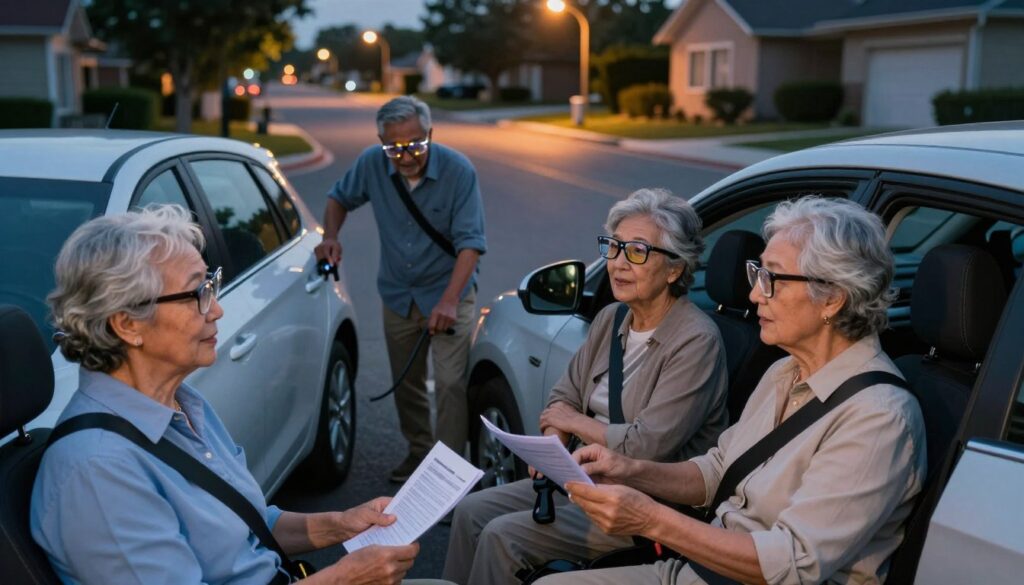
Regular Eye Check-Ups
Clear vision is key to safe driving. We advise getting eye exams yearly to catch age-related issues early. Cataracts can cause blurry vision and glare from streetlights.
Spotting glaucoma or macular degeneration early is important. Early treatment can greatly improve your vision. Don’t wait for symptoms to get worse before getting checked.
Importance of Proper Night Lighting
Improving your car’s interior lighting is essential at night. Dimming your dashboard lights helps reduce glare. This keeps your eyes on the road, not the dashboard.
Also, make sure your dome lights work but don’t use them while driving. If you need to read something, pull over first. Good lighting is a key safety tip for elderly drivers.
Adjusting Seat Position for Better Visibility
Your comfort affects your reaction time and vision. Adjust your seat for a clear view of mirrors and the windshield. If you drive with kids, our car seat installation guide can help keep them safe too.
| Vision Condition | Primary Symptom | Impact on Driving |
|---|---|---|
| Cataracts | Cloudy/Blurry Vision | Increased glare and halos |
| Glaucoma | Peripheral Loss | Reduced side awareness |
| Presbyopia | Focusing Difficulty | Harder to read dashboard |
| Dry Eyes | Irritation/Redness | Distraction and fatigue |
By following these safety tips for elderly drivers, you make the roads safer for everyone. Small changes can lead to big improvements. Stay alert, informed, and enjoy driving.
Understanding Road Conditions at Night
When it gets dark, our driving needs to change. We must watch out for dangers that are hidden in the dark. Staying alert is key to staying safe on the road.

Impact of Weather on Night Driving
Bad weather like rain or fog makes night driving even riskier. Water on your windshield can make it hard to see. We advise against driving in heavy storms to stay safe.
If you have to drive in bad weather, make sure your headlights are clean and working. Fog lights can help, but use them carefully. Always keep a safe distance from the car in front of you.
Tips for Handling Glare
LED headlights and high beams can be very bright and hard to look at. This is even tougher for older eyes. Try to look to the right when another car’s lights are coming your way.
Remember, extra lights are meant to help you see, but they can also cause accidents if not used right. If the light is too much, pull over until it’s better. Taking a break to rest your eyes is a good idea for any driver.
How to Maintain Night Driving Glasses
Your safety on the road depends on clear lenses. A simple care routine is key. When lenses get smudged, dirty, or have fingerprints, they can cause unwanted glare. Keeping your glasses clean ensures the special coatings work right.

Cleaning Techniques
It’s important to clean your glasses regularly to stop oils and dirt from building up. Always use a microfiber cloth made for optical lenses to avoid scratches.
- Rinse your glasses under lukewarm water to remove loose dust particles.
- Apply a small drop of mild, lotion-free dish soap to your fingertips and gently rub both sides of the lenses.
- Rinse thoroughly and dry the frames with a clean, lint-free towel.
- Avoid using paper towels or tissues, as these can leave tiny fibers or scratches on the lens coating.
Storage Recommendations
Storing your glasses right is as important as cleaning. Always put them in a hard-shell protective case when not in use. This protects against drops or pressure damage.
Don’t leave your glasses on the car dashboard. Extreme temperatures can warp the frames or harm the coatings. By following these tips, you can extend the lifespan of your glasses. This ensures they work well for every night drive.
The Role of Technology in Night Driving
Technology has changed how we see the road at night. New digital and optical advancements give drivers more confidence in the dark.
Advanced Features in Modern Eyewear
Today, recommended night driving glasses use advanced materials. These include special coatings that block harsh glare from headlights.
These night driving glasses features improve contrast. This makes it easier to see road markings and obstacles. They also reduce light scatter, helping you stay focused on the road.
Apps and Gadgets for Enhanced Vision
Your car and phone can help your eyes at night. Many cars have night modes in their infotainment systems. This dims the screen to prevent glare.
Using these settings can also reduce eye fatigue. Pairing them with recommended night driving glasses makes your eyes safer.
Navigation apps also have high-contrast interfaces for the dark. Combining these night driving glasses features with car tech keeps you alert and comfortable.
When to Consider Alternative Solutions
Knowing when to look beyond basic accessories is key to staying safe while driving at night. While best night driving glasses are convenient, they might not fix all vision problems that come with age. If you’re having trouble seeing even with regular glasses, it’s time to explore more advanced options.

Opting for Prescription Glasses
When basic glasses don’t work, seeing a doctor is the best step. Prescription glasses with special coatings can cut glare by up to 78% and protect your eyes from UV rays. These lenses are made just for you, ensuring light enters your eyes clearly without distortion.
“True visual clarity at night is not just about tinting; it is about precision optics that minimize scatter and maximize contrast for the aging eye.”
Exploring Night Vision Aids
There are many night driving aids for older drivers. It’s important to talk to an eye doctor to see if you need special coatings or treatments for conditions like cataracts. Using the best night driving glasses is a good start, but a doctor can make sure your eyes get the right help.
| Feature | OTC Glasses | Prescription Glasses |
|---|---|---|
| Glare Reduction | Moderate | Up to 78% |
| Customization | None | High (Tailored) |
| UV Protection | Basic | Advanced/Full |
| Cost | Low | Higher |
Prioritizing your eye health is the best way to stay safe while driving. By choosing the right tools, whether they are the best night driving glasses or custom prescription lenses, you make sure every drive is clear and comfortable.
Stories from Senior Drivers
Listening to drivers who’ve adapted to night driving gives us hope and useful tips. Personal stories show how modern tools help seniors stay independent on the road. Many have found that the top night driving glasses for seniors greatly improve their daily driving.
Positive Experiences with Night Driving Glasses
Many drivers say special eyewear makes them feel safer at night. A retired teacher from Ohio said her new lenses cut down on glare from headlights. She found that clarity and reduced eye strain were the biggest benefits.
Another driver said the right glasses gave him the confidence to visit friends at night. These glasses reduce the halo effect around streetlights, making driving smoother. These stories show how small changes can make a big difference in safety.
Overcoming Challenges on the Road
Adjusting to vision changes needs more than just the right glasses; it requires a proactive approach to safety. We urge all drivers to learn about safe driving practices for older adults. Many seniors find success by using these glasses and getting regular eye exams.
Overcoming fear of driving at night is possible with the right preparation. Using the top night driving glasses for seniors and staying informed about traffic helps many older adults drive safely. We’re proud to support a community that values independence and safety on every trip.
Resources for Elderly Drivers
Dealing with aging and driving can be easier with the right help. We think having good resources is key for safe driving for seniors. By being proactive, you can keep your independence and stay safe on the road.
Support Groups and Communities
Meeting others who face similar challenges can be very empowering. Many places and groups are there for older adults dealing with vision or reaction time changes. They provide a place to talk about worries and share tips for night driving.
Being part of these groups can help you feel less alone. Hearing how others have coped can give you the emotional support you need. Sharing your own story can also help others in your area.
Educational Materials on Safe Driving
It’s important to know the latest on traffic laws and defensive driving. We suggest checking out a detailed senior road safety guide to improve your skills. These guides cover important topics like car upkeep, medication effects, and better navigation.
Many groups offer free workshops or online courses to check your driving skills. Using these resources helps you make smart choices about when and where to drive. Learning is the best way to avoid risks from aging while driving.
| Resource Type | Primary Benefit | Accessibility |
|---|---|---|
| Peer Support Groups | Emotional encouragement | High (Local/Online) |
| Safety Guides | Practical knowledge | High (Digital/Print) |
| Driving Workshops | Skill assessment | Medium (In-person) |
Conclusion: Enhancing Night Driving Safety for Seniors
Maintaining mobility is key for aging with grace and dignity. We think that taking action changes how older adults drive at night.
Good vision is the base for safe driving. Wearing high-quality glasses from brands like Oakley or Essilor and regular eye checks are important. These steps make a big difference in staying safe on the road.
Being defensive is essential for safety at night. We urge everyone to check their driving habits and add these safety tips. Taking care of your eyes helps you stay independent for a long time.
Share your stories with us to help others face these challenges. Your journey is important, and your safety efforts inspire many. Let’s always focus on clear vision and caution when we drive.
Resources for Elderly Drivers
Why Night Vision Matters for Seniors
As we get older, our eyes need more light to see well. Our ability to see contrast also gets worse. This makes driving at night stressful. Having the right tools to see in low light is key for safety.
Common Vision Problems in Older Drivers
Age can bring issues like cataracts, which scatter light, or macular degeneration, which affects central vision. These problems get worse at night when our pupils get bigger. It’s harder to see moving objects and distant signs.
Benefits of Using Specialized Glasses
Special glasses help a lot. They reduce eye strain and make the road clearer. They also cut down on the “starburst” effect from streetlights and oncoming traffic. This makes driving at night safer and more comfortable.
Anti-Reflective Coating
An anti-reflective (AR) coating is very important. Look for lenses that let in lots of light and block reflections. This helps us see better, not worse, from LED headlights.
Polarized Lenses
Polarization is good for daytime glare but not always at night. We need lenses that reduce horizontal reflections without making it too dark. This keeps us safe.
Comfort and Fit
Finding the right fit is key for long wear. Choose frames that are light and give a wide view. Narrow frames can cause blind spots, which are dangerous for older drivers.
Review of Zeiss and Essilor Night Glasses
Zeiss DriveSafe lenses are great for low light. Essilor Crizal Sapphire HR coatings reduce glare from all angles. These are top choices for senior safety.
Comparison of Style and Performance
There’s a big difference between yellow-tinted glasses and professional AR coatings. Professional coatings, like Hoya, work better without cutting down light.
User Feedback and Ratings
Seniors say night driving glasses help a lot. They reduce headaches and fatigue. They also feel less blinded by HID lamps.
Regular Eye Check-Ups
Annual exams are a must. They help catch problems early and keep prescriptions up to date. This is vital for safe nighttime driving.
Importance of Proper Night Lighting
Make sure your car’s lights are working well. Check that headlights are aimed right and covers aren’t cloudy. This can improve light by up to 50%.
Adjusting Seat Position for Better Visibility
Adjust your seat to see over the dashboard. This helps you spot road hazards better and reduces reflections from inside the car.
Impact of Weather on Night Driving
Rain and fog make the road hard to see. They reflect light in unpredictable ways. Increase your following distance to stay safe.
Tips for Handling Glare
When hit by high beams, look at the white line on the right. This helps you stay in your lane and avoid direct light.
Cleaning Techniques
Clean your lenses daily with a microfiber cloth and lens cleaner. Avoid paper towels or clothes to prevent scratches that increase glare.
Storage Recommendations
Store your glasses in a hard case when not using them. Heat from the dashboard can damage the coatings and shorten their life.
Advanced Features in Modern Eyewear
Modern lenses use digital surfacing. This gives a precise prescription across the lens, reducing distortion for older drivers.
Apps and Gadgets for Enhanced Vision
There’s more technology now, like night-vision cameras. Used with the right glasses, they offer great safety.
Opting for Prescription Glasses
If over-the-counter glasses aren’t enough, try prescription ones. A dedicated pair for night driving can help with minor errors.
Exploring Night Vision Aids
For severe vision problems, talk to your optometrist. They might suggest bioptic telescopes or other devices for better safety.
Positive Experiences with Night Driving Glasses
Many seniors say the right glasses made driving safer. One driver felt more confident driving home at night with clearer road signs.
Overcoming Challenges on the Road
Getting used to night driving takes time. The right glasses and habits can help seniors drive long distances safely.
Support Groups and Communities
AARP offers driver safety courses for seniors. These are great for sharing vision challenges and learning new safety tips.
Educational Materials on Safe Driving
Check out resources from the National Institute on Aging. They provide detailed information on how to adapt to vision changes for safe driving.

Hello! I’m Moheen Iftikhar, the founder of «CarMotivei». I’m dedicated to covering modern automotive trends, new car technologies, and useful driving insights to keep car lovers updated and motivated. Here, you’ll find detailed car reviews, expert automotive content, and helpful tips for drivers and enthusiasts alike.