



Alternator Symptoms of Failure vs a Completely Dead Car Battery
Turning your ignition key and getting nothing but silence is frustrating. When your car won’t start, finding out why is urgent. You don’t want to be stuck without a way to move.
Many people mix up their car’s electrical parts. Your car needs both power storage and generation to run right. Knowing how these parts work together is key to a smooth ride.
When your car loses power, it’s easy to jump to conclusions. But knowing the difference between an alternator problem and a dead battery helps. Spotting these signs early can save you time and money on repairs.
Key Takeaways
- The charging system and power storage unit work in tandem to keep your vehicle running.
- Recognizing early warning signs prevents unexpected roadside breakdowns.
- Electrical issues often stem from either a lack of charge or a lack of storage capacity.
- Professional diagnostics help distinguish between a faulty generator and a depleted power cell.
- Regular maintenance is the most effective way to extend the lifespan of your electrical components.
Understanding Car Batteries and Alternators
If you’re wondering how to tell if it’s the alternator or battery, start by learning their roles. These parts are key to your car’s electrical system but do different jobs. Knowing what each does helps you fix power problems on the road.
What is a Car Battery?
Your car battery is like a storage tank for energy. It gives the power needed to start the engine. After the engine starts, it also powers your car’s extras like the radio and lights.
What is an Alternator?
The alternator is like a power plant in your car. It turns the engine’s movement into electricity. This keeps your battery charged and powers your car’s systems while driving.
How They Work Together
These parts work together to keep your car running smoothly. Think of the battery as your morning coffee and the alternator as the fuel for the day. Together, they keep your car’s electrical system stable.
If one part fails, your car’s electrical system suffers. Knowing the battery starts the car and the alternator keeps it running helps you figure out problems. This knowledge makes you a more confident car owner.
Common Symptoms of Alternator Failure
Knowing the signs of bad alternator or dead battery is key for car owners. Your car gives hints when its charging system starts to fail. Spotting these signs early helps fix the problem before it gets worse.
Dimming or Flickering Lights
Dimming or flickering lights often mean your alternator is failing. The alternator powers your headlights and interior lights when the engine is on. If your headlights get brighter when you rev the engine, it’s a sign the alternator is not working right.
Strange Noises from the Engine
A failing alternator can make strange noises. You might hear grinding or whining sounds from the engine bay. These sounds can mean worn-out bearings or a failing part. Sometimes, a loose or damaged drive belt can cause a clicking starter motor if the battery isn’t charged properly.
Dashboard Warning Lights
Modern cars have sensors to warn you of electrical issues. If the voltage is off, a battery-shaped icon or “ALT” light will turn on. These common signs of alternator failure or dead battery are your first warning of trouble.
| Symptom | Likely Cause | Severity |
|---|---|---|
| Flickering Headlights | Unstable Voltage | Moderate |
| Grinding Noises | Worn Bearings | High |
| Battery Warning Light | Charging Failure | Critical |
| Slow Engine Crank | Depleted Battery | High |
Signs of a Completely Dead Car Battery
When your car won’t start, knowing the signs of a dead battery is key. Many drivers get confused between signs of bad alternator or dead battery issues. It’s important to tell them apart to get back on the road safely.
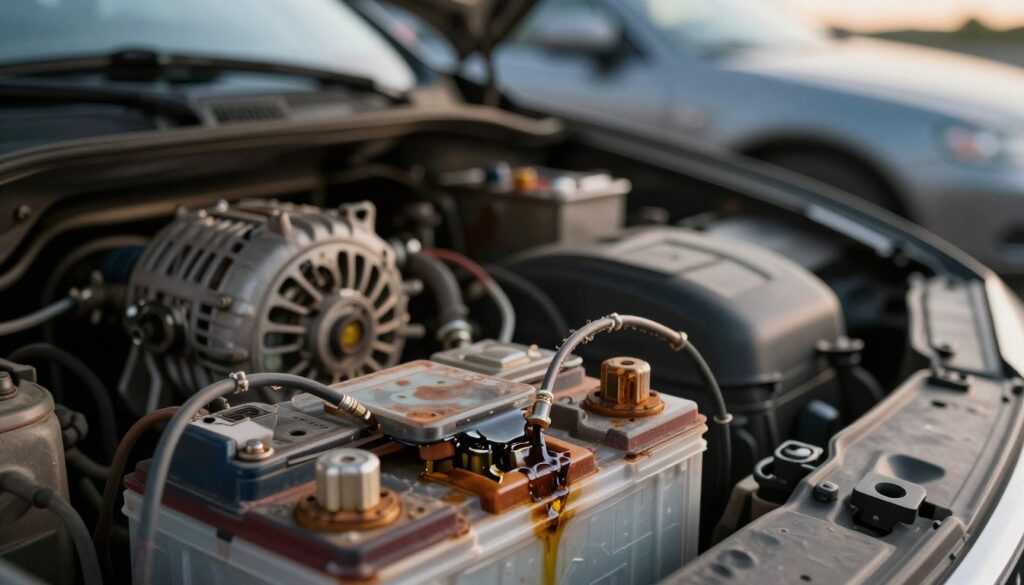
The Engine Won’t Start
The most clear sign is if your car won’t start. If you turn the key and nothing happens, it’s probably the battery. A dead battery can’t give enough power to start the engine.
Clicking Sounds
Fast, rhythmic clicking when trying to start means your battery is weak. This sound shows the starter solenoid is trying but can’t turn the engine. For more help, check this troubleshooting guide for a clicking starter.
No Dashboard Lights
A dead battery also means no dashboard lights. If your dashboard is dark and interior lights don’t work, your electrical system is dead. These common signs of alternator failure or dead battery need quick action to avoid more damage.
| Symptom | Likely Battery Issue | Likely Alternator Issue |
|---|---|---|
| Engine fails to crank | High probability | Low probability |
| Rapid clicking sound | High probability | Low probability |
| Dimming headlights | Low probability | High probability |
| Total electrical blackout | High probability | Low probability |
Key Differences Between Alternator Issues and Battery Problems
When your car loses power, figuring out if it’s the alternator or battery is key. Both problems can leave you stuck, but they come from different issues in your car’s electrical system. Knowing the difference helps avoid wrong repairs and gets your car fixed right.
Voltage Output
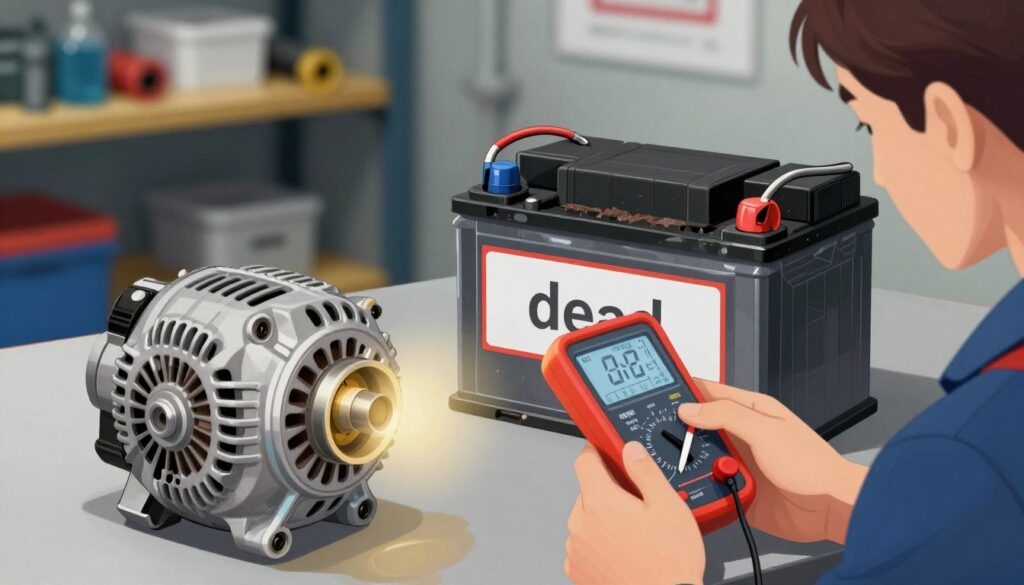
Voltage readings are the best way to check if your car’s electrical system is working. A good battery has 12.6 volts, and a working alternator should boost it to 13.5 or 14.5 volts when the engine is on. If your multimeter shows low voltage while the engine is running, it’s likely the alternator that’s not working.
Performance Over Time
Batteries tend to get weaker over time, showing signs like slow engine starts. On the other hand, an alternator might fail suddenly, causing lights to dim or go out while driving. For those curious about costs, a hybrid battery replacement cost breakdown for Toyota and Honda models can give you an idea of the difference.
Accessibility for Diagnosing Issues
Understanding the Alternator symptoms of failure vs a completely dead car battery helps in diagnosing problems. Batteries are easier to test and replace, but alternators need more complex access. Spotting the difference between alternator failure and battery failure early on can prevent damage to your car’s electronics.
| Feature | Battery Issue | Alternator Issue |
|---|---|---|
| Primary Symptom | Slow engine crank | Dimming lights while driving |
| Voltage Reading | Below 12V at rest | Below 13V while running |
| Failure Pattern | Gradual decline | Sudden or erratic |
| Repair Complexity | Simple DIY | Professional service recommended |
How to Test Your Alternator
Learning about electrical diagnostics helps you take care of your car. If your car’s power goes out, you need to find out if the alternator is the problem. By doing these simple tests, you can avoid costly repairs and keep your car running well.

Using a Multimeter
To check your alternator, use a digital multimeter. Set it to DC voltage and connect it to your battery terminals when the engine is off. Start the engine, and the voltage should go up to 13.5 to 14.5 volts.
If the voltage stays below 13 volts while the engine is running, your alternator might not be working right. Remember, other issues like a parasitic draw can also cause this problem. Make sure your connections are clean and tight before saying the alternator is bad.
Inspecting Drive Belts
The drive belt connects your alternator to the engine. If it’s loose, cracked, or worn, your alternator can’t spin properly. Check the belt for any damage or wear.
If the belt feels loose when you press it, it might need to be adjusted or replaced. Proper tension is key for your charging system to work well. If the belt slips, your battery will drain because it’s not getting a steady charge.
Listening for Unusual Noises
When troubleshooting car electrical issues, listen first. A failing alternator bearing makes a grinding or whining sound that changes with engine speed. If you hear a rattling sound, it might mean the parts inside are breaking down.
Don’t ignore these sounds. They often mean a bigger problem is coming. Catching these sounds early can help you avoid being stuck with a dead car. Use the table below to spot common signs of alternator trouble.
| Symptom | Potential Cause | Recommended Action |
|---|---|---|
| Low Voltage Reading | Faulty Alternator | Replace Unit |
| Squealing Noise | Loose Drive Belt | Tighten or Replace |
| Grinding Sound | Worn Bearings | Professional Repair |
| Flickering Lights | Voltage Regulator | Test Charging System |
How to Test Your Battery
Knowing how to check your battery’s health is key. It helps you tell if it just needs a charge or a full replacement. If your car won’t start, don’t jump to conclusions. Testing it can show if it’s just a simple fix or a bigger problem.
Battery Voltage Test
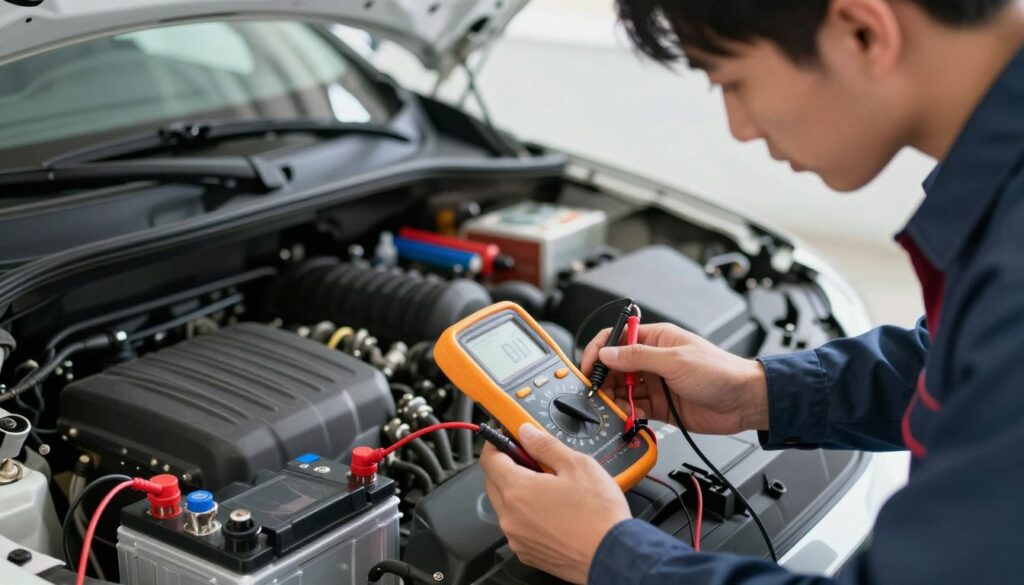
Start by testing the battery’s voltage. Use a digital multimeter to check the battery’s voltage when the engine is off. A good battery should read about 12.6 volts.
If the voltage is much lower than 12.2 volts, your battery might be weak or failing. This quick test gives you a good idea of your battery’s health. It’s a crucial step to figure out if you need to check your starter, battery, or alternator for more problems.
Load Test
A load test checks how the battery handles stress. It’s like seeing how it performs when you turn the key. This test needs special equipment, so it’s best left to a pro.
In a load test, the mechanic drains the battery to see how it holds up. If the voltage drops too low, the battery can’t power your car. Reliability is key, and this test is the best way to know if your battery is done for.
Visual Inspection of Battery Condition
Don’t overlook the importance of a visual check. Look for any damage like swelling, cracks, or leaks on the battery case. These signs often mean the battery has been damaged by extreme temperatures or internal issues.
Also, check the terminals for corrosion. Corrosion can block electrical flow, making your car hard to start. Keeping these connections clean and tight is a simple way to keep your electrical system working well.
When to Seek Professional Help
Modern cars have complex electrical systems. While you can do some basic maintenance at home, diagnosing car starting problems can be tough. If you can’t find the problem, it’s time to get a certified technician’s help.

Signs You Can’t Ignore
Some issues mean there’s a bigger problem than just a dead battery. If your car stalls right after a jump-start, it’s a sign of a bigger issue. Also, if you smell burning or hear grinding noises, it could mean the alternator is failing.
To understand these signs better, check out the top signs of a bad alternator and dead car. This can help you see if your car’s symptoms match common problems. Ignoring these signs can cause your car to break down completely.
Finding a Reliable Mechanic
When you need help, look for ASE-certified technicians. They have the right tools for accurate diagnosing car starting problems. This means you won’t waste money on unnecessary parts. Check online reviews and ask friends for recommendations to find a trustworthy shop.
Cost Considerations for Repairs
Getting repairs done by a pro costs both parts and labor. Prices can change based on your car’s make and model. While diagnostic fees might seem extra, they’re a smart investment to avoid wrong diagnoses. Knowing the total cost helps you budget and keeps your car running well for a long time.
DIY Troubleshooting Tips
We think every car owner should feel ready for power problems on the road. Learning the basics of troubleshooting car electrical issues helps you figure out simple battery drains or complex charging system failures.

Basic Tools You’ll Need
First, get some basic items for safety and accuracy. Always have protective gloves and safety glasses in your trunk. They help prevent injuries during checks.
A digital multimeter is key for troubleshooting car electrical issues. Also, keep jumper cables or a portable jump starter handy for quick tests.
Simple Tests You Can Perform
The jump-start test is a good way to tell if it’s a dead battery or a failed alternator. If your car starts with a jump but dies when the cables are removed, the alternator is not charging.
Learn more about these symptoms by visiting this guide on how to know if battery or alternator is bad. Make sure your cable connections are clean and tight before any test to avoid wrong readings.
Warning Signs to Watch For
Be on the lookout for signs that your electrical system is having trouble. Look out for:
- Dimming headlights that get brighter when you rev the engine.
- A rapid clicking sound when you turn the ignition key.
- The smell of burning rubber or plastic near the engine bay.
If you see these signs, do your checks carefully. Proper troubleshooting car electrical issues helps you decide if you can drive to a shop or need professional help.
Preventive Maintenance for Your Electrical System
Putting in a bit of effort today can save you from big repair costs later. By taking care of your vehicle’s health, you can make your battery and alternator last longer. Consistency helps avoid the hassle of a car that won’t start when you need it.
Regular Inspections
Make it a routine to check your car’s hood every few months. Look at the drive belt that powers your alternator. If you see cracks, fraying, or glazing, it’s time for a new one.
Also, check the wiring for heat damage or loose connections. A good electrical path is key for power transfer. Fix frayed wires right away to avoid short circuits.
Clean Battery Terminals
Corrosion on battery terminals can cause starting problems. A white or blue powdery substance can build up, blocking charging. Clean it with baking soda and water and a wire brush.
After cleaning, apply terminal protector spray to prevent buildup. This keeps your battery and electrical system connected well. Always wear gloves and eye protection when working near the battery.
Monitoring Warning Lights
Your dashboard is your car’s way of talking to you. Never ignore a battery icon or “check engine” light. These signs often mean trouble ahead. Early detection helps fix small problems before they get big.
If a warning light flickers, it might mean a loose connection or a failing part. Keep a log of when these lights come on. This helps your mechanic find the problem faster. Being alert keeps you safe and saves money.
| Maintenance Task | Frequency | Benefit |
|---|---|---|
| Inspect Drive Belts | Every 6 Months | Prevents sudden power loss |
| Clean Terminals | Every 12 Months | Ensures reliable starting |
| Check Wiring | Every 12 Months | Reduces fire and short risks |
| Voltage Test | Every 6 Months | Monitors battery health |
Conclusion: Knowing When to Replace
When your car won’t start because of a battery or alternator problem, you have to think carefully. These situations can be stressful, but a systematic approach can save you money. Check the age and condition of your parts to decide if a repair or a full replacement is better.
Making the Right Decision
First, you need to figure out the exact problem. Check if it’s a dead battery or a failing alternator. For more help, look at this guide on bad alternators vs bad to avoid the wrong fix.
If your battery is over four years old, it’s cheaper to replace it than keep recharging it. But, if your alternator is acting up, don’t wait too long or it might fail completely. Keeping your car reliable is key for your peace of mind.
Cost Implications of Repairs vs Replacement
Knowing the cost of your choices is important for your budget. Repairs might seem cheap at first, but they can lead to more trips to the mechanic. Here’s a table to help you decide between repairs and replacement.
| Factor | Repair | Replacement |
|---|---|---|
| Initial Cost | Low | High |
| Longevity | Short-term | Long-term |
| Reliability | Moderate | High |
| Risk of Failure | High | Low |
Long-term Vehicle Health Considerations
Choosing good parts is key to keeping your car in top shape. Going for OEM parts usually means better performance and longer life than cheaper alternatives. Fixing a car not starting due to battery or alternator with quality parts helps protect other important systems in your car.
Your goal is to keep your car reliable for years. Being proactive with maintenance and making smart choices helps avoid being stuck. See these repairs as an investment in your car’s future.
Frequently Asked Questions About Alternators and Batteries
Drivers often ask us about their car’s performance. Knowing the difference between alternator and battery failure can prevent expensive breakdowns.
How long do alternators typically last?
Alternators from Bosch or Denso usually last 80,000 to 150,000 miles. But, how long they last depends on how you drive and the weather.
Can a bad alternator damage a battery?
A bad alternator can overcharge or undercharge your battery. This can quickly damage a good battery. Spotting the problem early can save you from replacing both at once.
What should I do if my battery keeps dying?
First, check your battery terminals for corrosion. If they’re clean and the problem continues, get a professional to test your charging system. We invite you to share your experiences or contact local car experts if you think your electrical system needs a check-up.
Preventive Maintenance for Your Electrical System
What is a Car Battery?
A car battery, like an Interstate or Optima, stores chemical energy. It gives a big burst of electricity to start the engine. Without a charged battery, your car won’t start.
What is an Alternator?
Once the engine is on, the alternator takes over. It turns mechanical energy into electricity for your car’s systems. Bosch and Denso make these units.
How They Work Together
The battery and alternator work together. The battery starts the car, and the alternator keeps it running. If this partnership fails, your car’s electrical system will break down.
Dimming or Flickering Lights
Dim or flickering lights are a sign of a bad alternator. This happens because the alternator can’t keep the voltage steady. Your Sylvania LED headlights will show this.
Strange Noises from the Engine
Growling or whining sounds mean your alternator is failing. This is usually due to a bad bearing or a worn-out belt. These sounds are a warning to check your car’s electrical system.
Dashboard Warning Lights
Your car’s dashboard lights can warn you of alternator problems. A battery icon or “ALT” light means the charging system is failing. This doesn’t always mean the battery is the problem.
The Engine Won’t Start
A dead battery is the most obvious sign. If your car won’t start, it’s likely the battery’s fault. It needs enough power to crank the engine.
Clicking Sounds
Clicking when you try to start means the battery is weak. It has enough power to engage the starter but not to start the engine. This is a common sign of battery or alternator trouble.
No Dashboard Lights
If your car’s lights don’t work, it might be a dead battery. This suggests the battery has reached the end of its life.
Voltage Output
The main difference is in voltage. A good battery has about 12.6 volts when off. A good alternator boosts this to 13.5 to 14.5 volts when running. If the voltage is low while running, the alternator is failing.
Performance Over Time
Battery failure is usually gradual. Alternator failure can happen suddenly, causing the car to stall while driving. This is a sign of a serious problem.
Accessibility for Diagnosing Issues
Batteries are easier to test and replace than alternators. Most auto parts stores offer free battery tests. Alternators are harder to diagnose and require more tools.
Using a Multimeter
Use a digital multimeter to test your alternator. With the engine running, check the battery terminals. A reading below 13 volts means the alternator is not charging enough.
Inspecting Drive Belts
Check the serpentine belt for damage. A damaged belt can’t turn the alternator pulley. Make sure the belt is tight and in good condition.
Listening for Unusual Noises
Listen to the alternator with a stethoscope. A grinding sound means the bearings are failing. This is a sign of alternator trouble.
Battery Voltage Test
Check the battery voltage with your multimeter when the car is off. A reading below 12.2 volts means the battery is weak. Try to recharge it with a NOCO Genius charger.
Load Test
A load test simulates the starter motor’s draw. If the voltage drops, the battery’s plates are degraded. This means the battery needs to be replaced.
Visual Inspection of Battery Condition
Look for signs of damage or corrosion on the battery. Corrosion can prevent charging. Cleaning the terminals with CRC cleaner can help.
Signs You Can’t Ignore
If your car stalls while driving or smells like burning rubber, stop driving. These are serious signs of alternator or battery failure. They could lead to a fire or engine failure.
Finding a Reliable Mechanic
If you can’t diagnose the problem yourself, find a certified mechanic. Shops like Firestone Complete Auto Care have the tools to diagnose complex issues.
Cost Considerations for Repairs
Replacing a battery costs between 0 and 0. Alternator replacement is more expensive, costing 0 to 0. Use high-quality parts like ACDelco for better performance.
Basic Tools You’ll Need
Start with a basic toolkit. You’ll need a socket set, wire brush, and a multimeter. These tools help you diagnose problems quickly.
Simple Tests You Can Perform
The “Jump-Start Test” is a good diagnostic tool. If the car runs with a jump-start but dies when the cables are removed, the alternator is likely failed.
Warning Signs to Watch For
Slow-moving power windows are a sign of low voltage. This is a subtle sign of alternator failure or a dead battery. Pay attention to these signs.
Regular Inspections
Inspect your electrical system at every oil change. Check connections and the alternator belt. This prevents small problems from becoming big ones.
Clean Battery Terminals
Keep battery terminals clean with a terminal protector spray. This prevents corrosion and ensures efficient charging.
Monitoring Warning Lights
Don’t ignore a flickering battery light. It’s a warning of an impending problem. Ignoring it could leave you stranded.

Hello! I’m Moheen Iftikhar, the founder of «CarMotivei». I’m dedicated to covering modern automotive trends, new car technologies, and useful driving insights to keep car lovers updated and motivated. Here, you’ll find detailed car reviews, expert automotive content, and helpful tips for drivers and enthusiasts alike.