



Eco-Friendly Driving Habits to Maximize Your Fuel Economy in City Traffic
Sitting in traffic can be really frustrating. The constant stops and starts make us feel tired and upset.
But, we can make a change. By using eco friendly driving habits, we make our drive better for everyone.
Making small changes can really help. These changes make driving in city traffic easier and better for our planet.
Key Takeaways
- Practice smooth acceleration to save energy.
- Keep your tires properly inflated for better efficiency.
- Turn off the engine during long waits to reduce idling.
- Use navigation apps to avoid heavy congestion.
- Clear out heavy items from your trunk to lighten the load.
Understanding Fuel Economy and Its Importance
To make the most of our time driving, we need to understand how far we can go on a tank of gas. Fuel economy is about how far a car can travel on one unit of fuel. Knowing this helps us make smart choices about our daily drives.
What Is Fuel Economy in Simple Terms?
Your car is like a machine that turns gasoline into movement. Efficiency means how well it does this without wasting energy.
If you’re looking for a new car, check out fuel-efficient cars under 25000 with high highway MPG. A higher MPG means your car is working at its best.
Why Fuel Economy Matters for the Environment
Every gallon of fuel we use adds to air pollution. Better fuel economy means cleaner air. Using less fuel means fewer emissions from our daily drives.
By driving eco friendly, we all help the planet. Small changes in driving habits can make a big difference over time. We must drive in ways that protect our environment.
Impact of City Traffic on Fuel Efficiency
Driving in city traffic is tough. Stops, quick starts, and idling make the engine work too hard. This wastes energy and lowers efficiency.
The table below shows how driving conditions affect a car’s efficiency:
| Driving Condition | Engine Load | Fuel Consumption |
|---|---|---|
| Highway Cruising | Low/Steady | Optimal |
| Stop-and-Go City Traffic | High/Variable | Increased |
| Extended Idling | Minimal | Wasteful |
Knowing these factors helps us see why eco friendly driving habits are key in city traffic. Understanding these patterns helps us drive more efficiently.
Adopt Smooth Acceleration and Braking Techniques
We can make our vehicles more efficient by changing how we drive. Making small changes in our driving style helps our commute be greener and more efficient. These eco driving techniques are easy to use and help save fuel right away.
Benefits of Gentle Driving on Fuel Economy
Driving gently reduces stress on our vehicle’s engine. Sudden speed changes make the engine work harder, using more fuel. Driving smoothly keeps our car in its most efficient range.
Using these sustainable driving tips helps us keep moving smoothly. This not only saves money but also makes our car last longer. Smooth driving is key to being an efficient driver.

Tips for Practicing Smooth Acceleration
Imagine there’s an egg under your gas pedal. Apply pressure slowly to avoid sudden speed changes. This helps prevent the engine from wasting fuel by downshifting too much.
Also, keep a safe distance from the car in front. This lets you accelerate slowly and maintain a steady speed. Making these eco friendly driving habits part of our daily drive makes our time on the road better.
How to Brake for Maximum Efficiency
Good braking is as important as smooth acceleration. Always look ahead to plan your stops. This lets you coast to a stop, saving fuel.
Hard braking wastes fuel because it takes more energy to speed up again. By following these eco friendly driving habits, we avoid sudden stops. These sustainable driving tips help us drive efficiently in the city.
Maintain Your Vehicle for Optimal Performance
Keeping your vehicle in good shape is key to better fuel economy. Regular care ensures your engine runs well for a long time. This is vital for those who want to drive more efficiently in cities.

Regular Maintenance Checklist
Stick to a strict maintenance schedule to keep your car running well. Simple steps like changing air filters and using the right motor oil save fuel. This helps your car run better in the city.
Thinking about a more fuel-efficient car? Look into plug-in hybrids with long electric ranges. No matter your car, regular checks on fluids and cooling systems help it run smoothly.
The Role of Tire Pressure in Fuel Economy
Right tire pressure is a simple way to boost fuel economy. Low tire pressure means your engine works harder, using more gas. Check your tire pressure monthly to keep your car efficient.
Properly inflated tires also make driving safer and more comfortable. This is a basic part of environmental driving practices. Regular checks can save you money by avoiding costly repairs.
How Engine Tune-Ups Can Save Gas
Modern cars use advanced systems to manage fuel. Faulty spark plugs or sensors can hurt your car’s urban fuel efficiency. Regular tune-ups help catch these problems early.
Getting your car tuned up is a smart investment. It keeps your car running well for years, saving you money and helping the environment. Taking care of your car’s technical needs is a responsible choice.
Use Technology to Your Advantage
Dealing with city traffic gets easier with the right tech. Cars and phones give us real-time data for smarter driving. Using these tools helps us watch our fuel use and cut down on waste.

Utilizing Fuel-Efficiency Apps
Many drivers use apps to track their driving. These apps connect to our cars to show how we’re doing. They spot bad habits like hard braking or quick acceleration.
Looking at this data helps us change for the better. Regular checks make saving fuel a fun challenge. Knowing our impact motivates us to keep up good habits.
The Benefits of GPS for Routing
GPS does more than find the quickest route. It helps us dodge busy spots, key for urban fuel efficiency. Avoiding traffic means less idling and more moving at a good pace.
“The most efficient route is not always the shortest one, but the one that keeps your engine running at its optimal speed.”
Always check your GPS before driving. Even a small detour can save a lot of fuel. For more on green cars, check out this article.
How Cruise Control Can Help in City Driving
Cruise control is great for city roads with long stretches and few stops. It keeps speed steady, saving fuel. But, use it safely only where traffic is steady.
Here’s how different tech helps us save fuel:
| Technology Tool | Primary Benefit | Efficiency Impact |
|---|---|---|
| GPS Navigation | Traffic Avoidance | High |
| Diagnostic Apps | Behavioral Feedback | Medium |
| Cruise Control | Speed Consistency | Low to Medium |
Embrace Eco-Friendly Driving Accessories
Optimizing our vehicle’s setup is a smart way to follow sustainable driving tips. The way we set up our cars affects how much energy we use. By choosing the right equipment, we can greatly reduce our environmental impact.
Choosing Energy-Efficient Tires
Tires are the only part of our car that touches the road. Picking tires with low rolling resistance makes our engines work less hard. High-quality, energy-efficient tires are key for any driver wanting to save fuel.
These tires lose less energy as heat when they meet the road. Keeping them properly inflated ensures they work best. This simple action is vital for better urban fuel efficiency.
The Impact of Lightweight Vehicle Accessories
Every extra pound in our car makes the engine burn more fuel. We often forget about the weight of roof racks, heavy cargo organizers, or unnecessary items in the trunk. Getting rid of these items is a big step towards eco conscious driving habits.
A lighter car needs less power to move from a stop. This is really helpful in city traffic where we often stop and start. Streamlining our vehicle’s load makes it run smoother and use less gas.
How Aerodynamic Add-Ons Can Improve Fuel Economy
Air resistance, or drag, matters more as we go faster. Aerodynamic add-ons, like wind deflectors or spoilers, help our cars move through the air better. They’re made to improve airflow around the car body.
While these accessories work best at high speeds, they also help in the city. Reducing drag lets our engines keep speed with less effort. Getting these aerodynamic improvements is a smart way to make our car better and last longer.
Plan Your Trips Efficiently
We can make our fuel go further by changing how we travel. By planning better, we can cut down on miles and keep our cars in top shape. Strategic planning is key to saving fuel in the city.
Combining Errands to Reduce Trips
Grouping errands into one trip saves a lot of gas. Starting a cold engine uses more fuel than driving when it’s warm. Consolidating your tasks means fewer cold starts.
Make a list of your weekly needs before you go. Plan a route that makes sense. This way, you avoid short trips that waste fuel.

Best Times to Drive for Less Traffic
Too much traffic wastes fuel and causes idling. Choosing off-peak hours helps you avoid these problems.
Try to do your errands in mid-morning or early afternoon. The roads are usually less crowded, making your drive smoother. Skipping rush hour is a great way to save fuel.
Using Public Transportation When Possible
Using public transit is a big part of green commuting strategies. It takes your car off the road, helping to reduce carbon footprint.
Look into your city’s transit options to see if they work for you. Even just one or two trips a week on public transit can save a lot of fuel. It’s a smart choice for a greener future.
Driving Habits That Waste Fuel
We can make our cars run better by changing how we drive. Many of us do things that waste gas without realizing it. By changing our driving, we can save money and help the environment.

Common Mistakes Drivers Make
One big mistake is carrying too much stuff in the trunk. This makes the engine work harder and uses more gas. Also, not shifting gears right can make the engine work too hard, too.
Spotting these mistakes is the first step to better driving. By paying attention to how our car reacts, we can make small changes that save a lot. You can find more smart driving habits to save gas online.
The Impact of Idling on Fuel Efficiency
Idling wastes a lot of gas, but many of us don’t think about it. When we leave the engine on while waiting, we’re burning gas without moving. Turning off the engine when stopped for more than thirty seconds helps a lot.
This is a key part of driving green. It cuts down on emissions and engine wear. It’s an easy change that helps a lot with fuel use.
Understanding the Dangers of Aggressive Driving
Driving fast and hard braking is bad for both the car and the road. It uses more gas and increases the chance of accidents. Speeding and changing lanes a lot doesn’t save time but does raise the risk of crashes.
We should drive safely and efficiently. By driving smoothly and predictably, we use less gas. This makes driving safer and better for the planet.
Exploring Alternative Transportation Options
Using less personal vehicles can make our cities cleaner and more efficient. By choosing not to drive, we help lower carbon footprint levels. This change makes us think differently about our daily travels.
Switching to green commuting strategies saves us time and money. It also reduces traffic jams. These changes are good for the environment and make mornings less stressful.
Benefits of Carpooling for Fuel Savings
Carpooling is a smart way to share the cost of commuting. By teaming up with coworkers or neighbors, we cut fuel costs and reduce traffic. It’s a simple way to save money.
Carpooling also builds community. It turns a solo drive into a chance to chat or get work done. It’s a great option for those who want to save gas but can’t give up driving.
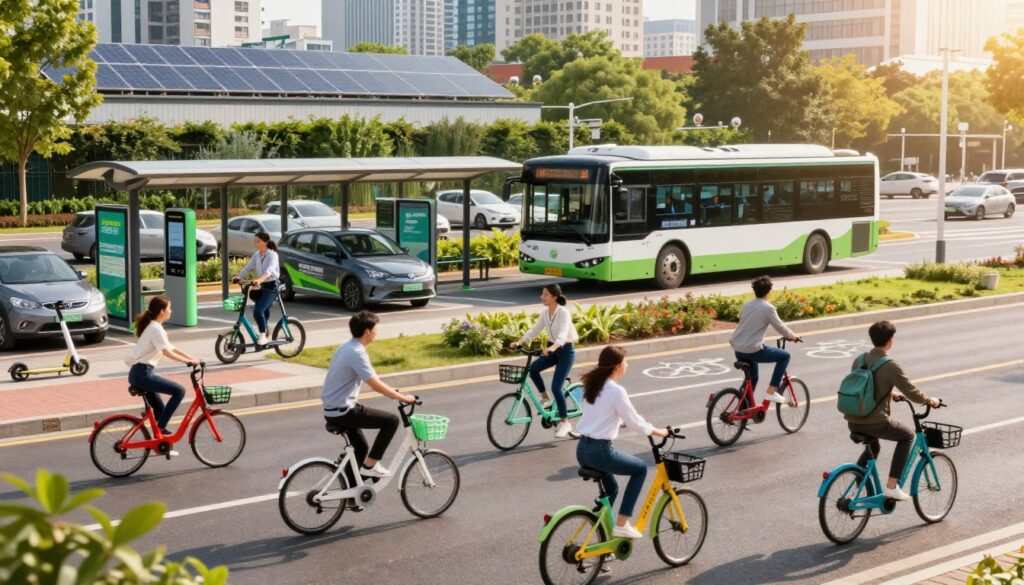
The Case for Biking in Urban Areas
Biking is a great choice for short trips. Cities are getting better at making biking safe and easy. It’s a good way to avoid parking headaches.
- Zero emissions during travel.
- Significant savings on fuel and maintenance.
- Improved physical fitness through daily activity.
How Walking Can Be Eco-Friendly and Healthy
Walking is the best way to get around close places. It uses no fuel and makes no pollution. It’s perfect for short trips.
Walking also boosts our health. It clears our minds and keeps us active. By choosing to walk, we show that city travel can be good for the planet and us.
Engage in Eco-Driving Education
Learning to drive efficiently is a lifelong journey. It’s all about staying curious and always learning. This way, you can keep improving your fuel use and help the planet.
Looking for sustainable driving tips helps you drive better in the city. Education lets you go beyond simple habits. You learn advanced ways to save fuel and money.
Learning Resources for Eco-Friendly Driving
There are many online resources and guides to help you get better. Websites like the U.S. Department of Energy offer tips on driving efficiently. They explain how to use your car wisely.
Practicing regularly is key to using these tips every day. Good resources give you solid information. This helps you make smart choices when driving.
Communities and Programs Promoting Efficient Driving
Joining local groups can also help a lot. Many cities have workshops on green commuting strategies. These teach you how to drive well in busy areas.
Being part of a community is great for learning. You can share tips and learn from others. This keeps you up-to-date with new car tech and traffic rules.
Sharing Knowledge with Friends and Family
Teach your friends and family what you’ve learned. Starting small at home can make a big difference. When you share sustainable driving tips, you help more people.
Talking about green commuting strategies with your family is good. It helps everyone make better choices. By doing this, we all help the environment and save money together.
The Future of Eco-Friendly Urban Driving
We are on the edge of a new era in transportation. Technology and human behavior are coming together to make cities cleaner. Electric vehicles and smart traffic systems will make our daily drives more efficient.
Learning environmental driving practices is key to this change. By mastering these skills now, we’re ready for a future where driving is greener.
Innovations in Fuel-Efficient Vehicle Technologies
Companies like Tesla and Toyota are leading the way with new tech. Regenerative braking and advanced aerodynamics help capture energy that was lost. This means we can drive with less impact on our planet.
Policies Encouraging Sustainable Transportation
Local governments are focusing on bike lanes and public transit. These efforts help reduce traffic and make our air cleaner. They also make our streets quieter.
How You Can Advocate for Better Urban Driving Practices
Your choices can make a big difference in your community. Share what you know about driving efficiently with others. Together, we can push for better travel options and a healthier environment for all.
FAQ
What Is Fuel Economy in Simple Terms?
Fuel economy is how far your car goes on a gallon of gas. It shows how well your car uses energy to move. It’s usually measured in miles per gallon (MPG).
Why Fuel Economy Matters for the Environment
Improving fuel efficiency helps reduce harmful emissions. By using less fuel, we cut down on pollution. This is good for our planet.
Impact of City Traffic on Fuel Efficiency
City driving is tough on fuel efficiency. Idling and constant stops use more gas. So, we need special driving tips for the city.
Benefits of Gentle Driving on Fuel Economy
Gentle acceleration saves energy. Avoiding hard starts helps the engine run smoothly. This saves fuel.
Tips for Practicing Smooth Acceleration
Imagine an egg under the gas pedal. Press down slowly for better shifting. This avoids wasting fuel.
How to Brake for Maximum Efficiency
Anticipate traffic lights to brake smoothly. This keeps momentum and saves energy. It’s good for fuel efficiency.
Regular Maintenance Checklist
Regular checks keep your car running well. Use good oil like Mobil 1 or Pennzoil. This cuts down on engine friction.
The Role of Tire Pressure in Fuel Economy
Under-inflated tires waste energy. Keep tires at the right pressure. This improves mileage and tire life.
How Engine Tune-Ups Can Save Gas
Regular tune-ups are key. Replace spark plugs and air filters. A well-tuned engine uses less fuel.
Utilizing Fuel-Efficiency Apps
Use apps like GasBuddy to track your fuel use. This helps find ways to improve your driving.
The Benefits of GPS for Routing
GPS helps find the best routes. Avoid traffic and roadwork. This saves time and fuel.
How Cruise Control Can Help in City Driving
Cruise control helps on long city roads. It keeps speed steady. This saves fuel.
Choosing Energy-Efficient Tires
Choose low-rolling-resistance tires. They save fuel without losing safety. Try Michelin Energy Saver A/S.
The Impact of Lightweight Vehicle Accessories
Remove unnecessary items. Lighter cars use less energy. This is good for city driving.
How Aerodynamic Add-Ons Can Improve Fuel Economy
Aerodynamic parts help at high speeds. Air dams and roof racks reduce drag. This saves fuel.
Combining Errands to Reduce Trips
Group errands together. This keeps the engine warm. It’s more efficient than short trips.
Best Times to Drive for Less Traffic
Drive outside rush hours. Avoid heavy traffic. This saves time and fuel.
Using Public Transportation When Possible
Public transit is the best choice. It lowers emissions and traffic. Try Amtrak or local light rail.
Common Mistakes Drivers Make
Not focusing on the road wastes fuel. Avoid sudden stops. This saves energy.
The Impact of Idling on Fuel Efficiency
Idling wastes fuel. Turn off the engine at stops. This saves gas and is good for the environment.
Understanding the Dangers of Aggressive Driving
Aggressive driving wastes fuel. Speeding and rapid lane changes are bad. Drive calmly for better fuel efficiency.
Benefits of Carpooling for Fuel Savings
Carpooling saves fuel and reduces traffic. Use RideShare for this. It’s good for everyone.
The Case for Biking in Urban Areas
Biking is great for short trips. It’s zero-emission and healthy. Try Trek or Specialized bikes.
How Walking Can Be Eco-Friendly and Healthy
Walking is the best for short trips. It saves fuel and keeps you active. It’s good for the environment.
Learning Resources for Eco-Friendly Driving
Learn from the Environmental Protection Agency (EPA). They offer tips on eco-friendly driving. It’s good for the planet.
Communities and Programs Promoting Efficient Driving
Join hypermiling and eco-driving groups. They share tips for better fuel efficiency. It’s a community effort.
Sharing Knowledge with Friends and Family
Teach others about eco-friendly driving. Share tips with friends and family. It helps create a greener community.
Innovations in Fuel-Efficient Vehicle Technologies
Look forward to hybrid and electric cars. Brands like Tesla and Rivian lead the way. They’re good for the environment.
Policies Encouraging Sustainable Transportation
Support bike lanes and public transit. These make eco-friendly driving easier. They’re good for the city.
How You Can Advocate for Better Urban Driving Practices
Speak up for better traffic management. Push for smart traffic lights and better roads. It’s good for everyone.
What are the most effective eco-friendly driving habits for city traffic?
Focus on smooth acceleration and anticipate traffic lights. These habits save fuel and reduce emissions. They’re good for the city.
How does maintaining proper tire pressure improve fuel economy?
Proper tire pressure reduces rolling resistance. This saves energy and improves fuel efficiency. It’s a simple but effective tip.
Can utilizing GPS apps really help us reduce our carbon footprint?
Yes, GPS apps help find efficient routes. They avoid idling and reduce emissions. It’s a smart way to drive.
What are some simple environmental driving practices for daily commutes?
Avoid idling and remove unnecessary items. These habits save fuel and reduce waste. They’re easy to follow.
How do green commuting strategies like carpooling benefit us?
Carpooling reduces traffic and emissions. It’s a smart way to share the road. It’s good for the environment.
Does regular maintenance like engine tune-ups impact my fuel usage?
Yes, tune-ups save fuel. Use good oil and replace parts as needed. It’s a responsible way to drive.

Hello! I’m Moheen Iftikhar, the founder of «CarMotivei». I’m dedicated to covering modern automotive trends, new car technologies, and useful driving insights to keep car lovers updated and motivated. Here, you’ll find detailed car reviews, expert automotive content, and helpful tips for drivers and enthusiasts alike.