


Pre Purchase Inspection Checklist to Use When Buying from Private Sellers
Did you know that nearly 20% of all pre-owned vehicles sold today have hidden mechanical issues? These problems are often not found during a casual test drive. I’ve seen many buyers lose thousands of dollars because they didn’t do a thorough check. My goal is to help you avoid these common traps.
This car buying guide will give you the clarity you need. By using my buying from private seller checklist, you can see a vehicle’s true condition before you buy. This way, you won’t lose money.
I created this pre purchase inspection checklist to use when buying from private sellers to protect your investment. It doesn’t matter if you’re a first-time buyer or a seasoned pro. Having a reliable used car checklist is key to making sure you get a safe, dependable car.
Key Takeaways
- Understand the hidden risks associated with acquiring vehicles through individual owners.
- Learn how to perform a systematic evaluation of a car’s mechanical and cosmetic state.
- Identify red flags that indicate a vehicle may have been poorly maintained.
- Gain the confidence to negotiate a fair price based on factual findings.
- Protect your financial investment by verifying the history and condition of the automobile.
Understanding the Importance of a Pre Purchase Inspection
Before buying a car, it’s key to check its condition with an expert. A private party vehicle inspection gives you peace of mind. For just $100 to $150, you can avoid costly repairs later.
Why Inspections Matter
A vehicle inspection spots issues that sellers might miss. Even if a car looks good, it can have hidden problems. A pro can tell you the car’s real condition before you buy.
“An ounce of prevention is worth a pound of cure, specially with cars.”
Benefits of Buying from Private Sellers
Buying from a private seller can save you money. You talk directly to the seller, learning about the car’s care. A private sale inspection makes the deal clear for both sides.
Risks of Skipping Inspections
Not getting a private party vehicle inspection is risky. You might buy a car with engine or transmission problems. Here’s why a vehicle inspection is vital for your wallet’s safety.
| Feature | With Inspection | Without Inspection |
|---|---|---|
| Hidden Defects | Found early | Found after buying |
| Repair Costs | Can be negotiated or avoided | Must be paid yourself |
| Confidence | High | Low |
| Long-term Value | Kept safe | At risk |
A private sale inspection is your best defense against bad buys. Don’t let excitement blind you. Always choose a vehicle inspection to make sure your car is reliable for years.
Key Elements of a Pre Purchase Inspection
Getting a detailed pre purchase car inspection is key to avoiding hidden problems. I examine each vehicle closely, looking for signs of neglect. This helps me understand the car’s real condition.
Mechanical Components
The engine and transmission are the car’s heart. During my pre purchase car inspection, I use an OBD-II scanner. This tool shows any hidden issues the seller might have fixed.
I also check belts, hoses, and fluids for leaks or contamination. Finding these issues early can save you a lot of money later.
Exterior Condition
The car’s exterior tells a story of its past. I look for mismatched paint or uneven gaps, signs of past damage. A thorough pre purchase car inspection also checks the frame for rust or damage.
I also examine the glass and weather stripping. Ensuring the exterior is in good shape is important for safety and value.
Interior Evaluation
The cabin reveals a lot about the car’s maintenance history. I check the seats for wear and test all electronics, like the air conditioning and infotainment system. A well-kept interior often means the car was well-maintained.
Lastly, I look for water damage or musty smells, signs of past flooding. A clean and working interior shows the car is reliable and ready for use.
Tools You’ll Need for the Inspection
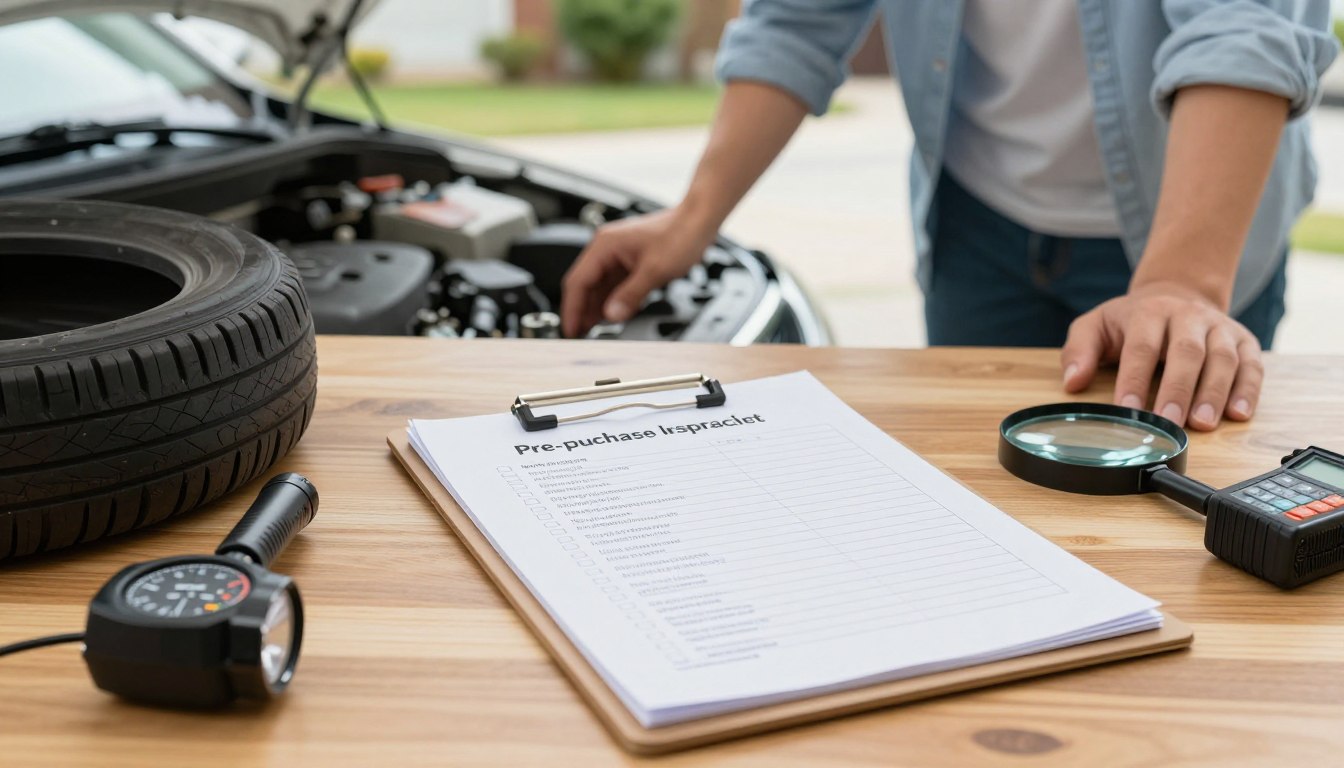
Carrying a small kit of essential tools makes a big difference when checking out a car. The right gear turns a casual look into a professional evaluation. This ensures my used car checklist is applied well during every visit. Preparing ahead helps me spot issues others might miss.

Basic Inspection Tools
I always have a high-quality flashlight with me. It lets me see into dark engine bays and check the undercarriage for leaks or damage. A small magnet is also key; I use it to find body filler, which often means hidden rust or past repairs.
Lastly, I never forget a stack of paper towels. They’re vital for checking fluid levels, like engine oil and transmission fluid, directly from the dipstick. If you’re looking for a reliable vehicle, check car safety ratings for modern family SUVs to meet your standards.
Optional Equipment for Detailed Checks
For a more detailed inspection, consider adding advanced tools to your kit. An OBD2 scanner is great for reading hidden error codes that the seller might have cleared. Also, a digital tire pressure gauge is useful for checking if tires are properly inflated and wearing evenly.
| Tool Name | Primary Function | Inspection Benefit |
|---|---|---|
| Flashlight | Illumination | Reveals leaks and hidden damage |
| Magnet | Metal Detection | Identifies body filler and rust |
| Paper Towel | Fluid Analysis | Checks oil and fluid quality |
| OBD2 Scanner | Diagnostic Check | Detects hidden electronic faults |
Using these tools well makes your used car checklist a powerful tool in the buying process. Spending a bit of time gathering these items can save you from expensive surprises later.
Preparing for the Inspection
Success in a private party vehicle inspection starts with preparation. Being ready helps you stay focused and objective. It also sets clear expectations, avoiding surprises and ensuring both sides are in agreement.

Scheduling the Inspection
Choose a daylight meeting time for clear vehicle inspection. Meet in a well-lit, neutral space like a large parking lot. This allows for a detailed walk-around. Never rush the process; seller impatience could signal hidden issues.
“Preparation is the foundation of every successful transaction, specially with used vehicles where hidden issues can be costly.”
Asking the Right Questions
Before leaving, make a list of questions to test the seller’s honesty. Ask about ownership length and selling reasons. These questions often uncover a lot about the car’s reliability and maintenance.
Be cautious if the seller is hesitant or vague. Also, ask about any known mechanical issues. This helps you verify claims using a car problems diagnostics guide. Starting this conversation early is key to a private sale inspection.
What to Bring Along
Being organized is key for a productive visit. Bring a few items to ensure you don’t miss anything:
- A printed checklist to track every component you examine.
- A flashlight to inspect dark areas under the hood or chassis.
- A pair of gloves to keep your hands clean while checking fluid levels.
- A smartphone to take photos of any concerns you discover.
Arriving prepared shows you’re a serious buyer who values transparency. This approach often encourages sellers to be more open about the vehicle’s condition.
Conducting a Thorough Exterior Inspection
When I check out a car for sale, the outside is my first focus. I see it as a critical safety inspection. The car’s exterior often shows its history. I take my time to spot any hidden problems.
Body and Paint Condition
I walk around the car in the sunlight. I look for mismatched paint colors, which might mean it’s been in an accident. If a panel looks off in color or texture, it’s likely been fixed.
I also check for Bondo or filler on the body panels. I look at the gaps between doors, hood, and trunk. Small, even gaps are good. Big or uneven gaps might mean problems or bad repairs.

Tire Quality and Tread Depth
Tires are key for safety because they touch the road. I check the tread depth with a gauge or penny test. Uneven tread could mean alignment problems or worn parts.
I also check the sidewalls for cracks, bulges, or dry rot. These signs can cause blowouts. Replacing tires is costly, so I consider this when making an offer.
Lights and Indicators
Next, I test all the lights to make sure they work. I check headlights, turn signals, brake lights, and reverse lights. A broken light is a safety risk and can get you in trouble with the police.
| Inspection Area | What to Look For | Potential Risk |
|---|---|---|
| Paint Finish | Mismatched shades or texture | Hidden collision damage |
| Body Panels | Uneven gaps or filler | Poor structural repair |
| Tire Tread | Uneven wear patterns | Suspension or alignment issues |
| Lighting System | Flickering or burnt bulbs | Electrical faults or safety hazards |
Checking Under the Hood
When I check a used car, the engine bay is key. It shows how well the car was taken care of. Before starting, I use a detailed checklist to not miss anything important.

Engine Condition
I look for signs of neglect like dirt or oil buildup. A clean engine might look good but could hide leaks. I check belts and hoses for damage that could mean they’re about to fail.
If the engine looks too clean, I’m extra careful. I watch for smoke or burning smells when it’s running. A good engine should run smoothly without shaking or strange noises.
Fluid Levels and Quality
Fluid checks are key in my pre-purchase inspection. I pull the oil dipstick to see its color and texture. If it’s dirty or has metal flakes, it’s a big problem.
I also check the coolant for oil contamination. A dirty coolant can mean a blown head gasket, a costly fix. Here’s what I look for in the main fluids.
| Fluid Type | What to Check | Warning Sign |
|---|---|---|
| Engine Oil | Texture and Color | Frothy or metallic flakes |
| Coolant | Clarity and Level | Oil streaks or sludge |
| Brake Fluid | Color and Clarity | Dark, murky appearance |
Battery Health
The battery is often ignored but is very important. I check the terminals for corrosion, which can stop the car from starting. If the battery looks damaged, it’s almost time to replace it.
I also check the battery’s age. Most last three to five years. If it’s older, I consider the cost of a new one when making an offer.
Inspecting the Interior Space
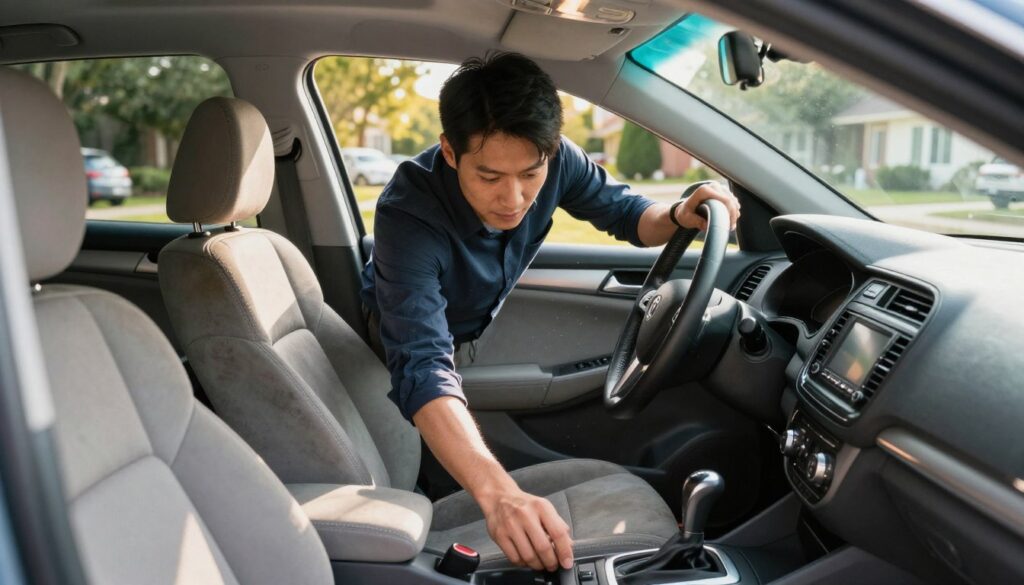
I always start by checking the interior closely. It shows how well the car was taken care of. The cabin is key to understanding the car’s condition. A detailed pre-purchase inspection helps avoid hidden problems.
Seat Condition and Functionality
I first look for wear on the seats, like cracks in leather or thin fabric. It’s vital to make sure all seat adjustments work right. Don’t forget the seatbelts; check if they pull out fully and retract without issues.
Dashboard and Controls
Then, I test every button and knob on the dashboard. I make sure the air, heat, and entertainment systems work as they should. Finding problems with vehicle electronics early can prevent costly repairs.
Noise and Smells
Lastly, I focus on the cabin’s smells and sounds. Any musty or moldy smells suggest past water damage or leaks. A damp carpet or strong mildew smell is a big warning sign of possible electrical issues or mold.
Taking a Test Drive
I always take a long test drive to find any hidden problems before buying a car. A static check is good, but the road test shows the car’s true condition. Make sure to use a used car inspection checklist to catch all important details.

Checking Performance and Handling
I drive on city streets and highways to test the car’s speed and handling. Consistent performance is key, so I watch how the transmission shifts. If it hesitates or jerks, it might have transmission issues.
I also test the brakes, both regular and hard, to see if the car stops smoothly. Smooth, predictable stopping power is essential for safety. If the steering wheel shakes during braking, the rotors need fixing.
Listening for Unusual Noises
I listen for any clunks, whines, or rattles during the drive. These sounds can mean worn parts or engine problems. It’s important to catch these noises early.
When turning at low speeds, I listen for clicking sounds. These often mean failing CV joints, which can be costly to fix. Listening carefully can help you avoid buying a car with hidden damage.
Evaluating Comfort and Usability
I also check if the car meets my personal needs. I make sure the seats adjust well and the cabin is quiet at high speeds. Ergonomics matter, so I check if the dashboard controls are easy to use.
I test the climate control system to see if it works well. If the interior feels cramped or visibility is bad, it might not be right for me. A comfortable car is one you’ll enjoy driving for years.
Reviewing Vehicle History
A thorough background check is key in my used car checklist. A physical check shows the car’s current state. But, the history report reveals hidden events.
Importance of a Vehicle History Report
I use trusted services like CarFax, NMVTIS, or AutoCheck for reliable data. These platforms give a detailed timeline of the car’s life. Getting this info is worth it for long-term safety.
Without a report, I’d be making a purchase blind. I always check the report’s date before deciding.
Key Information to Look For
I look for major red flags in these reports. I check for accidents, damage, and title brands that mean the car was totaled.
It’s also key to see if the car was in a flood. Flood damage can be hard to spot during a simple check. So, the history report is vital.
Understanding Previous Ownership
The number of previous owners can tell a lot. I like cars with fewer owners, as they often had better care.
I also look at the service history in the report. Regular maintenance means a reliable car. By checking these details, I can confidently finish my checklist and buy the car.
Final Steps Before Purchase
After my pre purchase car inspection, I’m ready to buy. This step is where all your hard work pays off. You’ll feel confident moving from buyer to owner.
Negotiating the Price
I use my inspection findings to talk about a fair price. If I find small problems like worn brake pads, I mention them. Transparency is important to show the seller I’ve done my homework.
Most sellers are open to a lower price if they see a detailed pre purchase car inspection report. By talking about repair costs, I can often get a better deal. This reflects the car’s true condition.
Final Inspection Checklist
Before paying, I check my pre purchase inspection checklist to use when buying from private sellers one last time. I make sure I haven’t missed anything important. I check for all keys and a clean title.
I also make sure the VIN on the dashboard matches the title. This step prevents legal issues later. It’s the last check in this car buying guide to make sure everything is right.
Completing the Purchase
After agreeing on the price, it’s time for the paperwork. I make sure the bill of sale is signed and the title transfer is clear. Safety is key when paying.
I use a secure payment method, like a cashier’s check, for a clear record. After paying, I collect all service records and manuals. This helps keep the car in great shape for years.
After the Purchase: Next Steps
Driving away in your new vehicle is just the beginning. Keep your used car inspection checklist and service records handy. This helps protect your investment and makes future maintenance easier.
Completing Legal Requirements
Visit your local motor vehicle department to register the car in your name. This step avoids late fees and ensures you meet state insurance and tax laws. Having your documents ready makes the process quick and easy.
Maintaining Long-Term Reliability
A detailed vehicle inspection sets a baseline for your car’s health. Schedule an oil change and fluid check right away. Regular care keeps your vehicle safe for many miles.
Organizing Your Records
Store all transaction paperwork in a safe place. These documents prove your ownership and show the vehicle’s condition at purchase. Keeping records adds value and peace of mind to your daily drive.
FAQ
What is the most important part of a pre purchase car inspection?
Checking the engine and transmission health is key. A used car inspection checklist helps me focus on these areas. This way, I avoid missing major issues while noticing minor cosmetic flaws.
Can I perform a private party vehicle inspection myself?
Yes, if you know a lot about cars. I use a flashlight, a magnet, and an OBD-II scanner. But, if unsure about a model, I hire a professional mechanic for a detailed check.
How do I use a used car checklist to negotiate?
I use the checklist to point out needed repairs. Showing the seller what needs fixing helps me make a lower offer. This is based on real repair costs.
Why should I request a private sale inspection for a car that looks perfect?
Looks can be misleading. I’ve seen cars that look great but hide leaks or have hidden Bondo. A detailed inspection checklist reveals what a simple wash can’t.
What documents should I check during a pre purchase car inspection?
I check the title for liens and a Carfax report. This ensures the inspection covers hidden issues like salvage titles, odometer rollbacks, or flood damage.

Hello! I’m Moheen Iftikhar, the founder of «CarMotivei». I’m dedicated to covering modern automotive trends, new car technologies, and useful driving insights to keep car lovers updated and motivated. Here, you’ll find detailed car reviews, expert automotive content, and helpful tips for drivers and enthusiasts alike.